

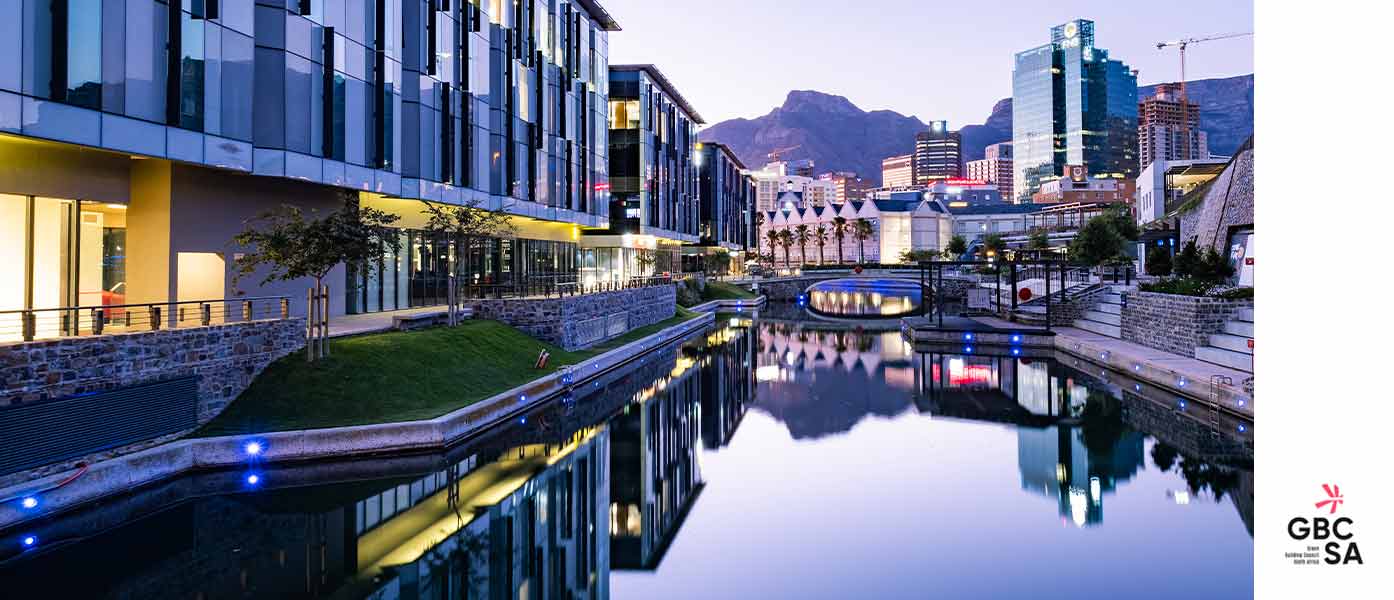
How do we convince clients of the business case for greener buildings? How do we drive sustainable design practices within client and consultant teams? These questions were top of mind for the dhk Architects delegation attending this year’s Green Building Convention in Cape Town. The discussions at the conference sparked valuable insights that can bolster our team’s commitments to designing for the future.
The 18th Green Building Convention, held this year at the Century City Conference Centre, challenged everyone in the built environment to raise the bar, push boundaries and embrace a future that demands more sustainable, efficient and resilient built environments. These sentiments drive dhk's own relentless pursuit of environmentally responsible and innovative design solutions.
dhk Chairman Derick Henstra, and Senior Associates Daphne Nederstigt and Michelle Coetzee attended this year's conference, along with Partner Peter Stokes, who took part in a panel discussion on building sustainable neighbourhoods. Peter leads dhk's Sustainability Committee, which serves as a think tank and internal consulting team with a mandate to entrench the studio's sustainability ethos throughout our work and practice.
The convention has become a space for high-level learning, meaningful networking and celebrating the progress made towards sustainability in the built environment. Held under the theme “Stepping Up to Next”, it explored what is needed to step up to the next level in the drive for a greener built environment.
Rebuilding relationships with architects
“While the questions above weren't fully addressed, we left feeling optimistic about the significant commitment from GBCSA’s incoming leadership, especially in terms of our role as architects within the drive for a greener built environment,” said Daphne. During the event, Georgina Smit, was announced as the new CEO effective from May 2026. Georgina, who has been with the organisation since 2019, succeeds Lisa Reynolds who has led the organisation since 2020. Smit expressed her commitment to rebuild relationships with architects, acknowledging that this vital connection has waned.
African solutions for Africa
The packed programme featured visionary leaders and speakers such as Nigerian Architect Olajumoke Adenowo. Her message about green architecture emphasised that following Western models is not the solution. “We already have strong, context-appropriate solutions within the African continent and the broader Global South,” she said.
The three-day event was a reminder to design from and for what the building and site needs, rather than forcing a preconceived image of a building onto the project. It also reinforced the importance of viewing things from different perspectives, as one person’s way is not always the only way.
Another standout moment was the Urban Surfer landfill-refuse video by Sifiso Gumbi, a powerful reminder that recycling succeeds in South Africa largely because of individual, everyday people. It was so impactful that it continues to influence daily decisions. The organisation supports informal waste reclaimers through equipment, training and inclusive recycling systems.
Looking forward: themes for 2026
As architects, we have a responsibility to entrench our knowledge about green buildings and responsible design into every aspect of our work. This requires closer collaboration with the Green Building Council South Africa (GBCSA) on more effective engagements, but also with clients and consultant teams. Several themes emerged from the event that the dhk Sustainability Committee will be exploring during 2026:
Community participation: Designing spaces that accommodate the human aspect of green architecture. The Dunoon Public Library project in Cape Town emerged as an example of true community participation, showing that when the community is involved in design, people take genuine ownership. The concept of “open-endedness” resonated strongly. Library users are allowed to bring in their own notes, plants and personal elements. We should design spaces that accommodate this human aspect of green architecture.
Future housing demand: The role of backyard housing in meeting future housing demand. Since so much of the needed growth will come from this sector, how do we ensure these structures are safe and durable?
The role of technology: Exploring how technology can help us build more houses quickly and sustainably, and how we can use AI to our advantage without contributing to negative environmental impacts.
Net zero embodied carbon: Continuing conversations around Net Zero Embodied Carbon, a topic not fully explored during the convention. The dhk delegation has identified this as a critical gap that warrants deeper exploration in future industry conversations.


