

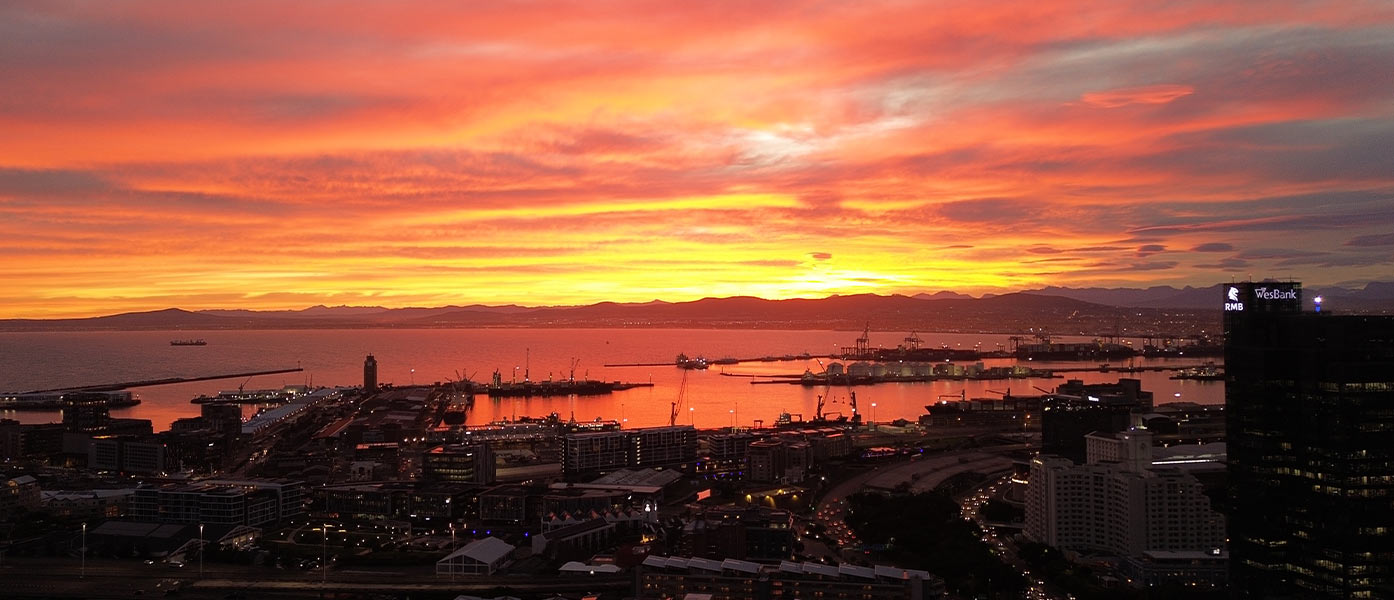
For nearly three decades, Cape Town's CBD has undergone a remarkable transformation. In that time, it has evolved from a centre facing serious urban challenges into a vibrant mixed-use destination that attracts businesses, residents, investors and visitors from all over the world. Along the way, architects, developers, the City of Cape Town, the CCID and many other stakeholders have helped shape the urban environment that defines the city today. New developments, restored heritage buildings and the day-to-night energy demonstrate a real confidence in this vibrant downtown.
Few architectural practices have had a closer view of that evolution than dhk Architects. Established in the CBD in 1998, the firm has contributed to many of the developments that have changed the city's skyline and helped support the growth of a more connected, active and liveable city centre. dhk Chairman Derick Henstra has been designing buildings in Cape Town throughout much of this period, giving him front-row seats to the CBD's journey from an uncertain commercial centre to one of South Africa's most successful centres.
"We had offices in Barrack Street in the same building as where Mavericks is now, with a fabulous terrace and an incredible view of the mountain. It was long before the East City became what it is today," says Derick.
The CBD was a very different place when dhk was established in 1998. Then, the future of South Africa's city centres was far less certain. Businesses were increasingly looking beyond the CBD towards decentralised commercial nodes and office parks, raising questions about the role of the traditional CBDs. While Cape Town had many natural advantages, as it still does, as a viable city centre its future wasn’t assured.
The CBD looked physically different, too. “The Foreshore skyline was less densely developed,” says Derick. “Living in the city centre was a relative novelty. Commuters into the city would stay in their offices and leave again at day’s end, because there were so few options after work. We didn’t have the range of restaurants, hotels and lifestyle destinations that define the CBD today.”
In time, however, this began to gradually change, with incremental interventions and the expansion of a mindset focused on transforming the perceptions, and the reality, of the city centre. “The CCID was one of the organisations instrumental in the shift, along with the City of Cape Town and others. More and more, we were approached by developers who had started to take the CBD seriously. Cranes in the sky are real markers of that kind of confidence,” Derick adds.
From then on, dhk’s inner city portfolio started to expand, reshaping the city’s skyline, with, among others, 15 on Orange, Triangle House (now Pullman), Taj Hotel and Mandela Rhodes Place in the tourism district and later constructions like Portside, Icon and 35 Lower Long in the Foreshore and The Rubik on the corner of Riebeek and Loop Streets. Current developments include City Park – which is the long-awaited redevelopment of the former Christiaan Barnard Hospital – and the newly launched The Madison on Bree Street. On the outskirts of the CCID’s boundaries, The Paradigm is under construction and Longkloof Precinct was recently completed.
But these structures have been catalysts for something that is just as important than the addition of contemporary architecture to the cityscape: the activation of the public realm in the spaces between the buildings. The CBD has become so much more active. “City living has become part of the CBD's identity, and the many cafés, restaurants and cultural destinations have brought new life and activity to spaces that were previously empty after office hours. It’s been a real evolution,” notes Derick.
“Many of the ideas that have shaped our practice over the years, around heritage, density, mixed-use development, sustainability and the relationship between buildings and people were refined through working in the Cape Town CBD. It’s a privilege to see how the city has evolved and to know that we’ve contributed to that journey.”


