[ view project ]

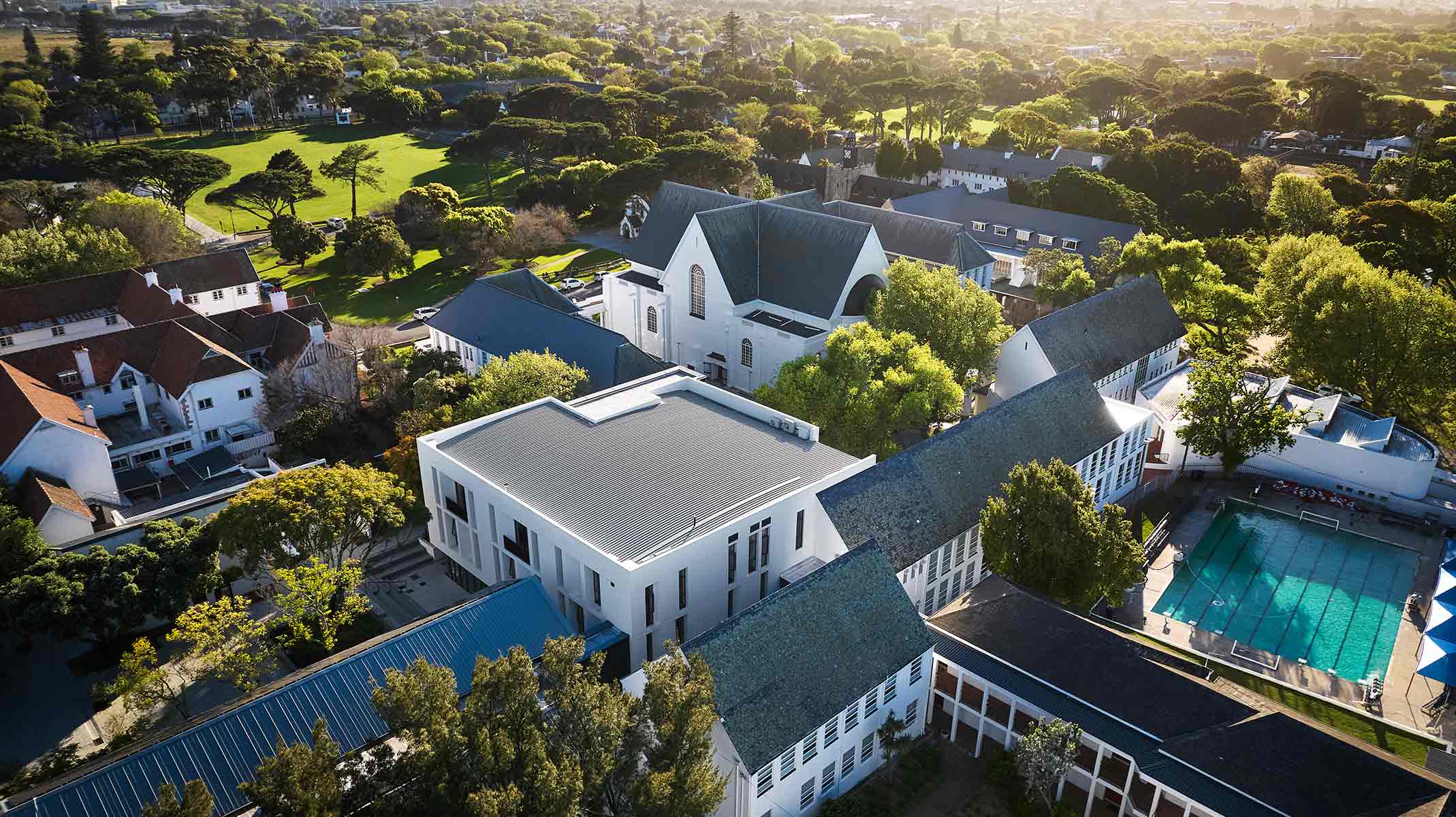
As one of the oldest in the country, Bishops wanted to embark on a journey of modernising learning environments on its historical campus. This led to the transformation of the existing Molteno Library and New Lecture Theatre (NLT), located within a cluster of buildings at the heart of the academic campus designed to facilitate more collaborative learning practices that characterise contemporary 21st century education.
The site lies at a crucial fulcrum of routes through the campus, surrounded by existing buildings and mature trees that needed to be retained. The existing buildings within the tight space were inward-focused, connected with dark, unwelcoming passages, convoluted access routes and disconnected spaces. One of the key challenges was to create large, flexible spaces with generous dimensions while meeting acoustic and ventilation requirements in the constrained footprint. This was complicated by height restrictions, a high water table and the need to align with the floor levels of the existing surrounding buildings. The project team also had to navigate the complexity of moving large numbers of people through the spaces using existing circulation routes as designated escape routes, while preserving as much natural light and ventilation as possible.
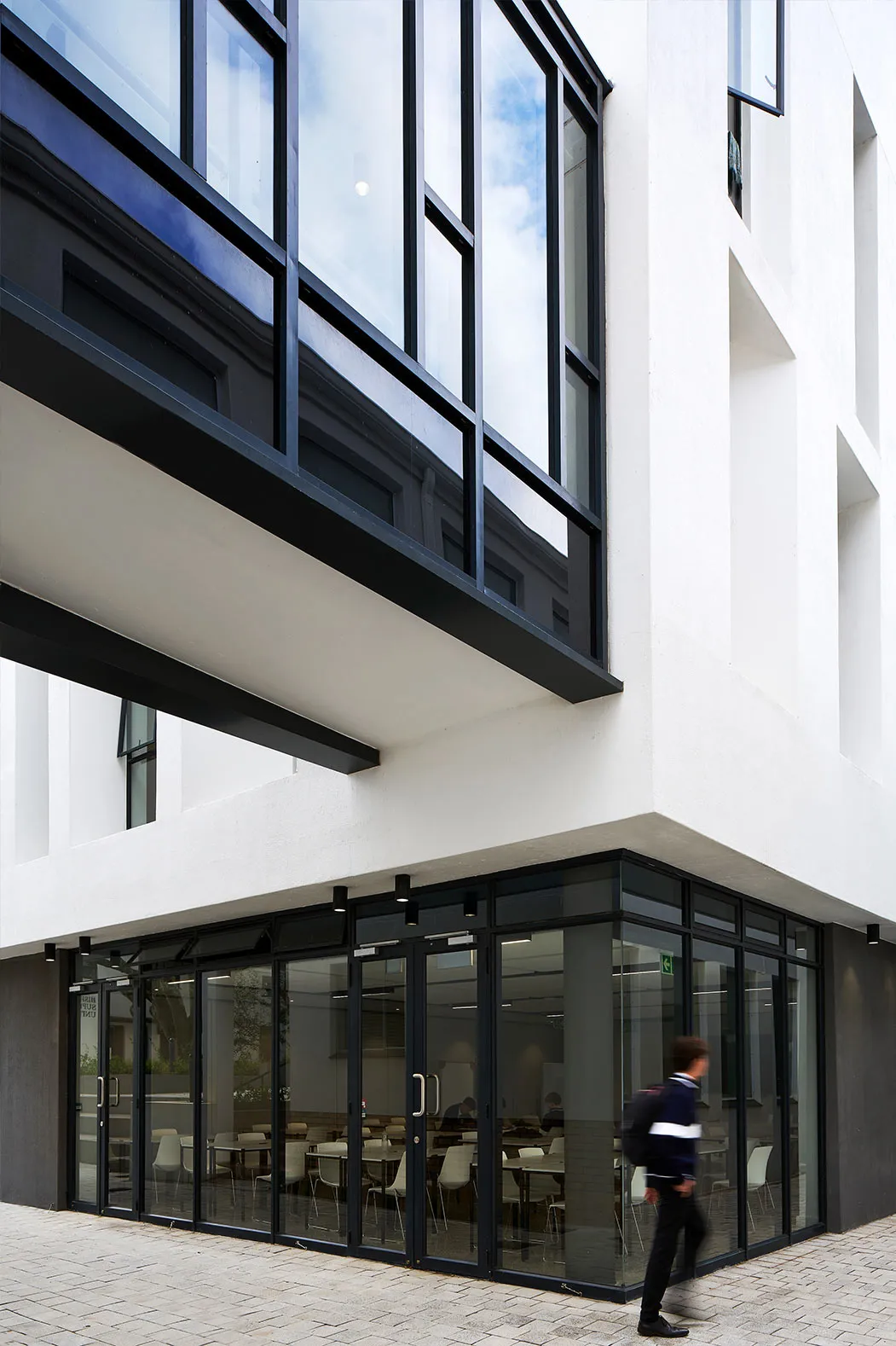
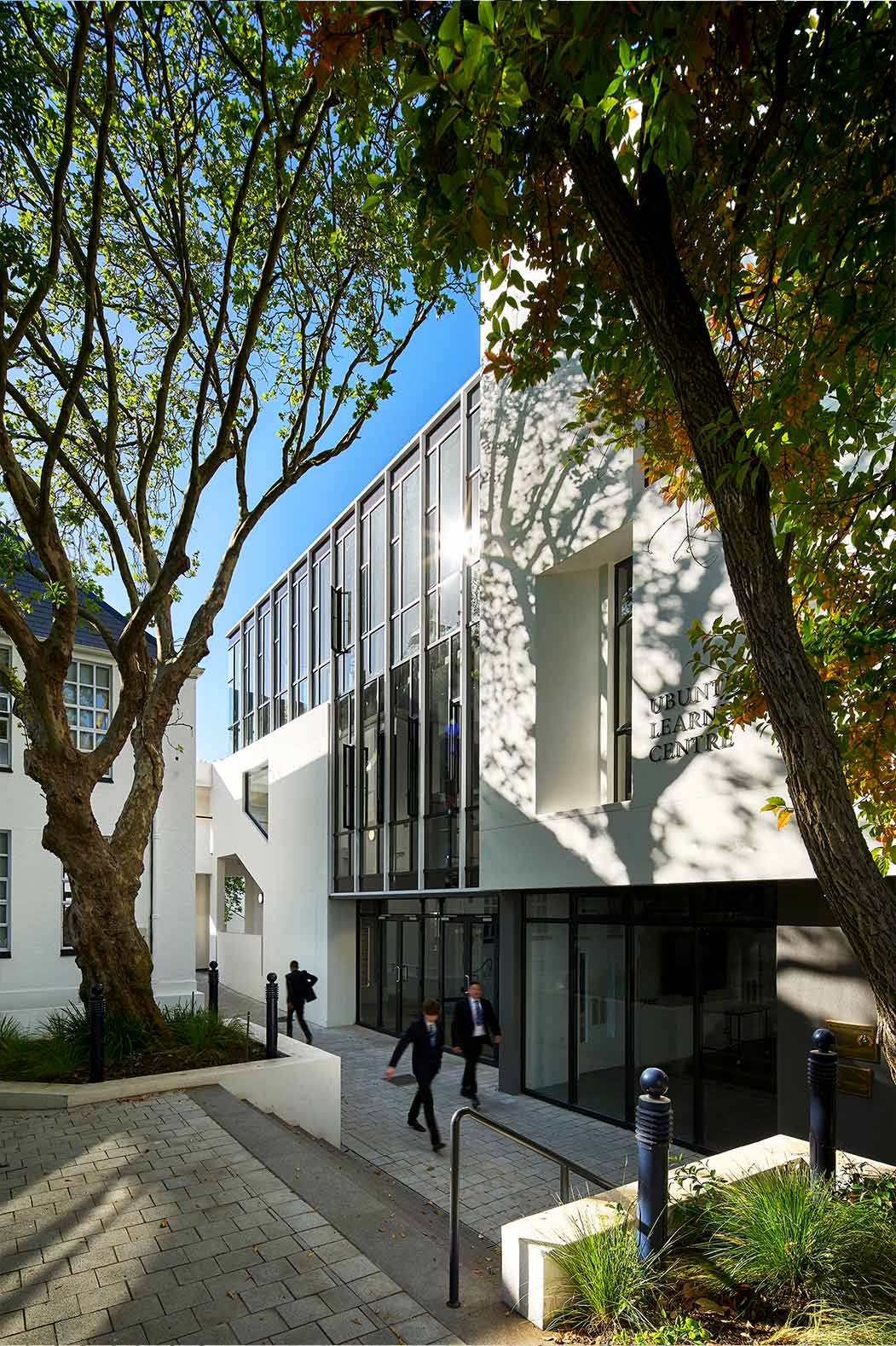
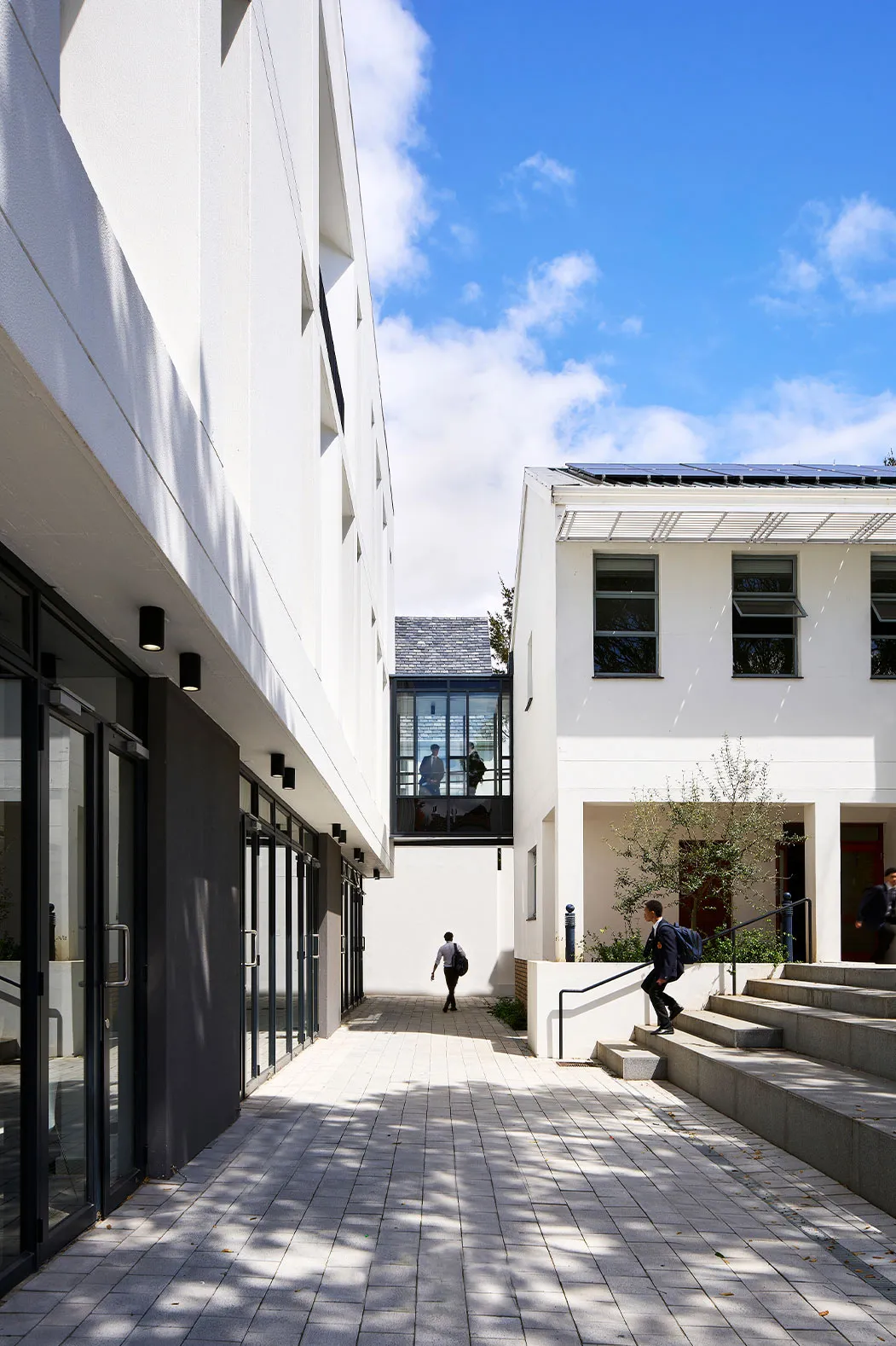
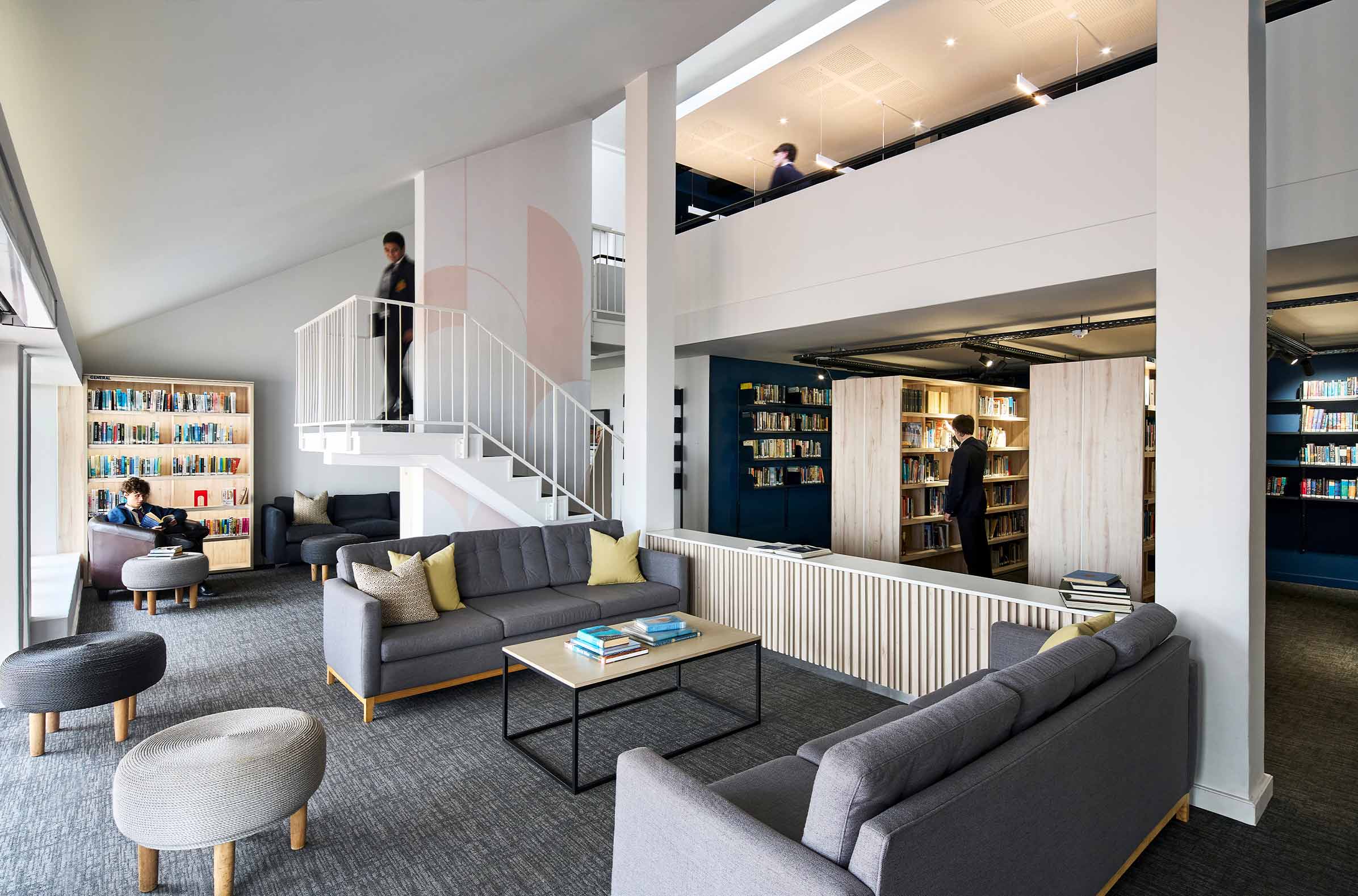
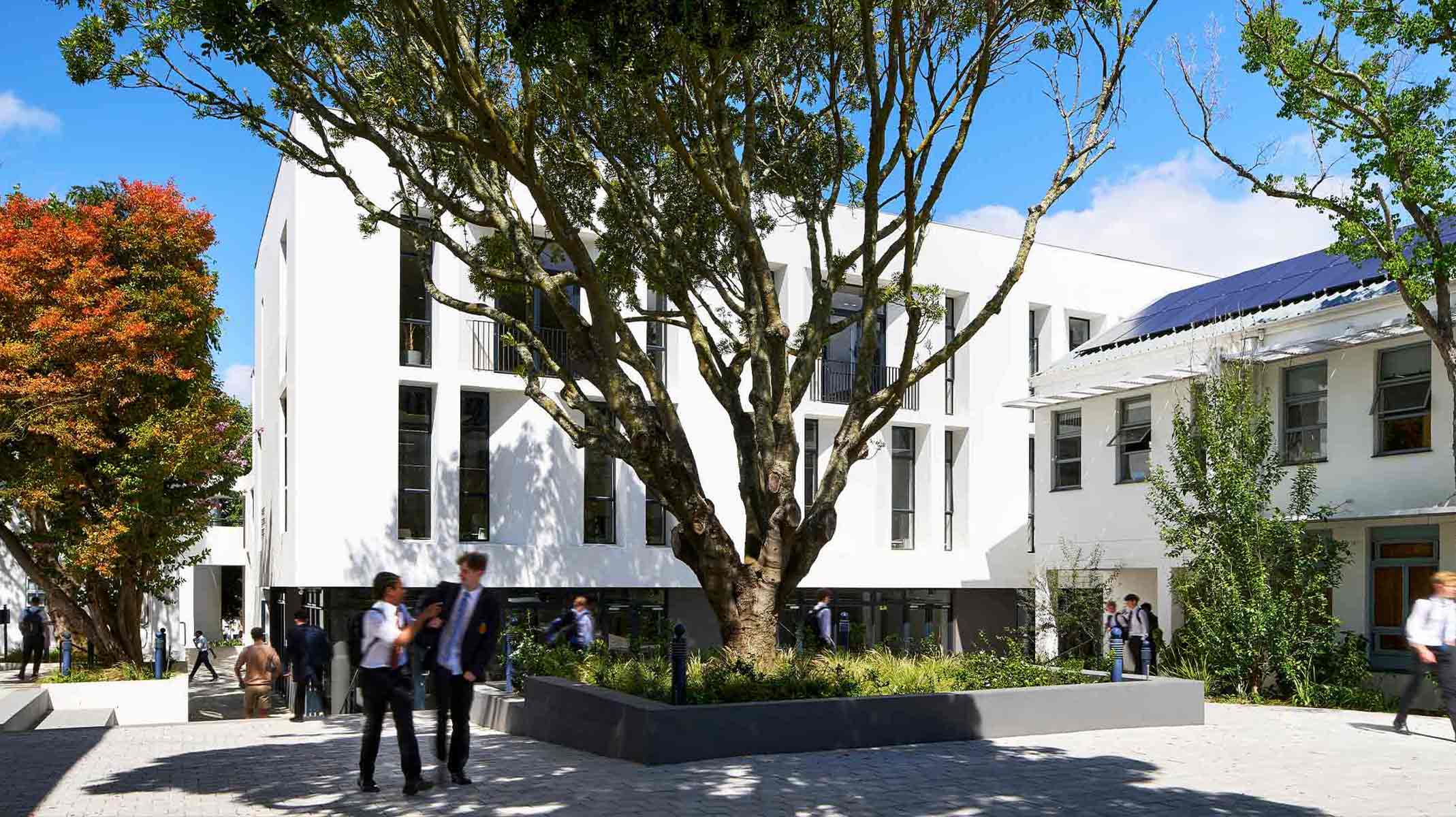
The new building was designed to tie into five existing ones, to open up visual links and improve relationships to the outside realm. It incorporates the Molteno Library, with its characteristic pitched slate roof. This is a treasured piece of the school’s history and had to be retained. The design incorporates a glazed ‘gasket’ connection to create a deliberate break between the old, pitched roof and new monolithic form hovering above it. This retains the much-loved intimacy of the library while modernising the facility.
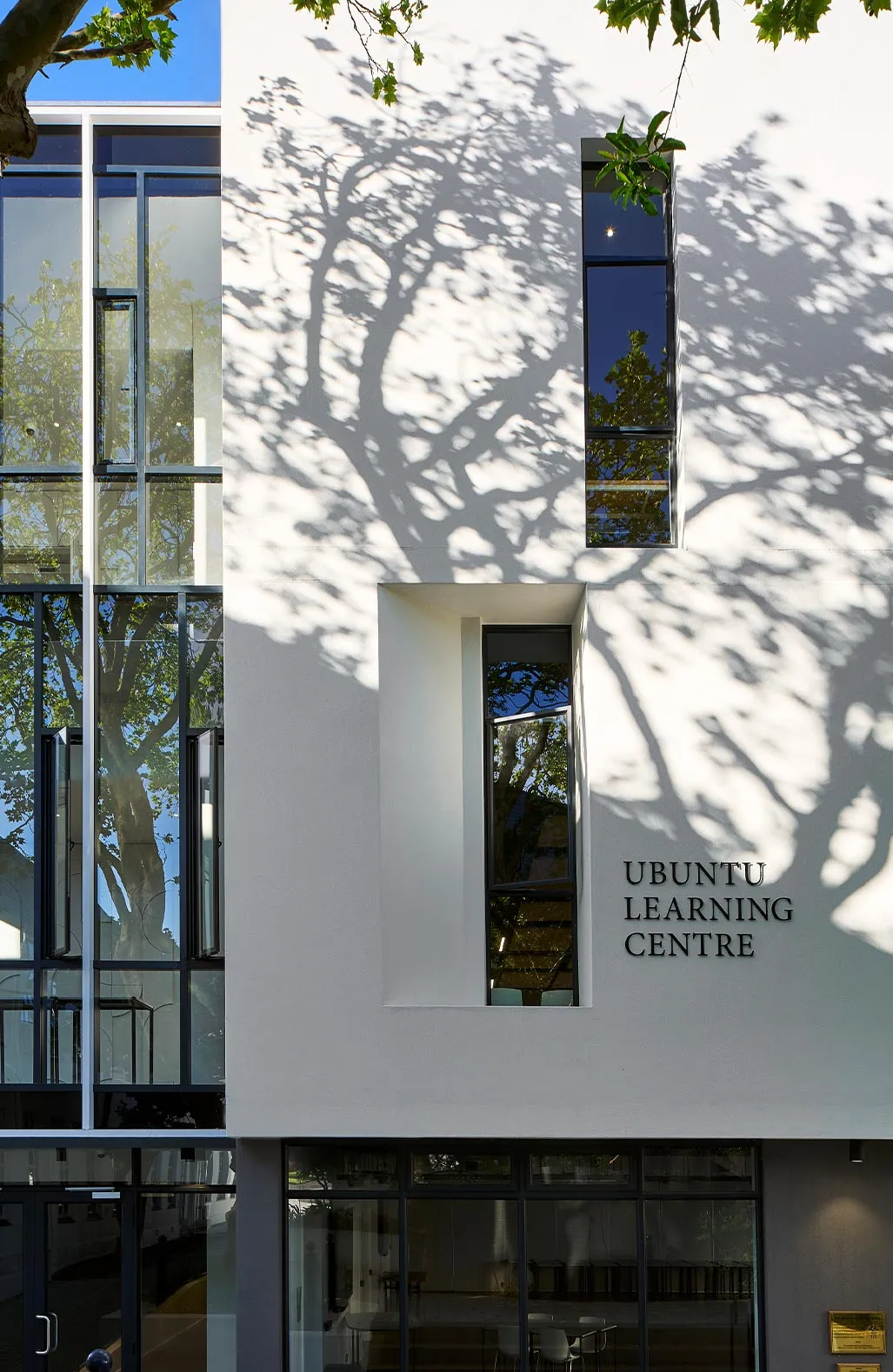
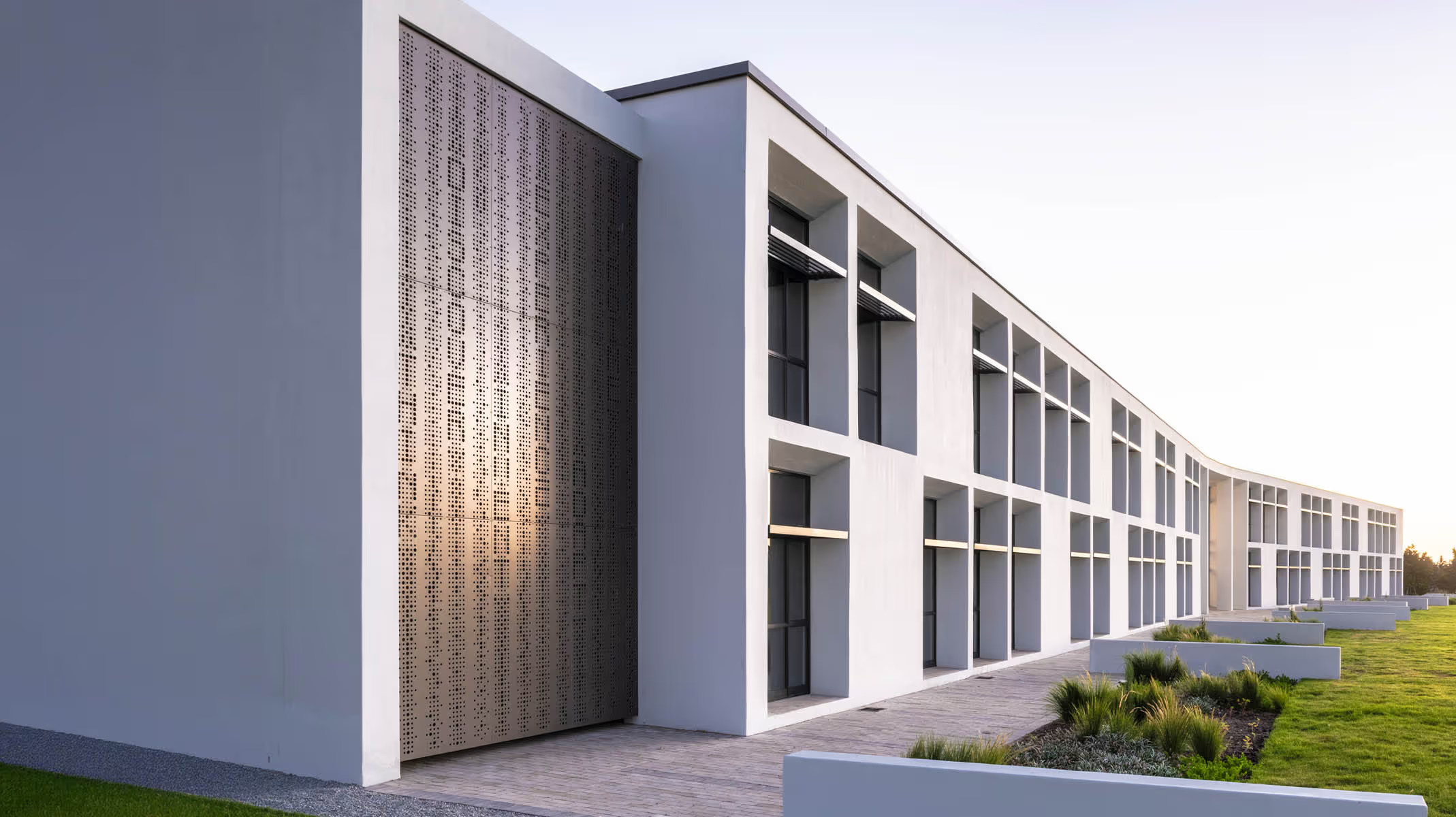
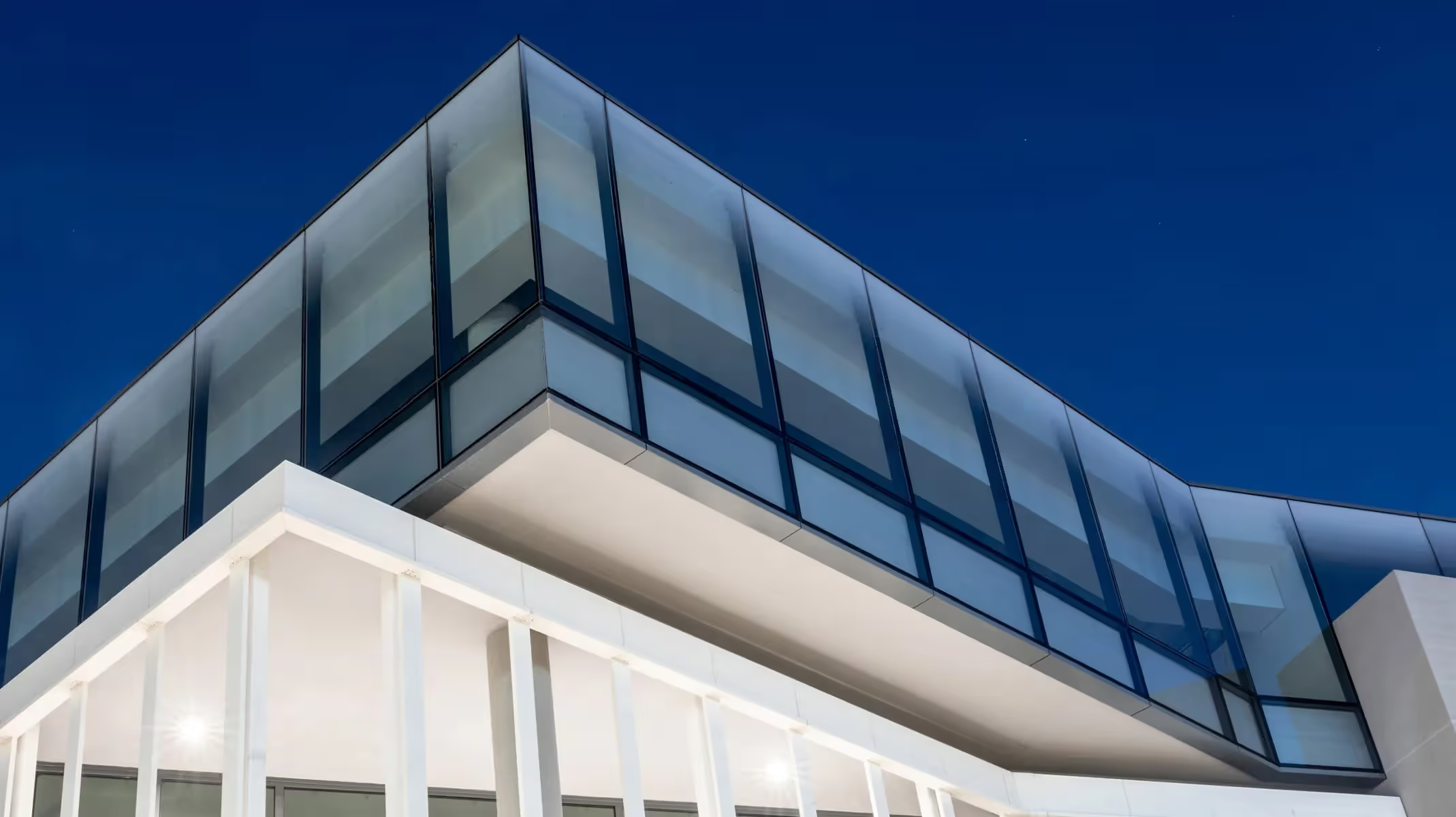
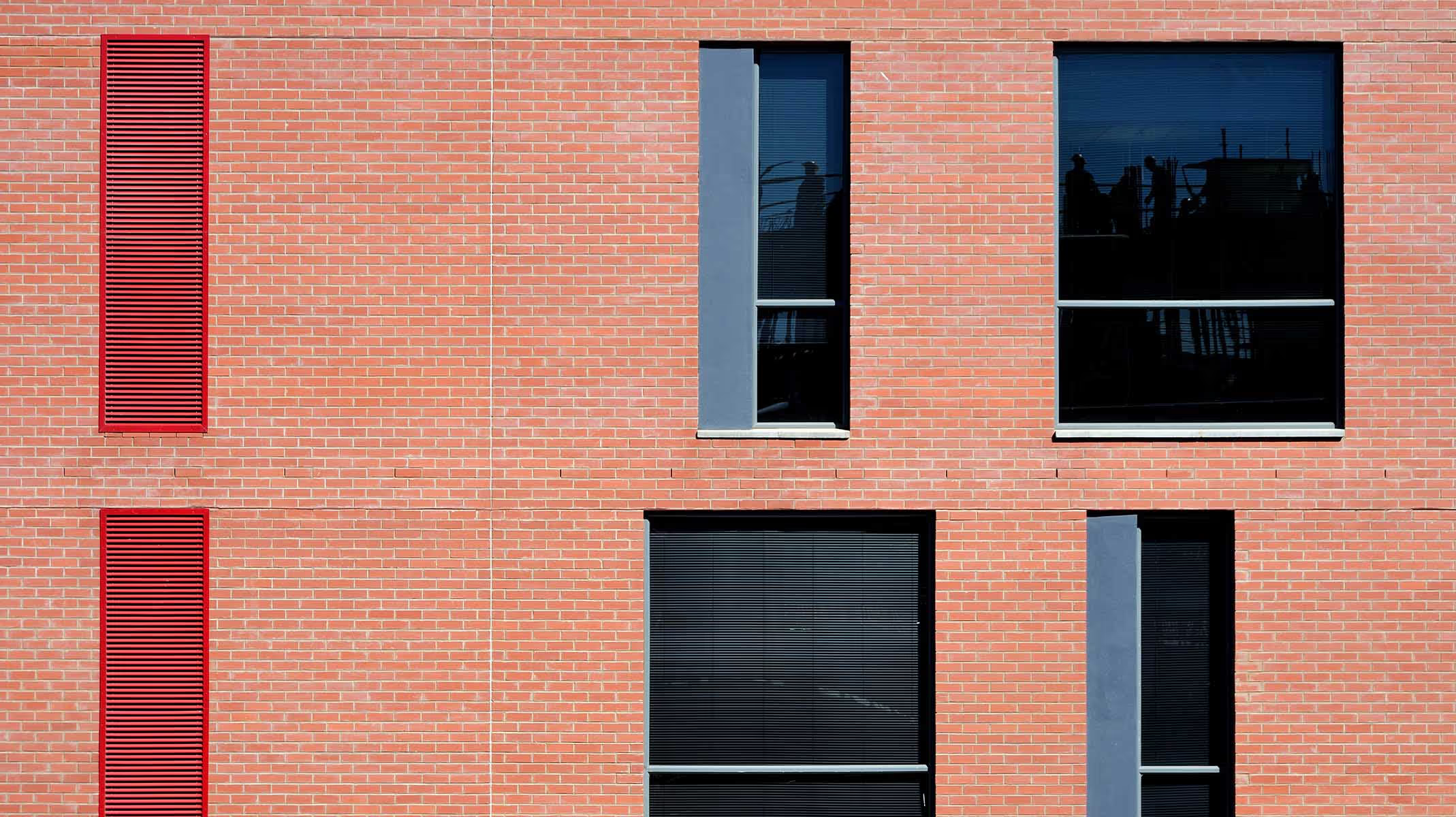
The new insertion is a large rectangular cube, designed for maximum operational flexibility. To lighten its impact within the historical campus, the cube is conceptually ‘lifted’ off the ground floor. This approach notionally extends the ground plain beyond the building’s walls, creating greater connection to the immediate surrounds and establishing the building’s presence within the campus. The new façades feature deep, tall windows with angled reveals which introduce a playful abstraction that references elements of the existing campus architecture.
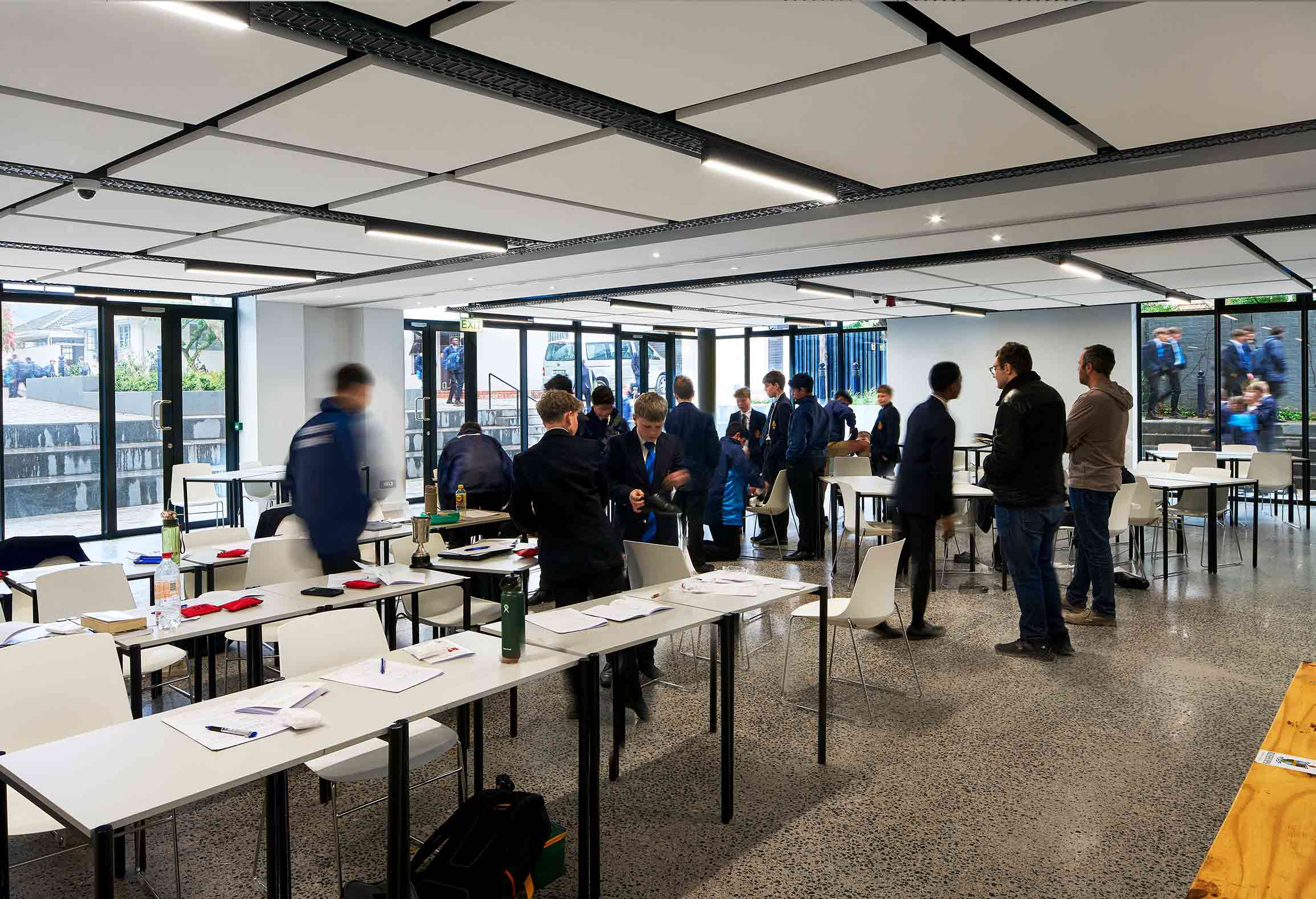
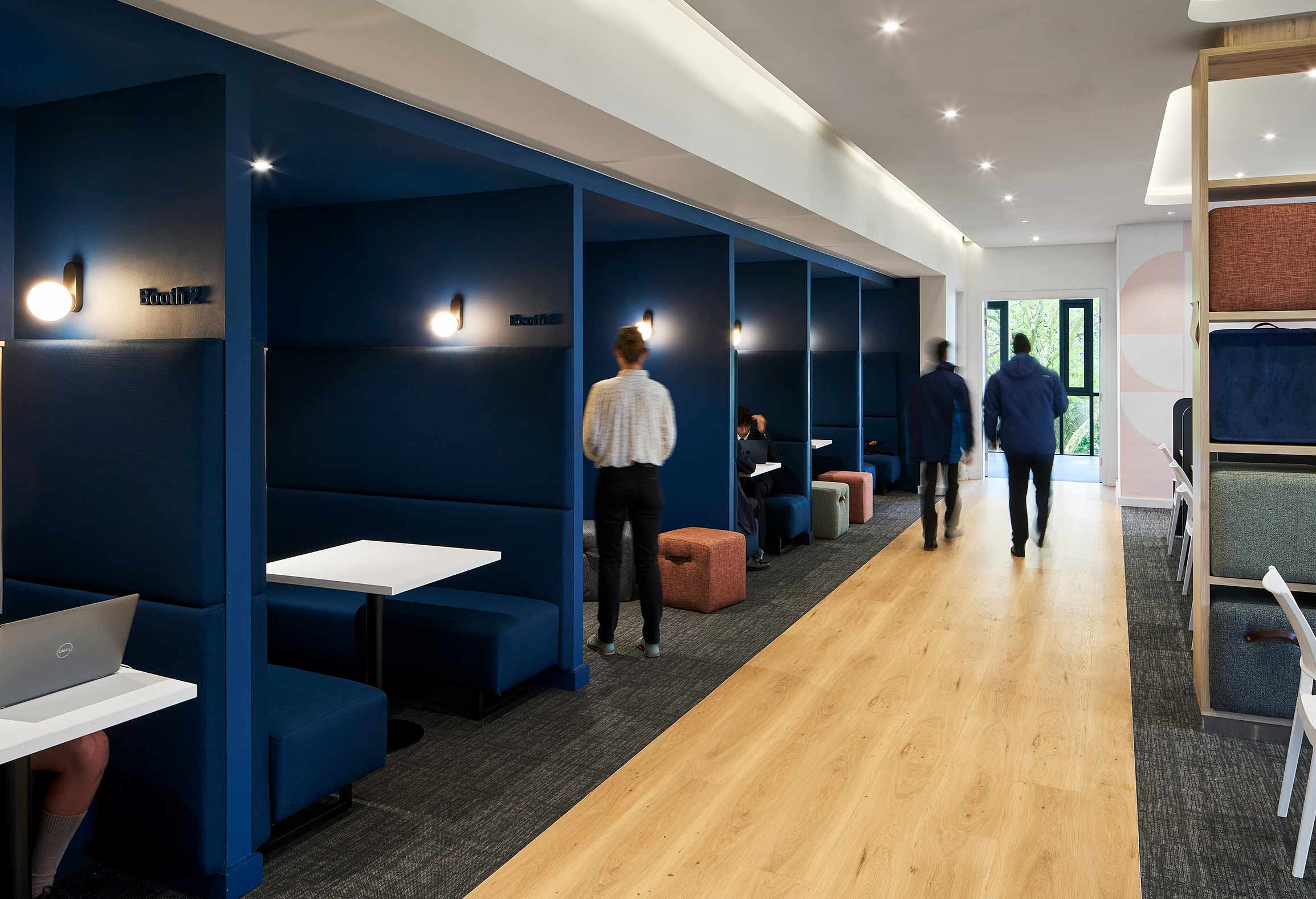
The new addition creates a modern learning environment that offers a range of flexible spaces to support various learning styles, while accommodating places for private study and more public spaces.
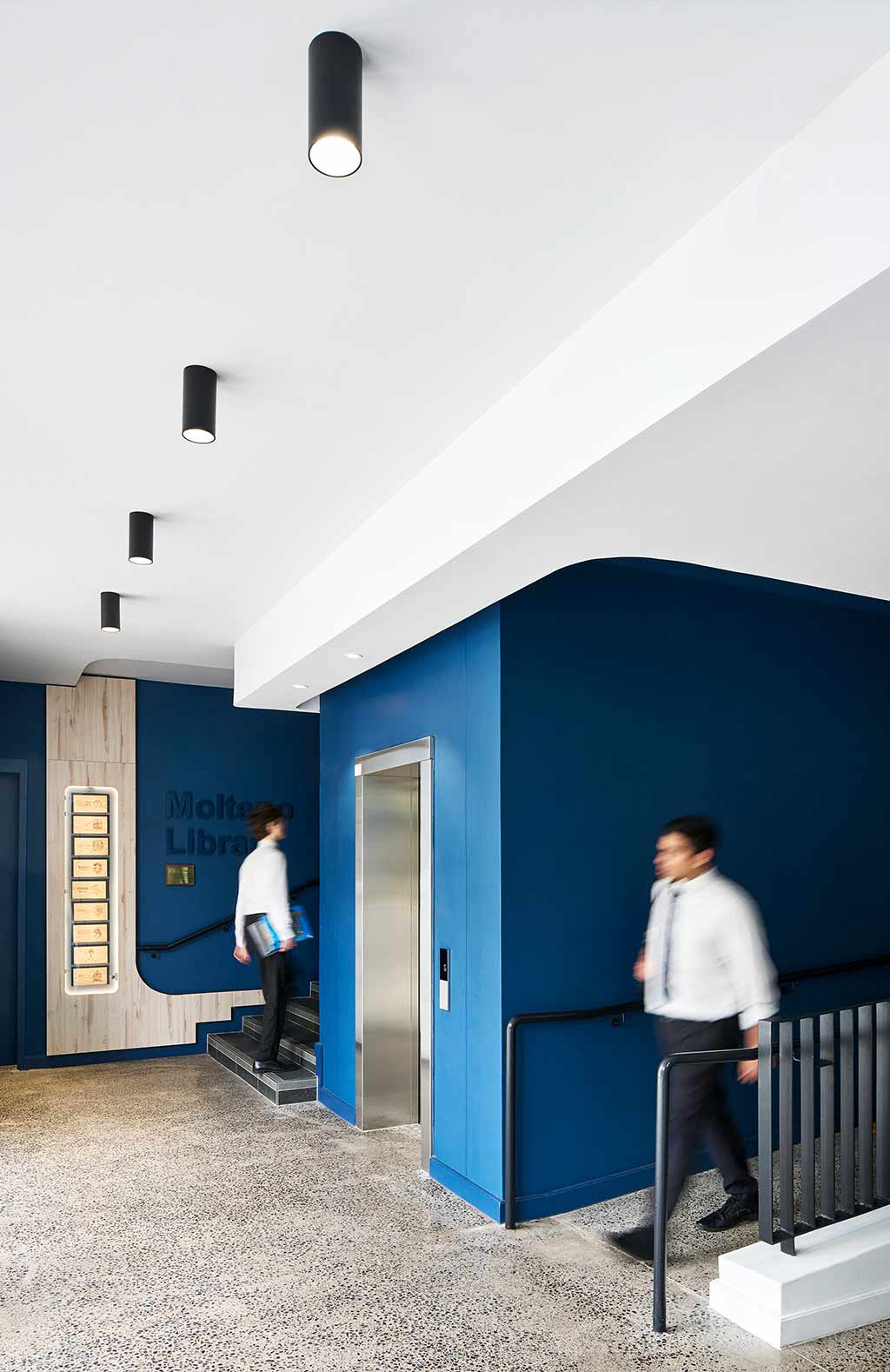
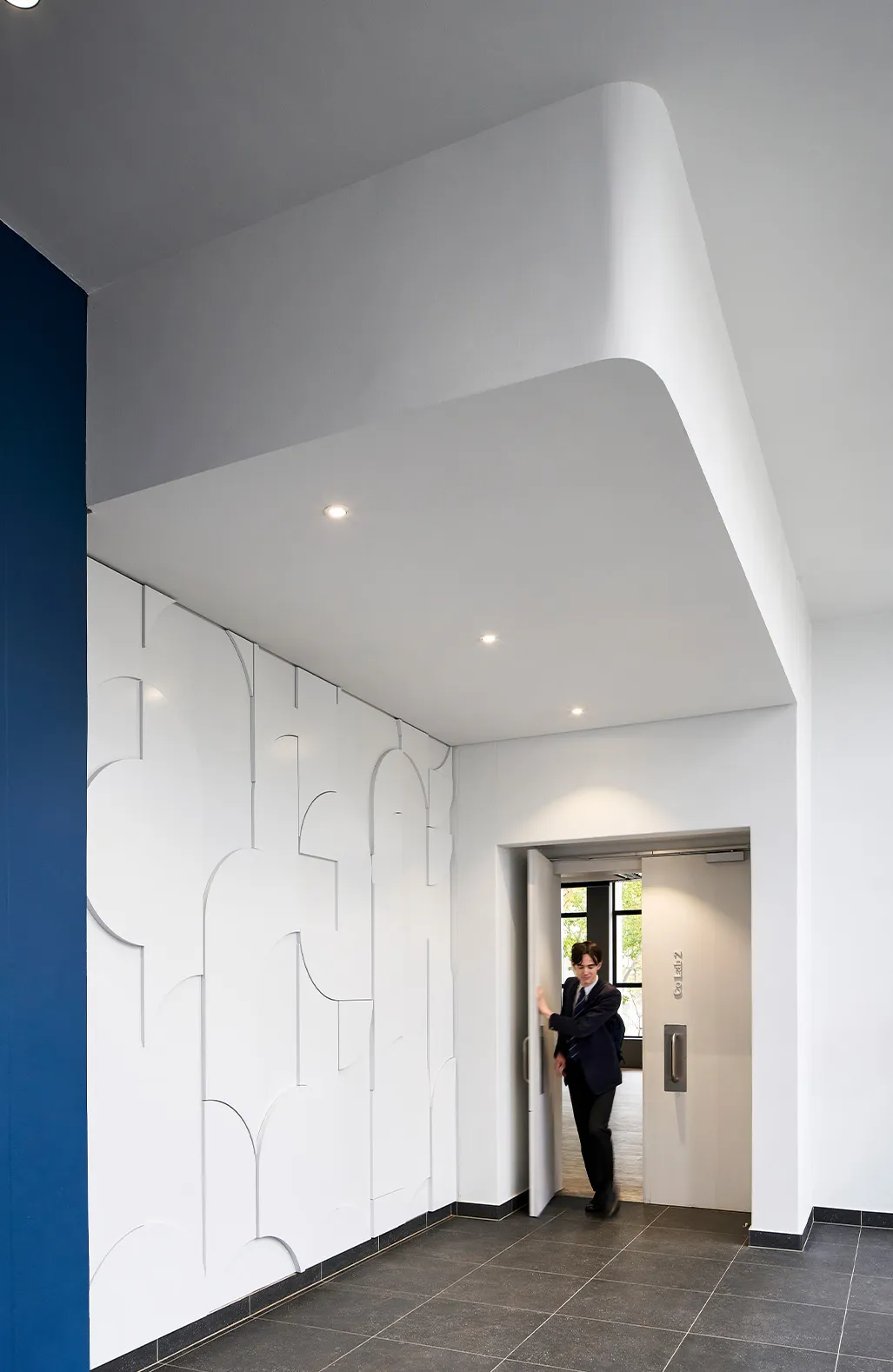
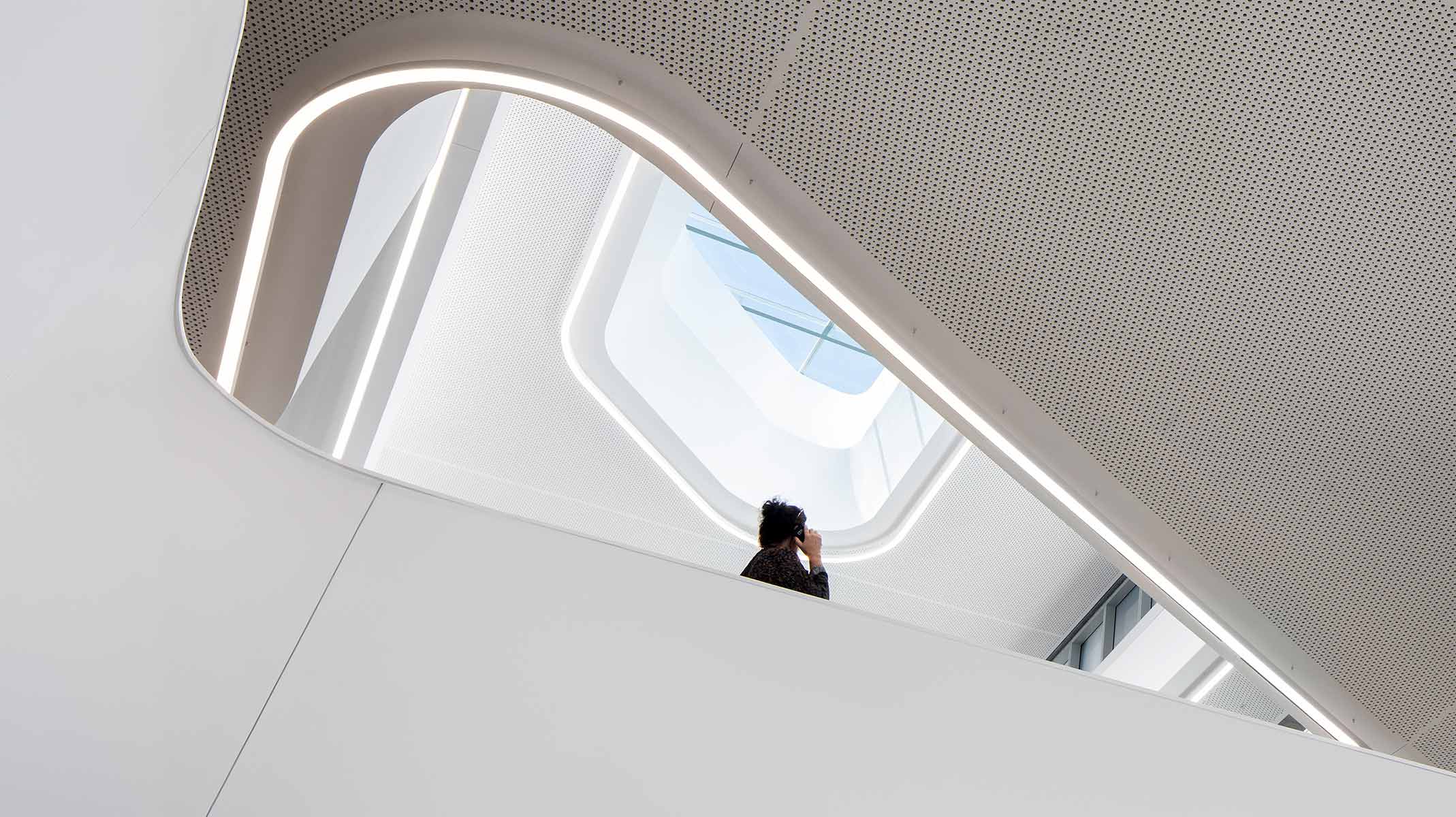
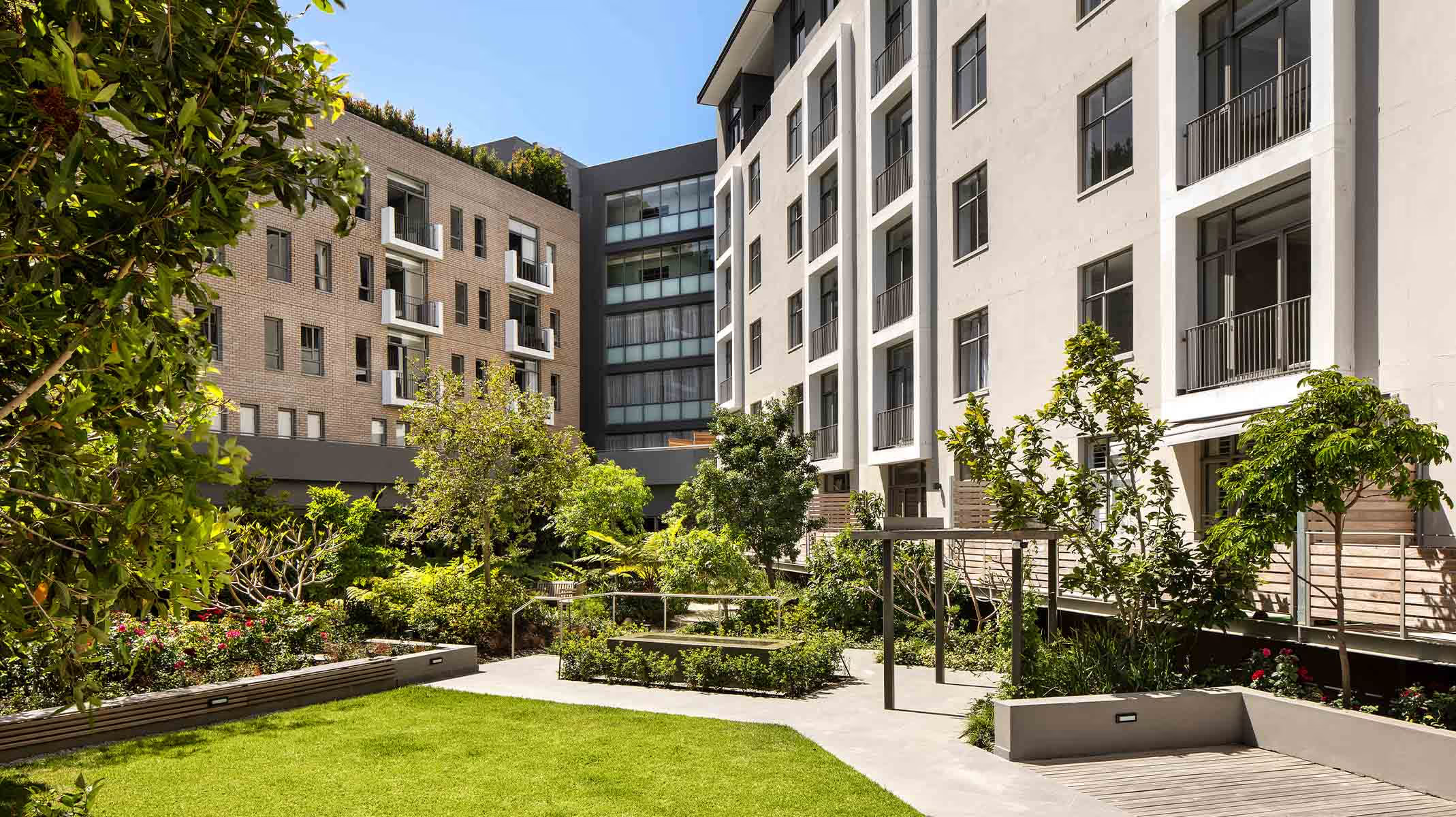
A key conceptual idea was to create a vertical privacy gradient, balancing the busy openness of the ground floor with the need for more focused workspaces for study and private staff facilities on the upper levels. Spaces are flexible, enabling students to choose places that suit their current mood and individual learning style. Extensive glazing creates a strong indoor-outdoor connection and effectively extends the usable space. Access to and within the building has been carefully planned to optimise flow, functionality and circulation while meeting safety requirements. The stairways and circulation areas also form common spaces, and one staircase wall has been identified as a gallery space where exhibitions of student artwork can contribute to the building's evolving character. A new glazed bridge link improves flow between the buildings and enhances wheelchair access. This resolves mobility issues and creates seamless access throughout the space in inclement weather.
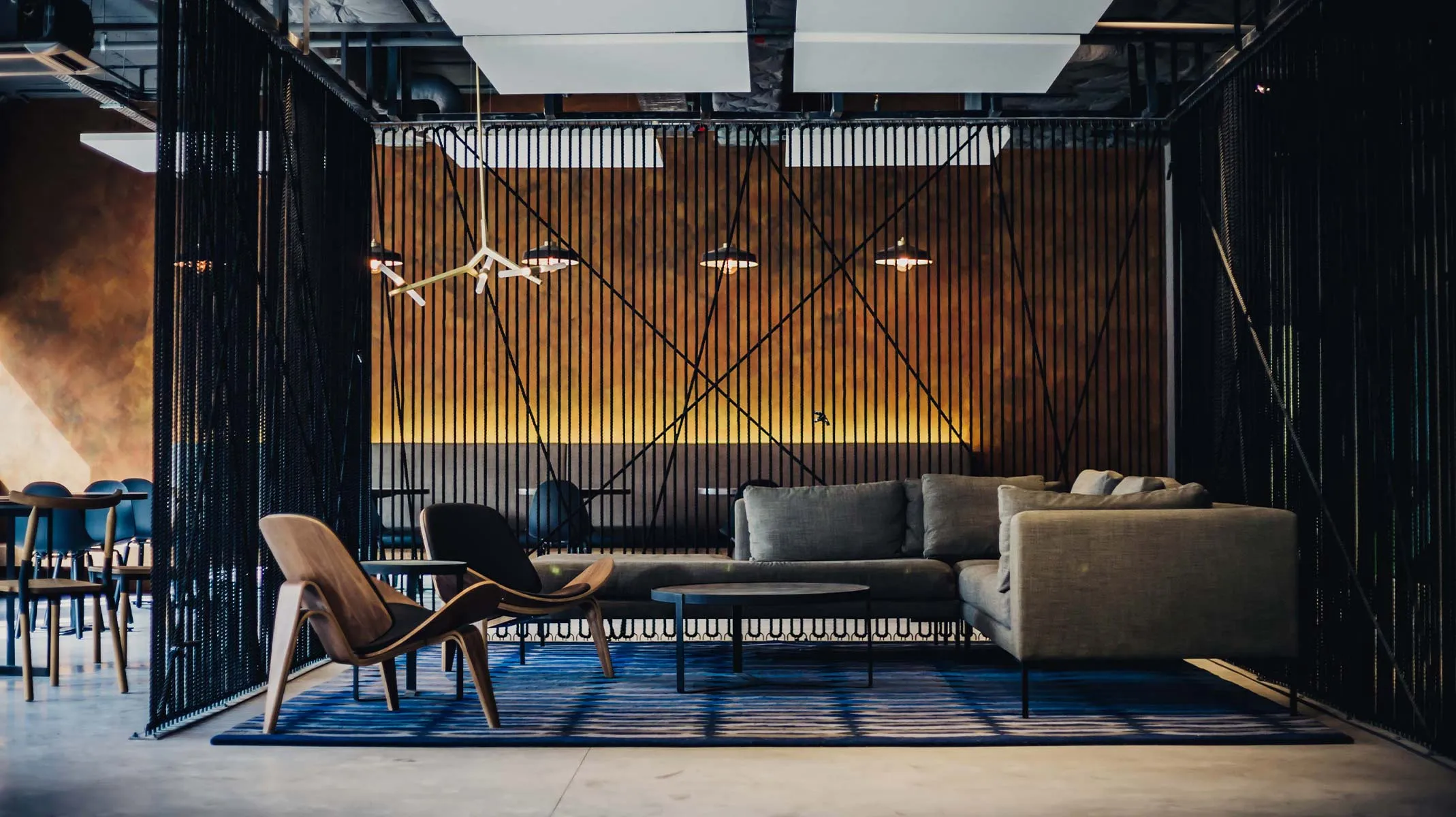
The interior design follows a visual thread, with colour palette and materials carefully curated to create a calm yet stimulating environment, with an understated aesthetic devised to endure, avoiding trendy design elements that might date quickly. The colour scheme honours the Bishops corporate identity, with complementary colours adding a playful element.
Sustainable features have been integrated throughout the design and materials are robust, durable and locally sourced so elements can be easily replaced when necessary. Applying adaptive reuse principles, the project repurposes existing spaces which significantly reduced the environmental impact. These spaces can be configured and adapted as needs change, improving the long-term sustainability of the building.









.avif)


%20(cover).avif)


.avif)
.avif)
.avif)