[ view project ]

Overview
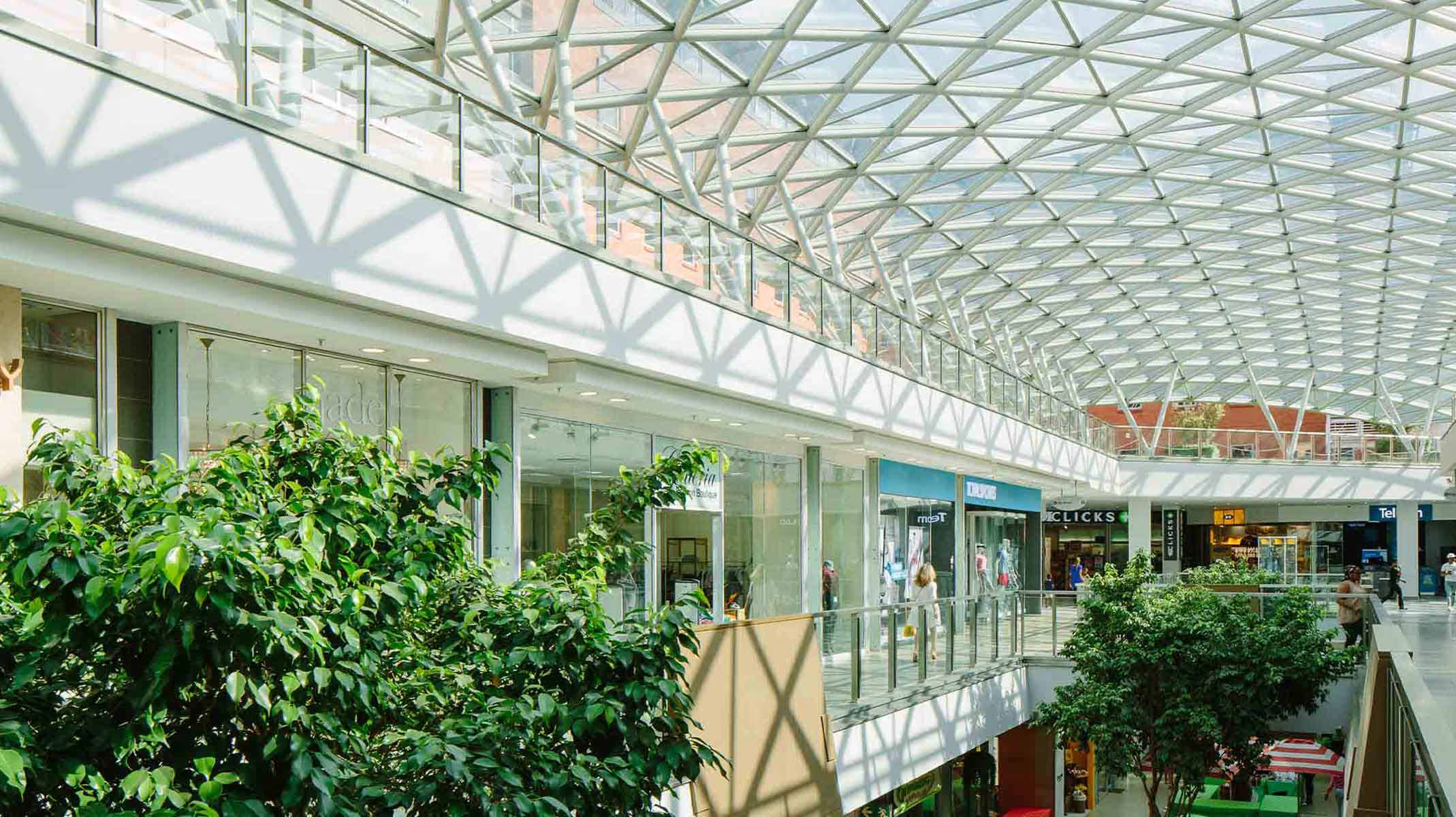
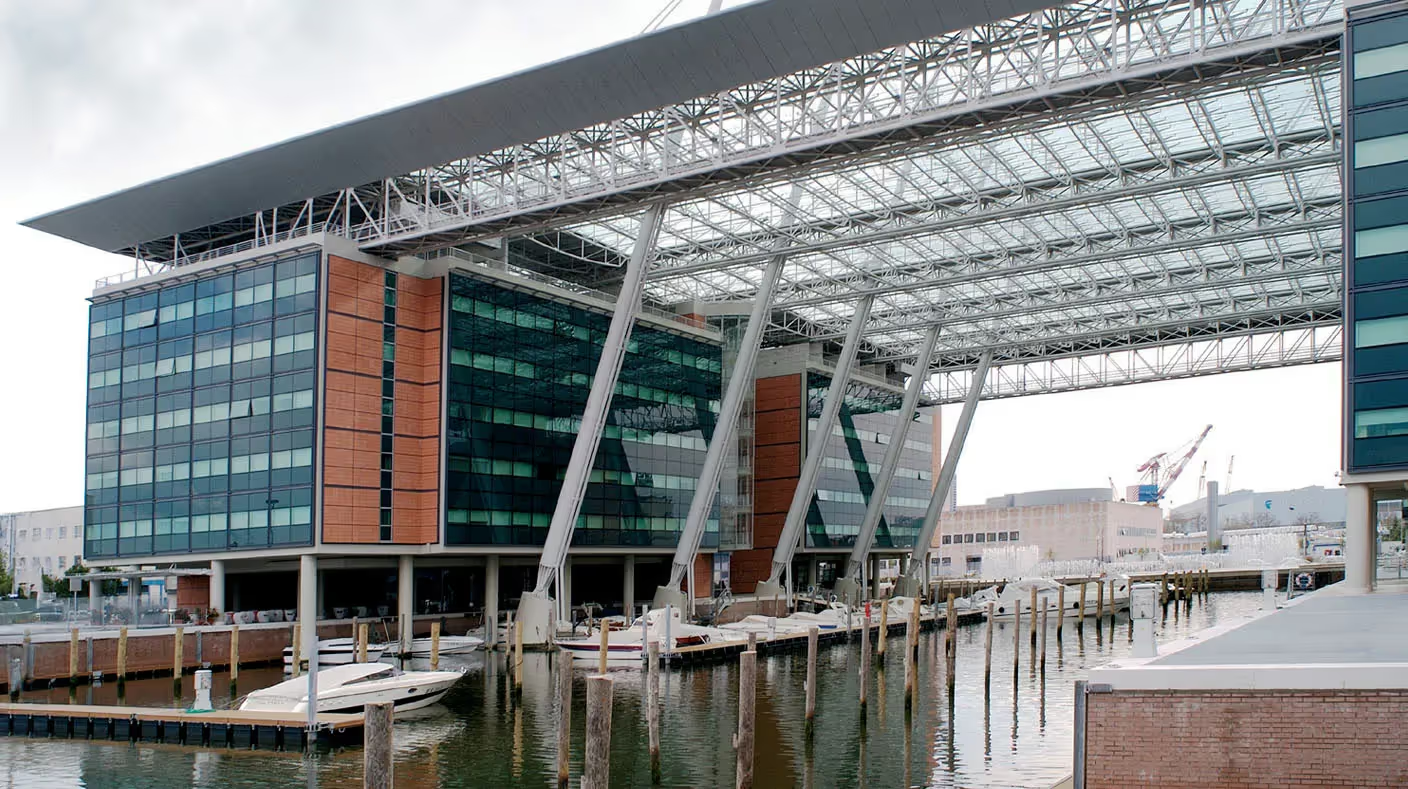
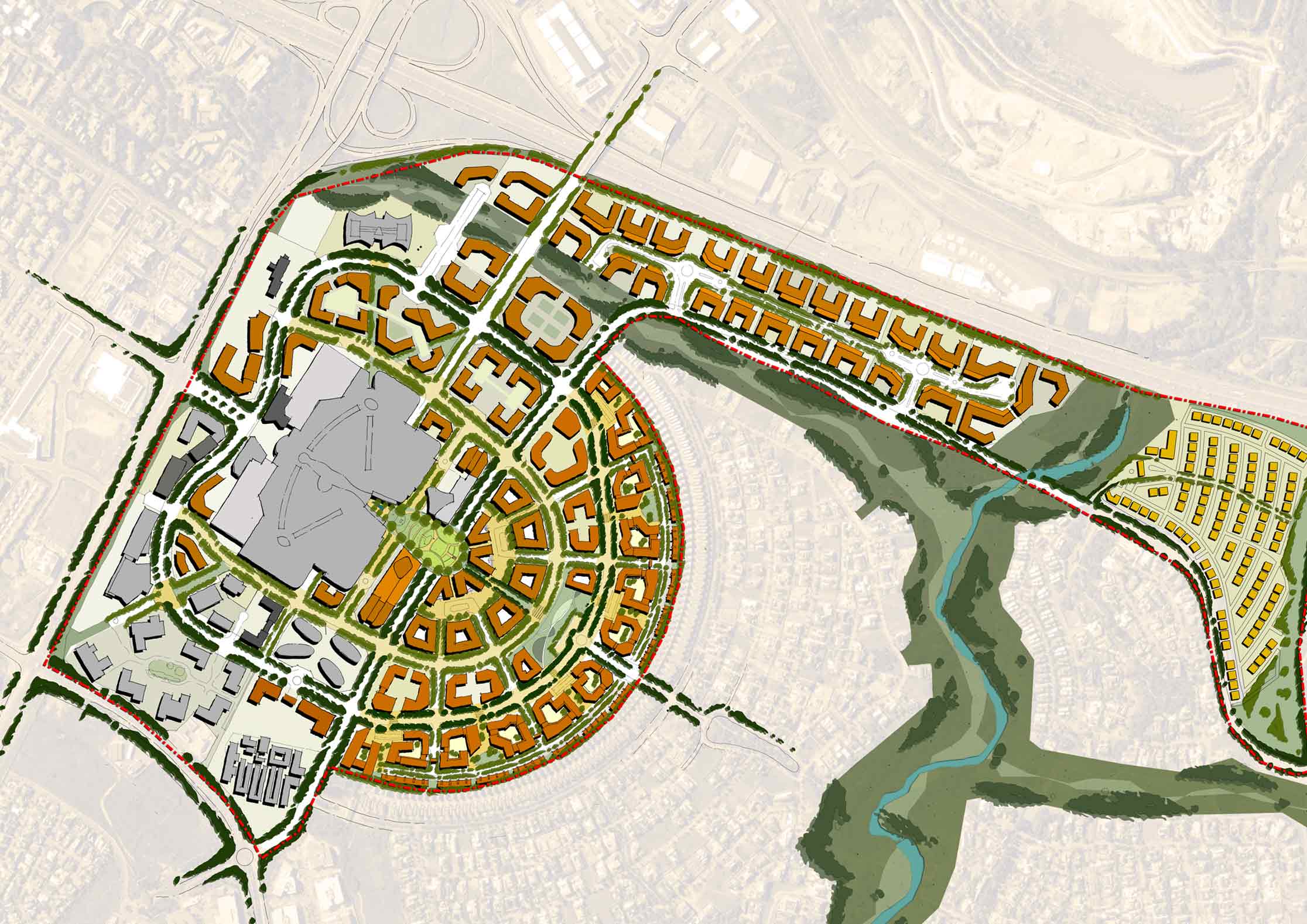
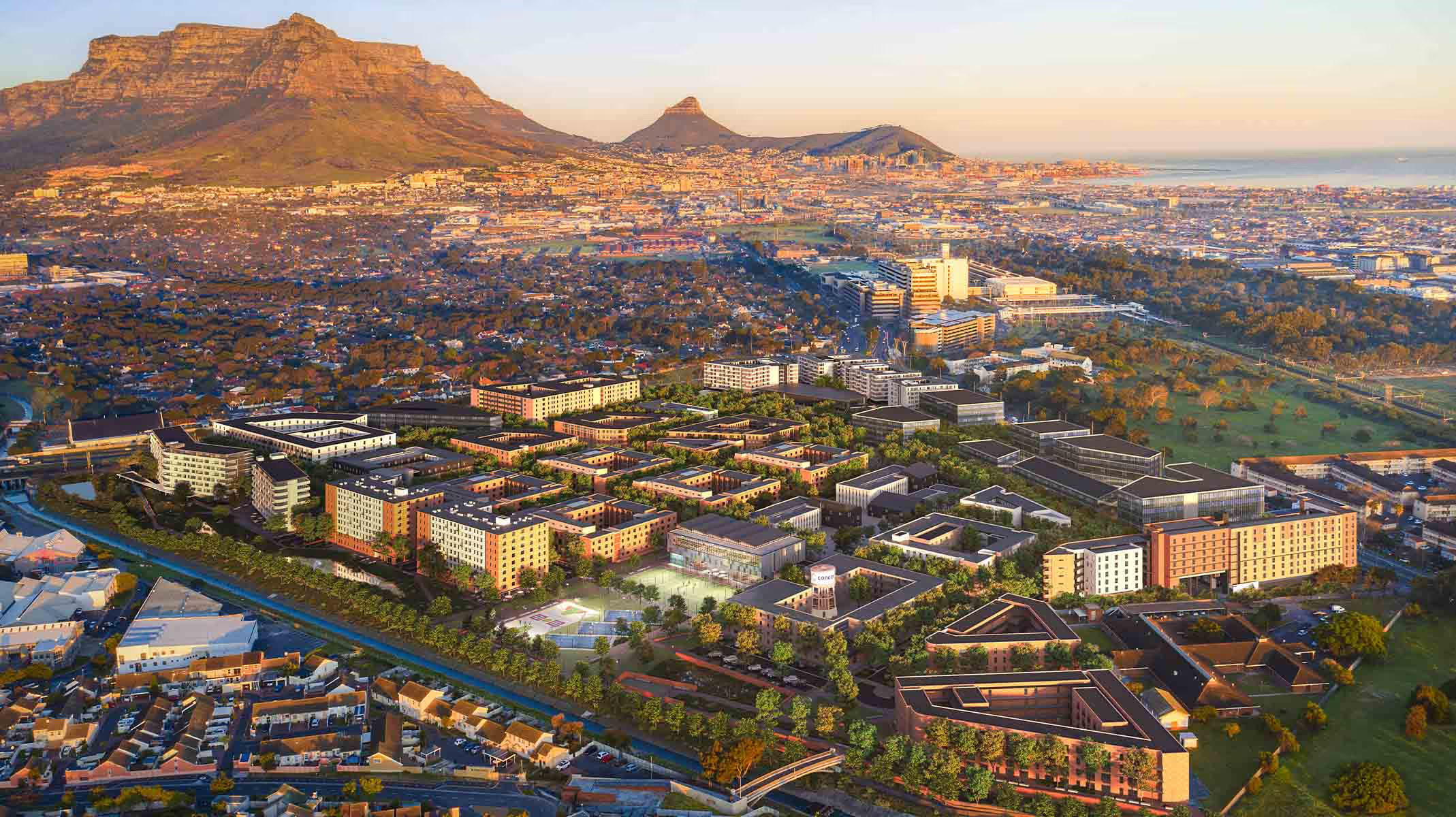
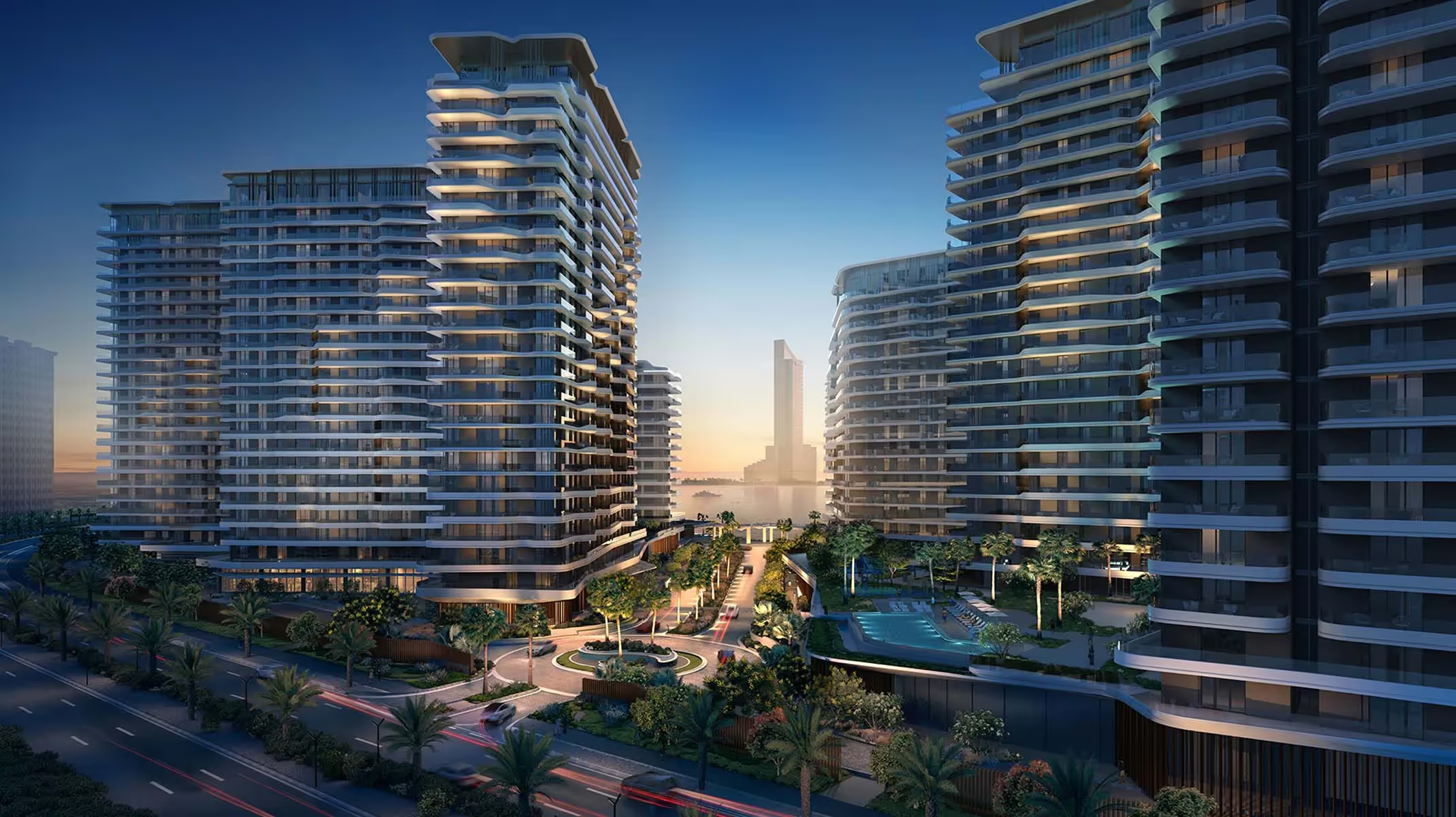
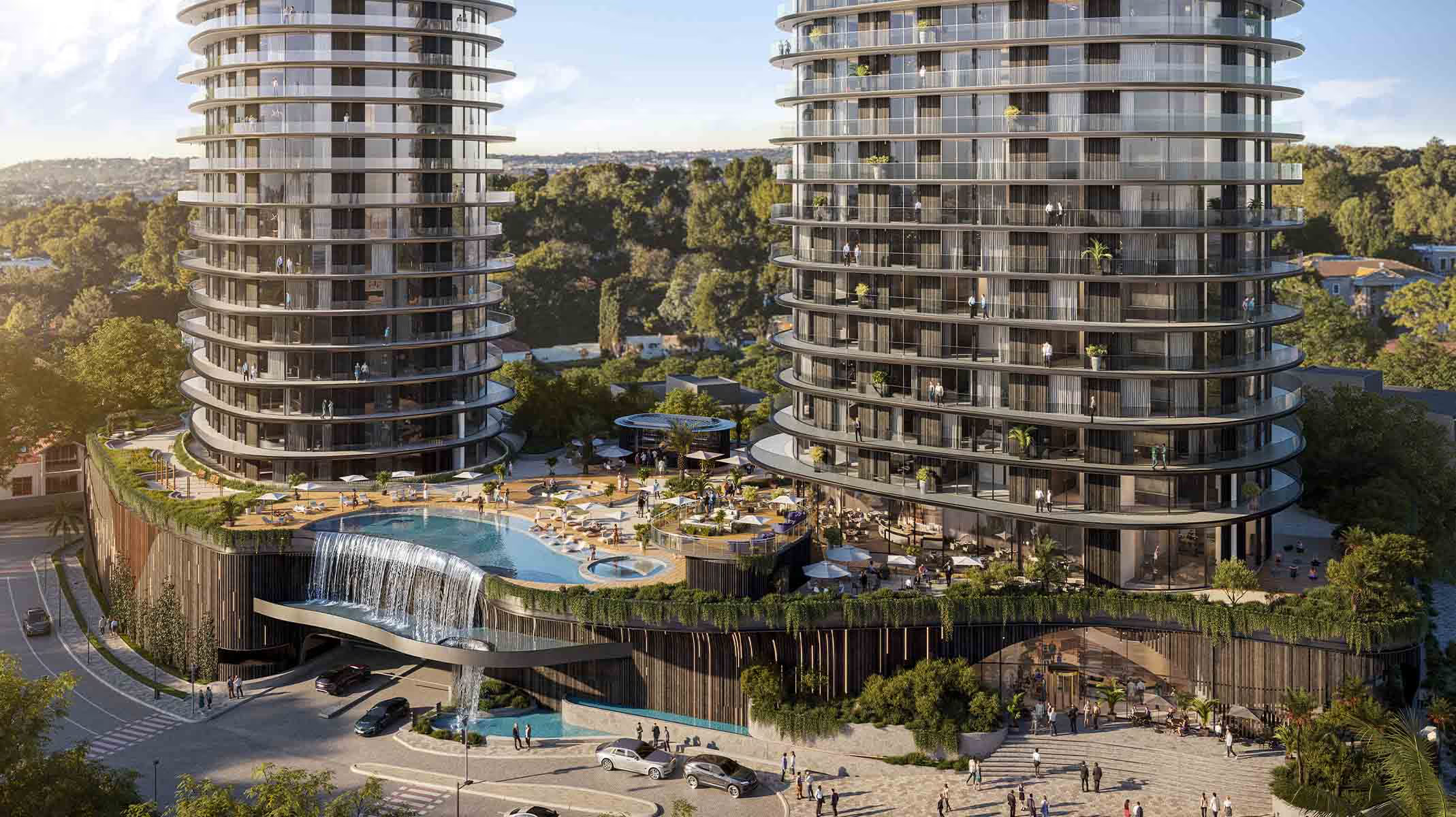
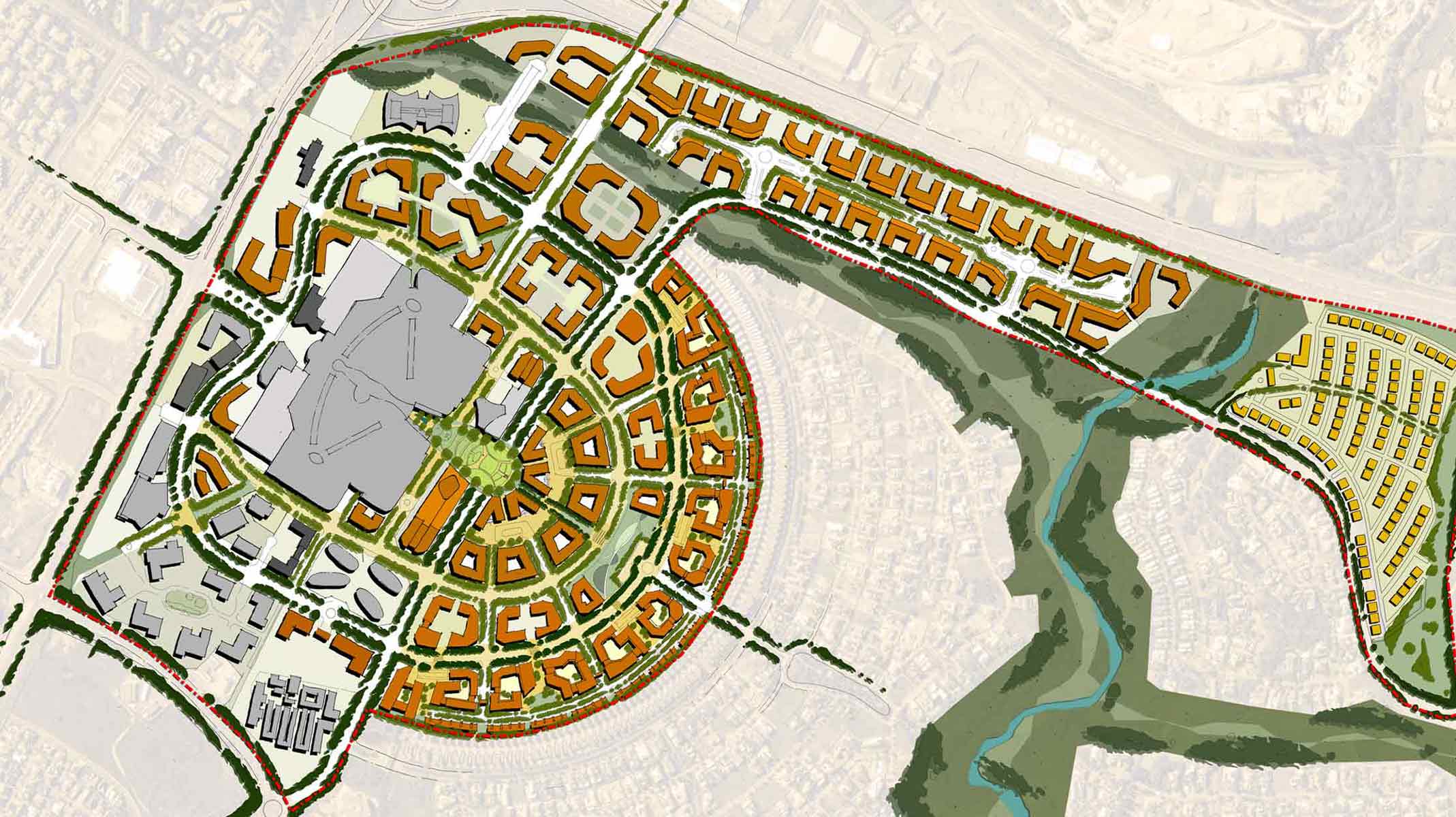
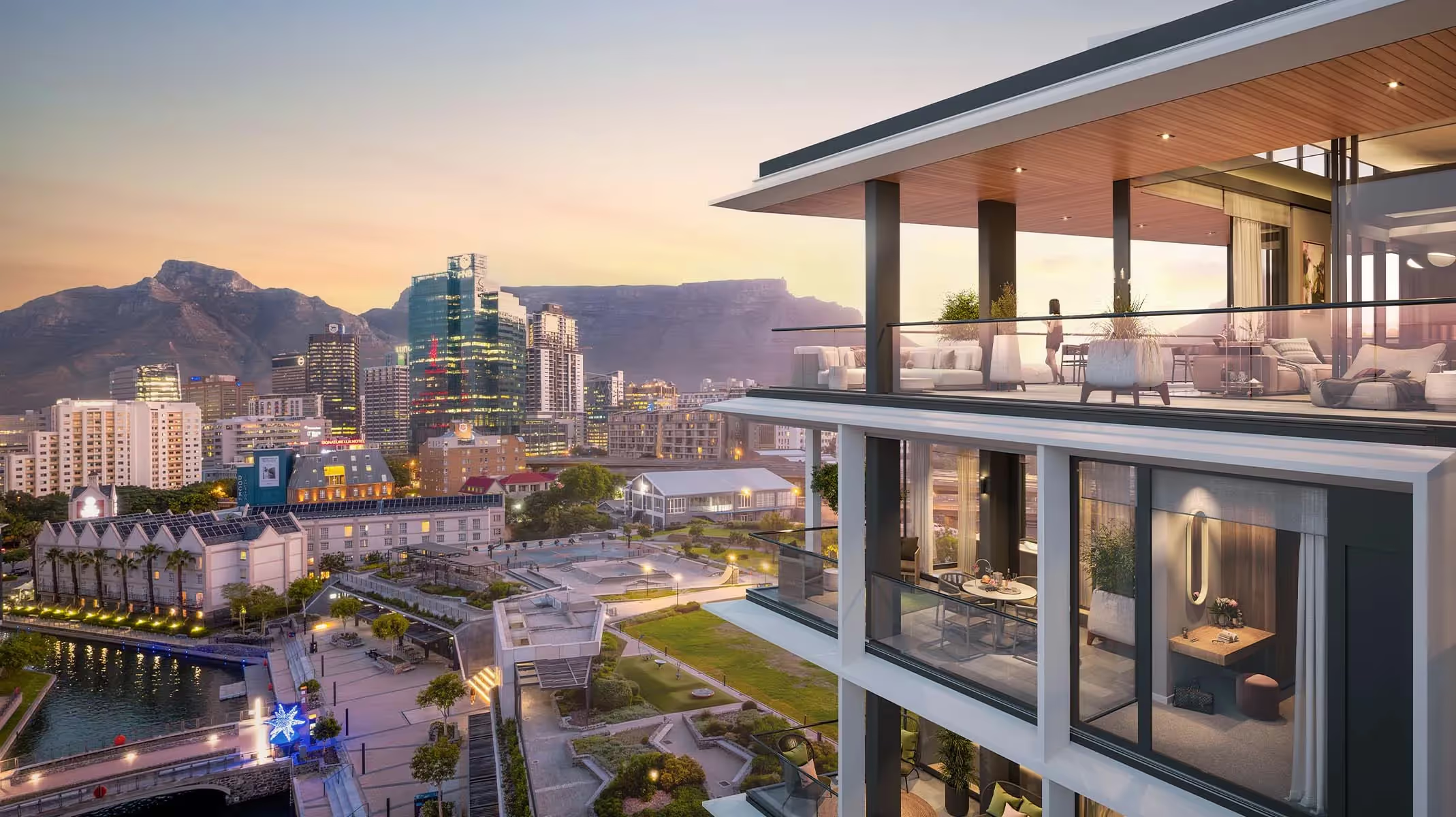
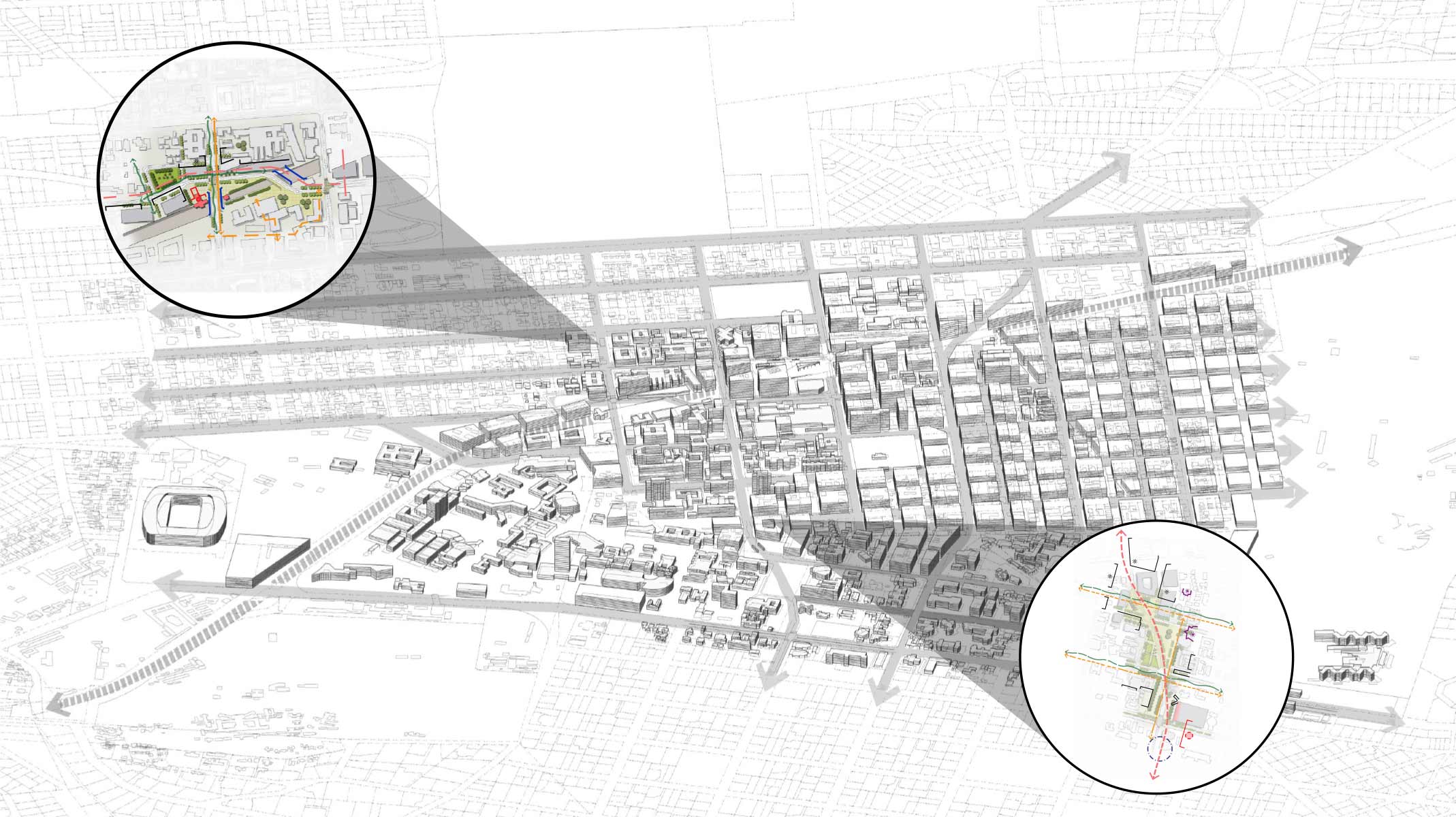
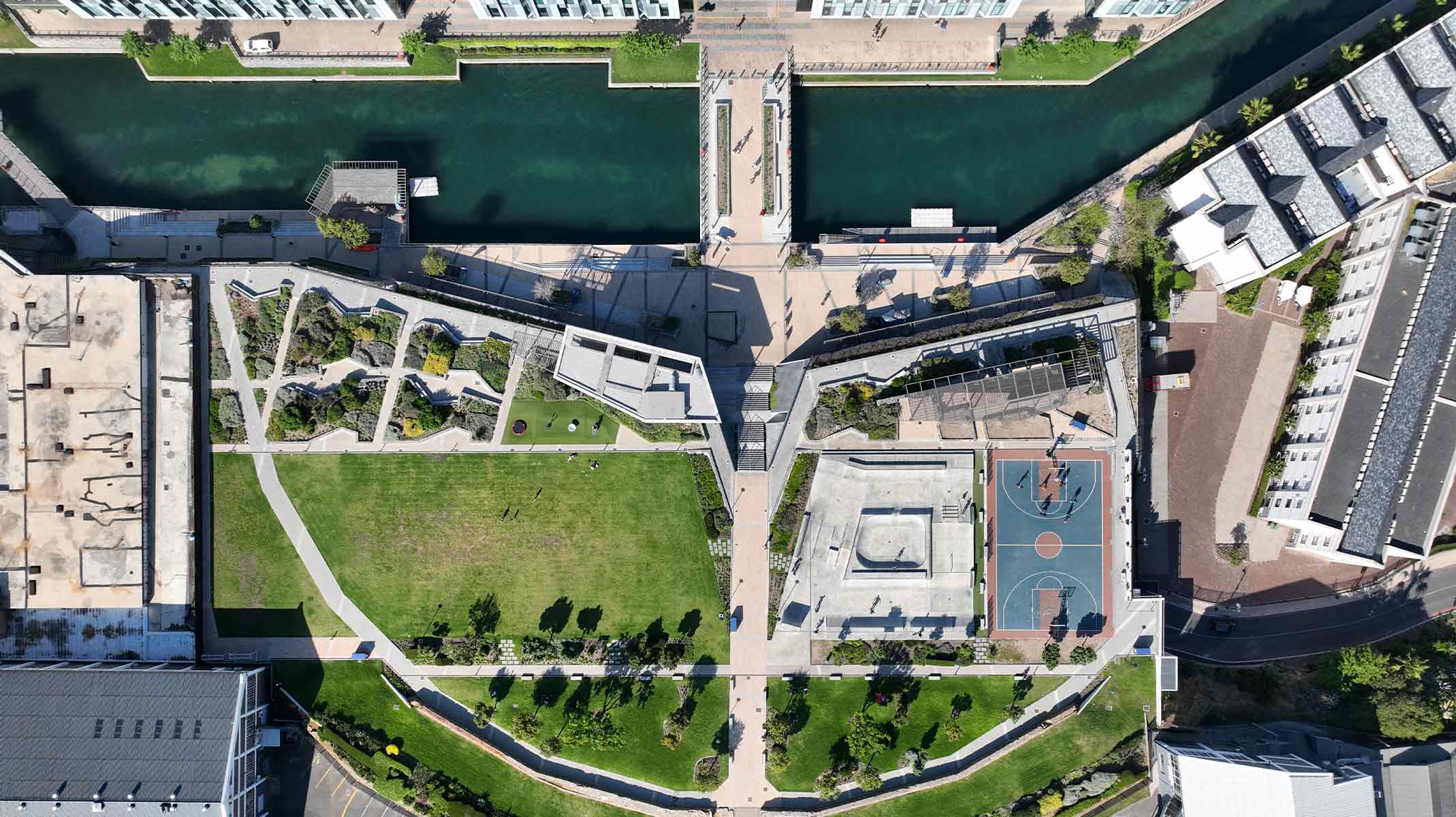
Waterfall City in Midrand lies to the north of the Johannesburg CBD. The area is earmarked as a future major node in the Gauteng city region. Waterfall City occupies a strategically significant position between Johannesburg and Pretoria, anchored by the Mall of Africa, a large shopping mall at the centre. Despite an original vision for a high-density, walkable, mixed-use city centre, the CBD has developed as a series of isolated, single-use buildings arranged around a vehicle-dominated street network that is disconnected, difficult to navigate on foot and lacking a coherent public realm.
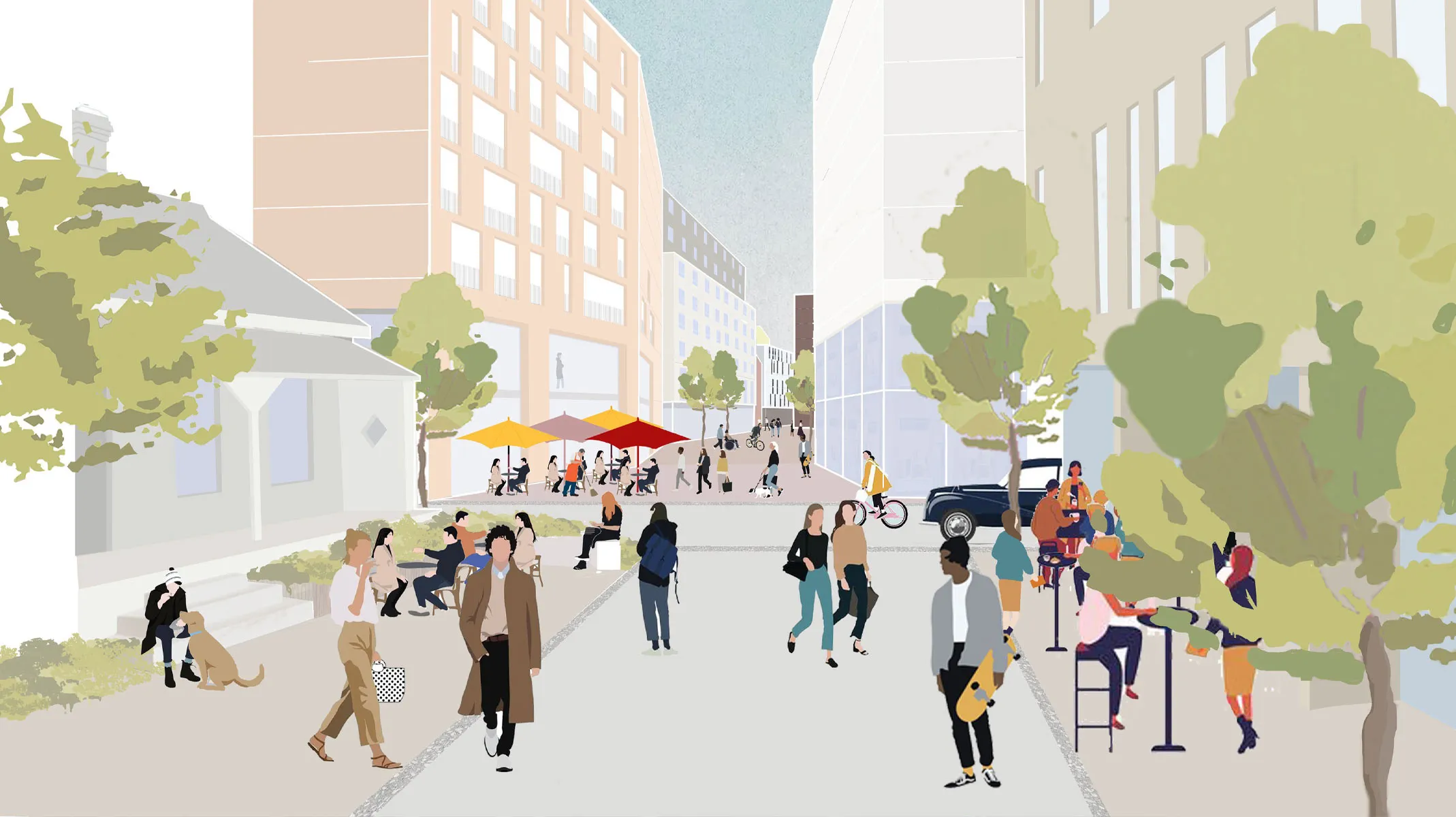
Attacq appointed dhk to review and update the existing urban design framework. The result is a comprehensive, people-first framework with enforceable design guidelines for the precinct. This response restructures Waterfall City CBD around pedestrian movement, connected open space and a clear hierarchy of streets.
Design response
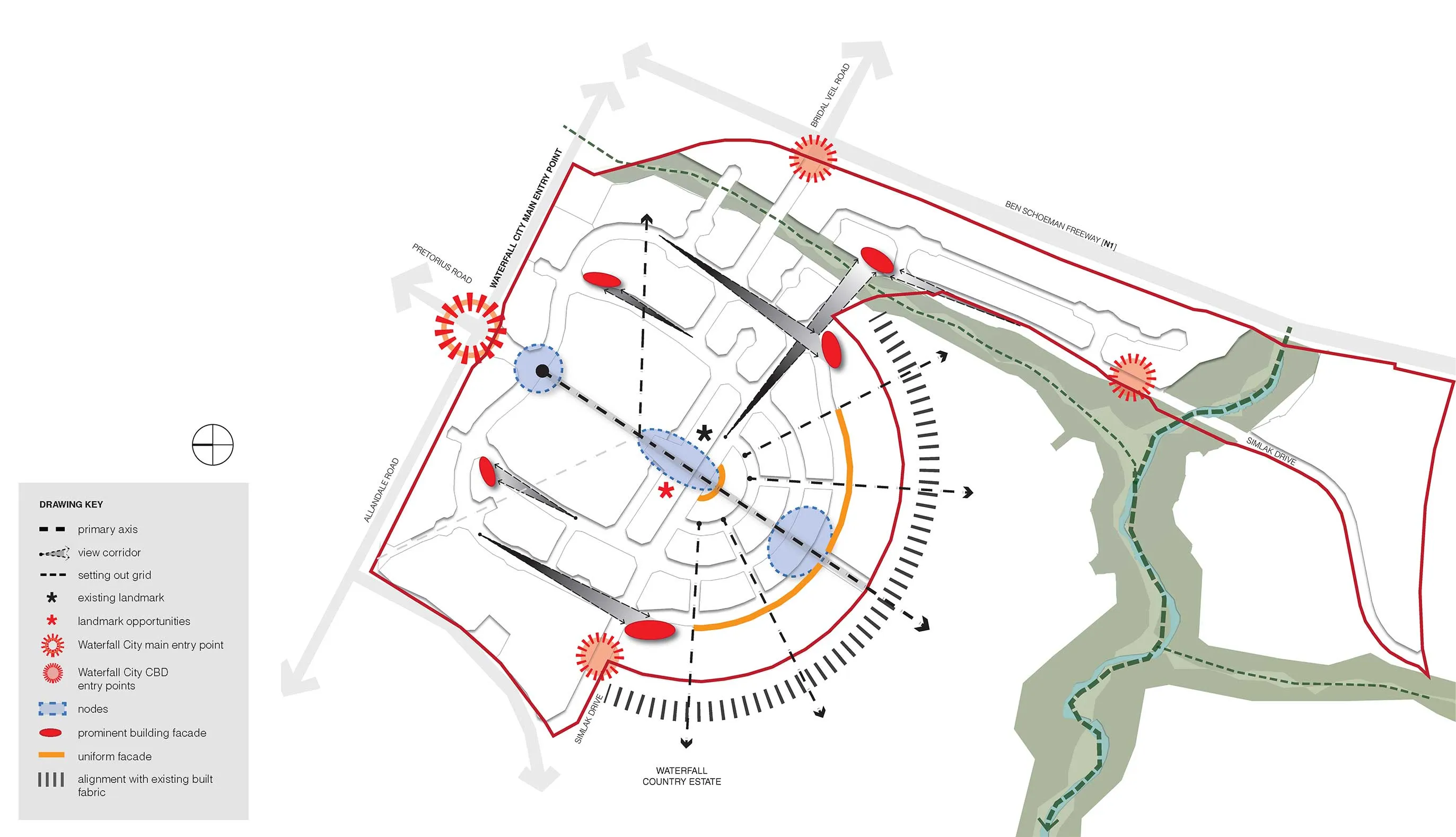
The framework is organised around nine urban design principles: intensification, permeability, connectivity, legibility, quality, identity, sustainability and resilience, greening and landscaping, and safety and security. Together these principles address both the structural failings of the existing precinct and the qualitative conditions needed to make it a viable, active urban environment.
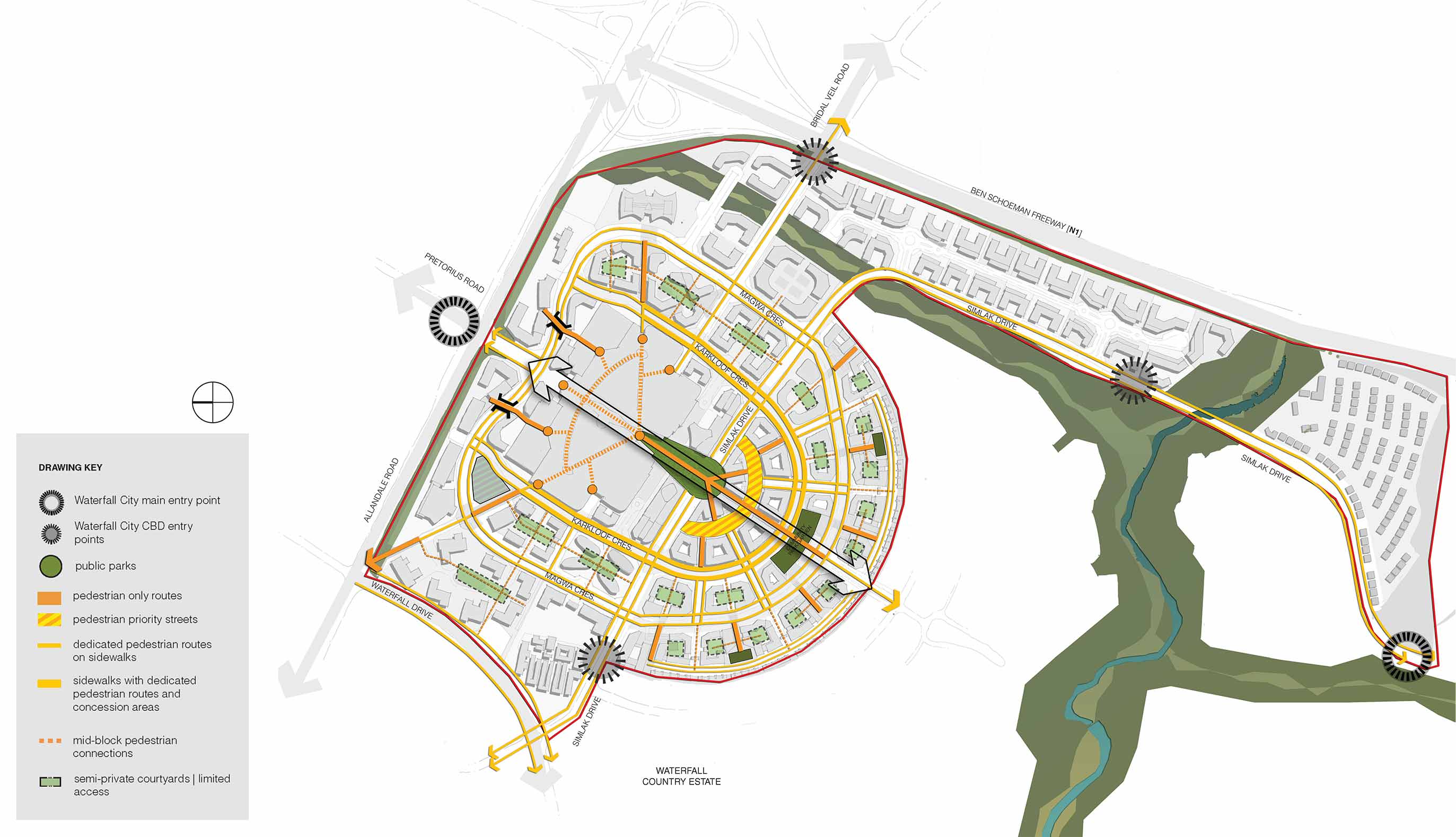
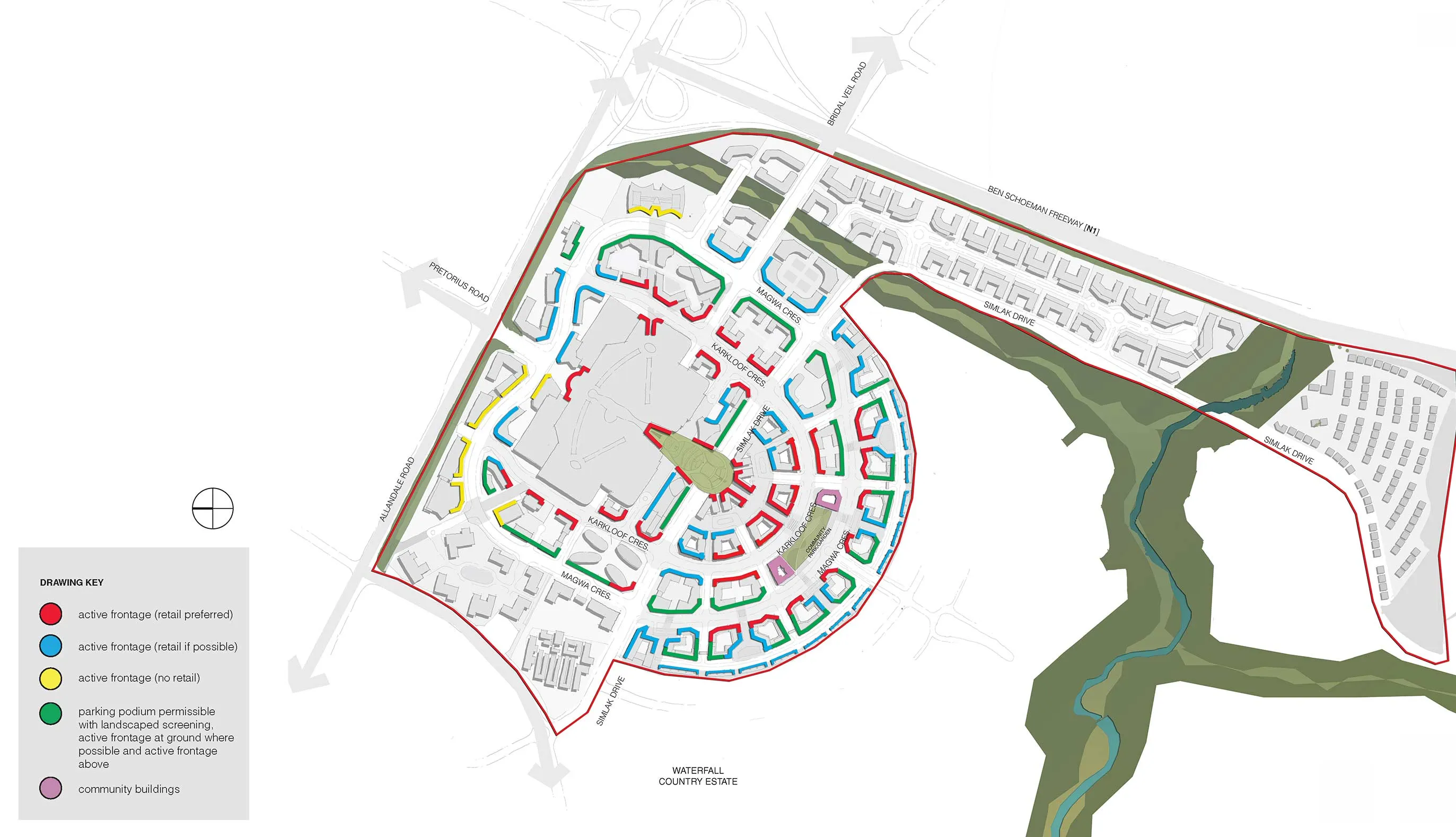
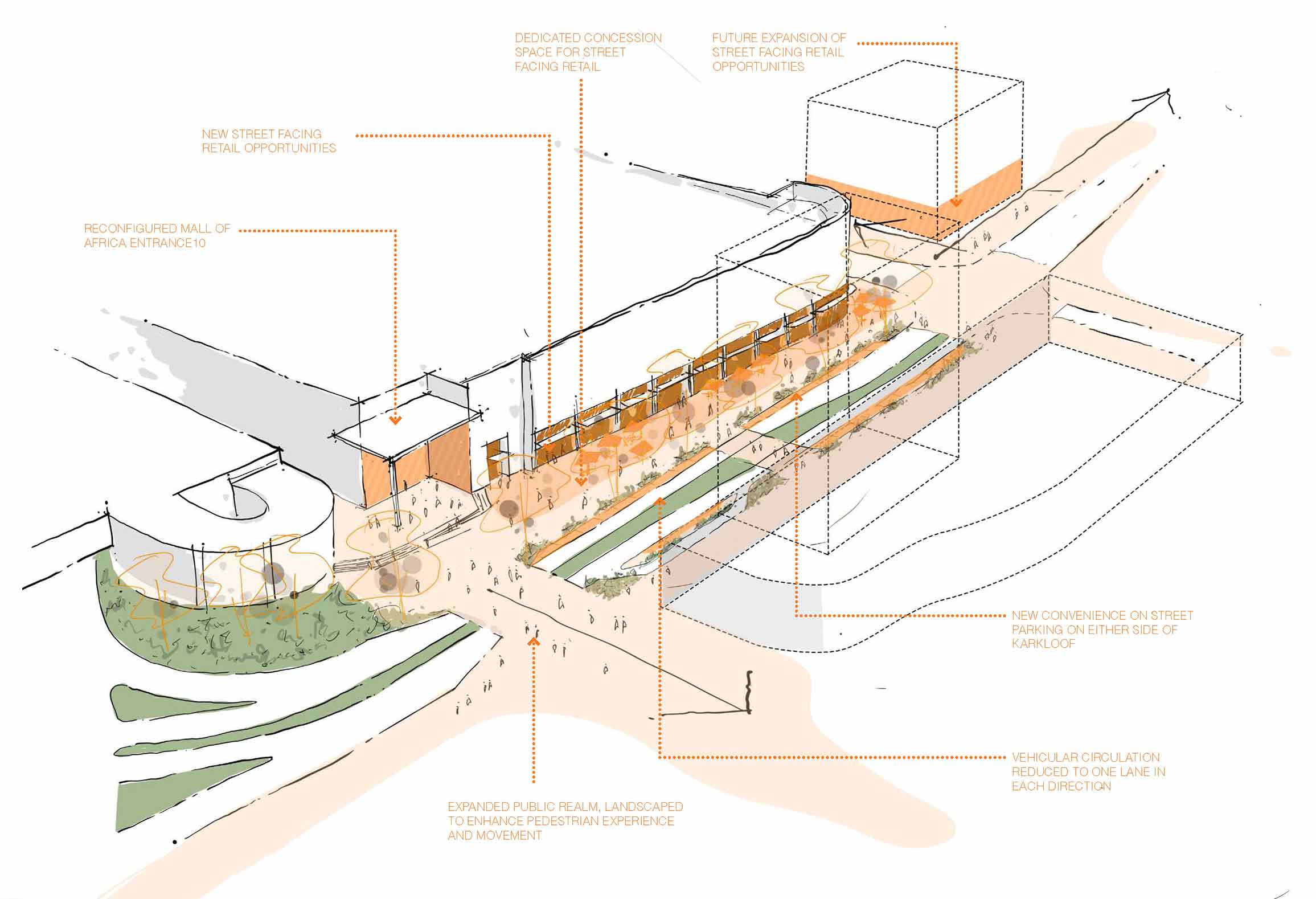
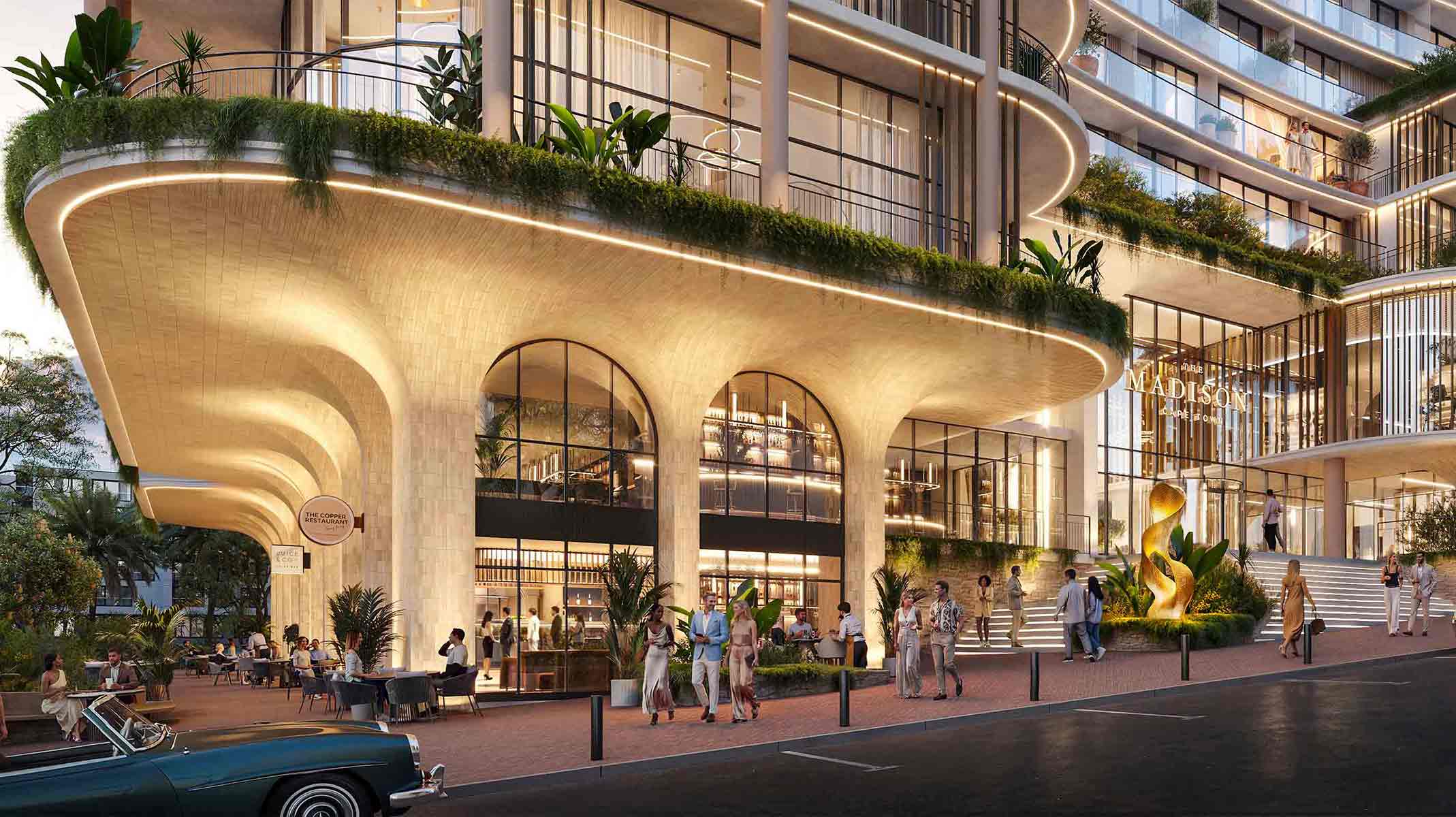
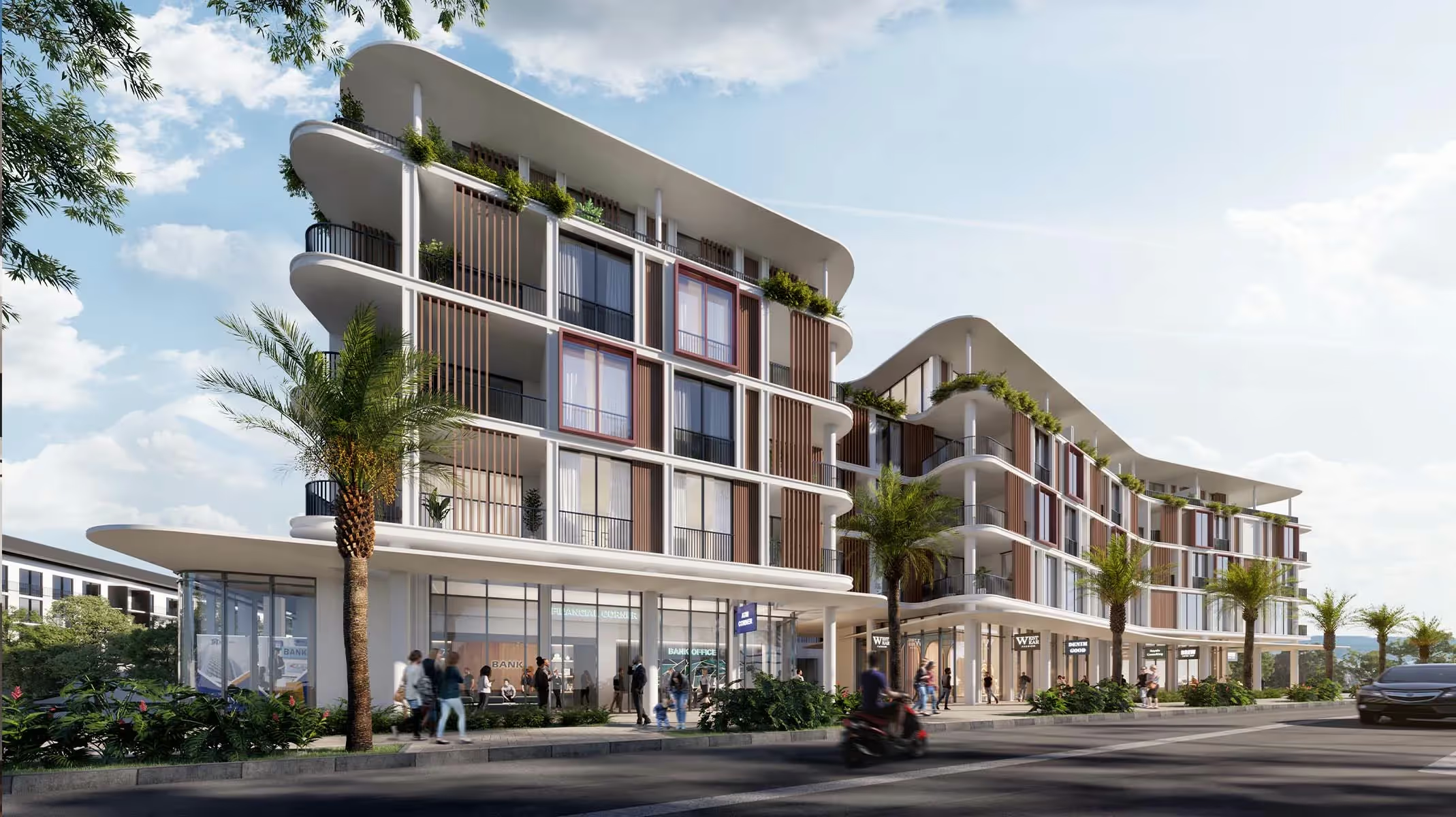
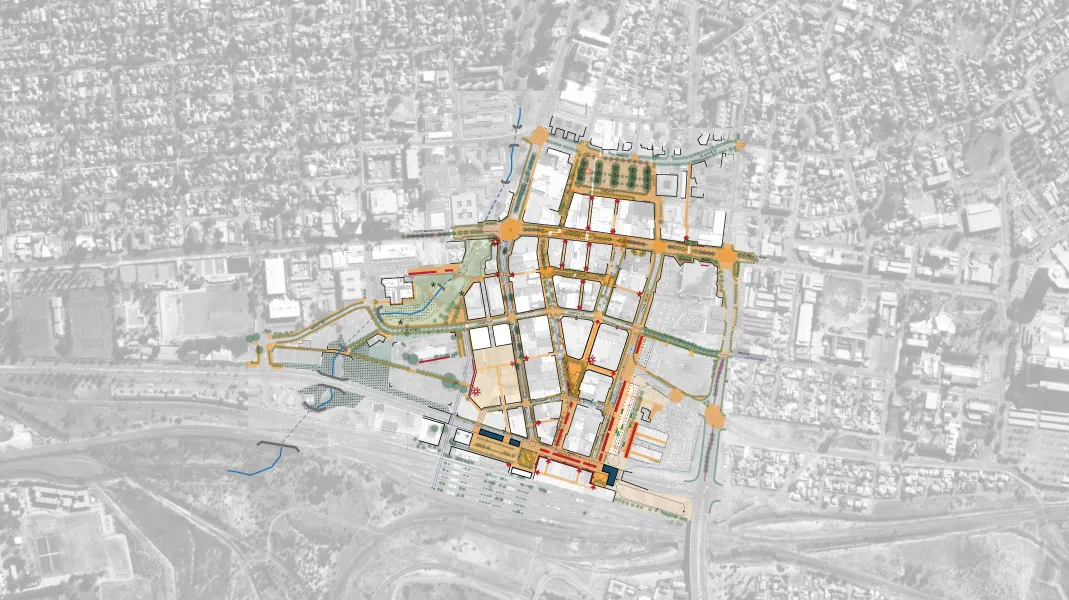
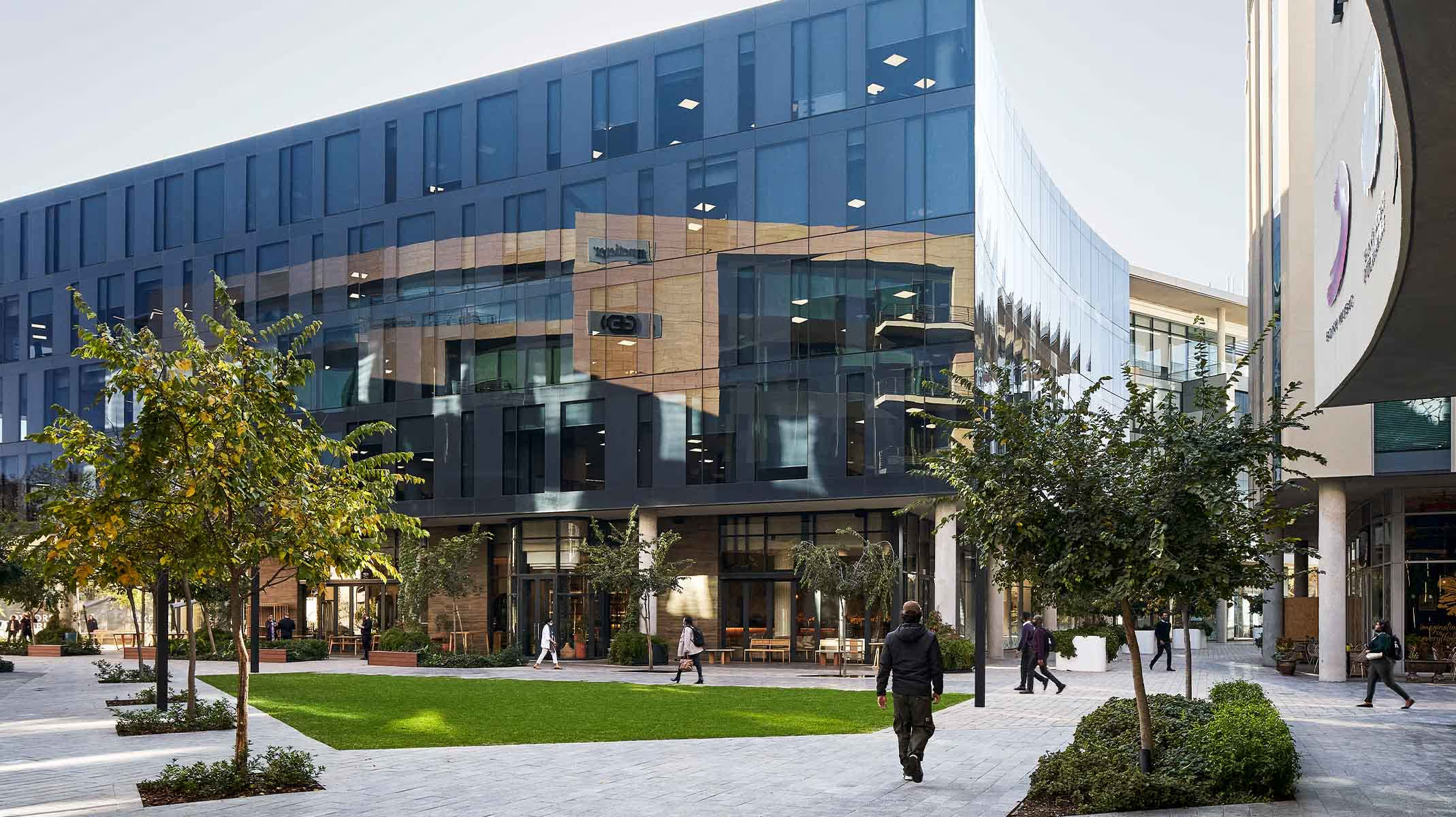
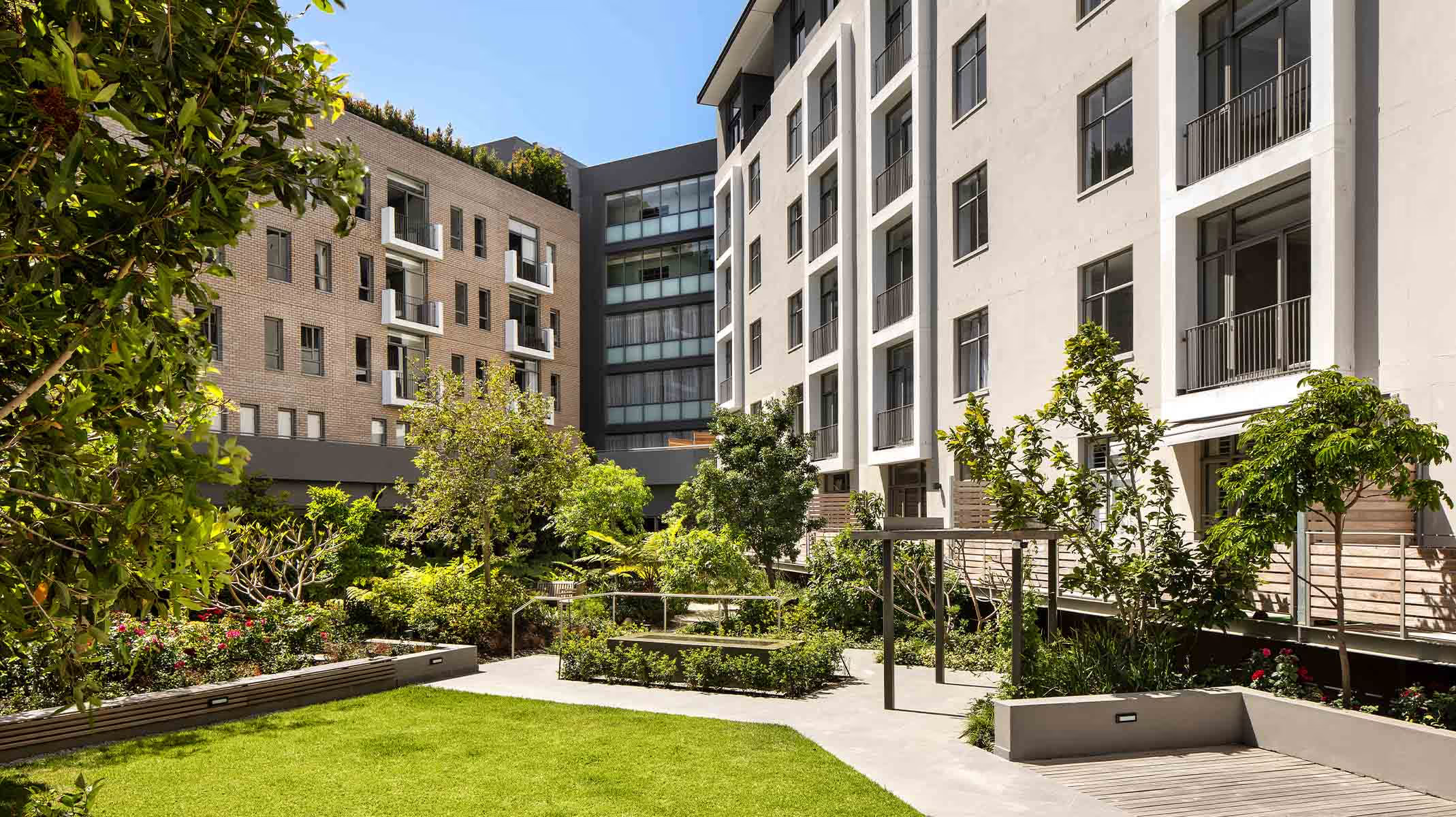
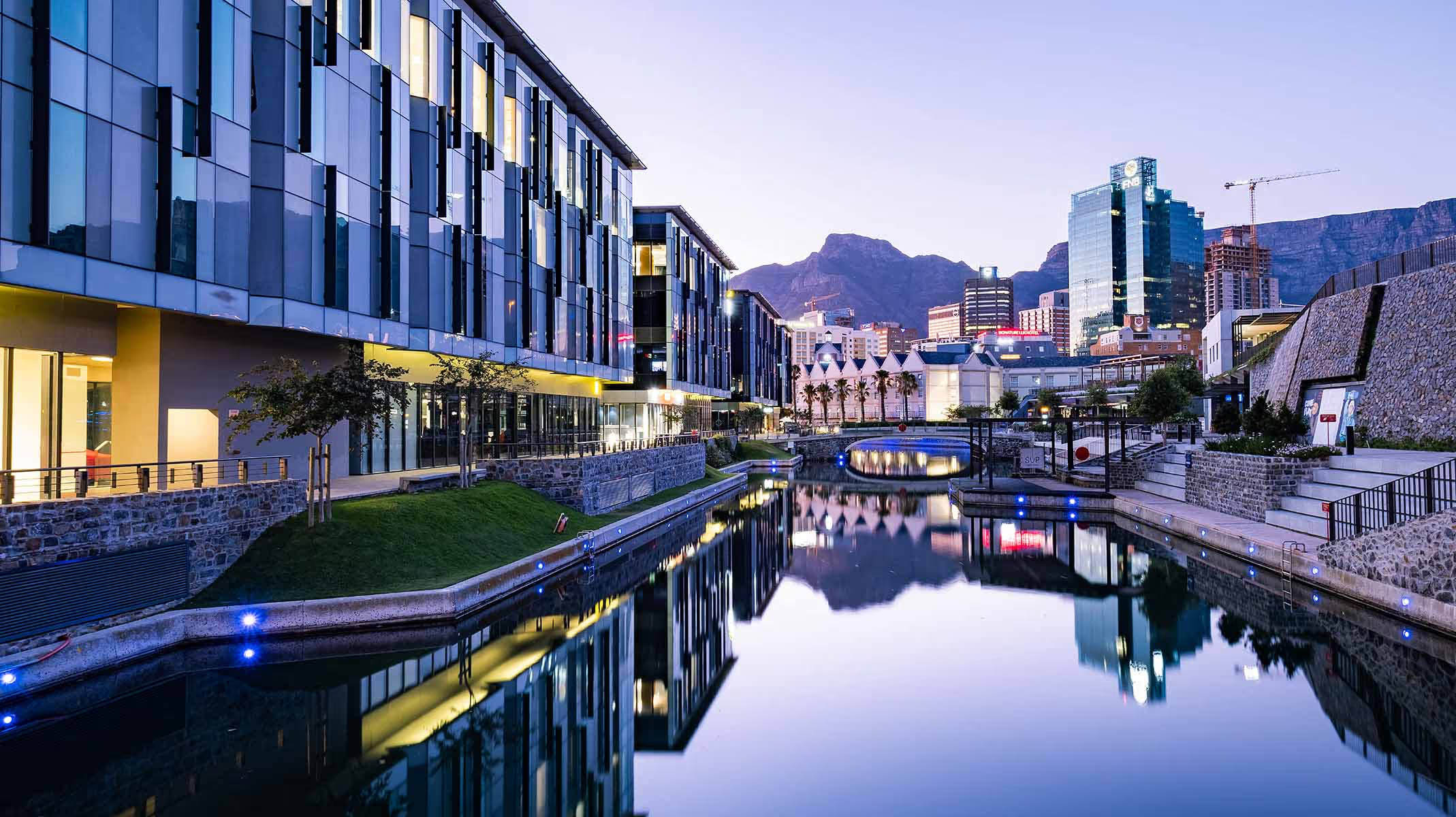
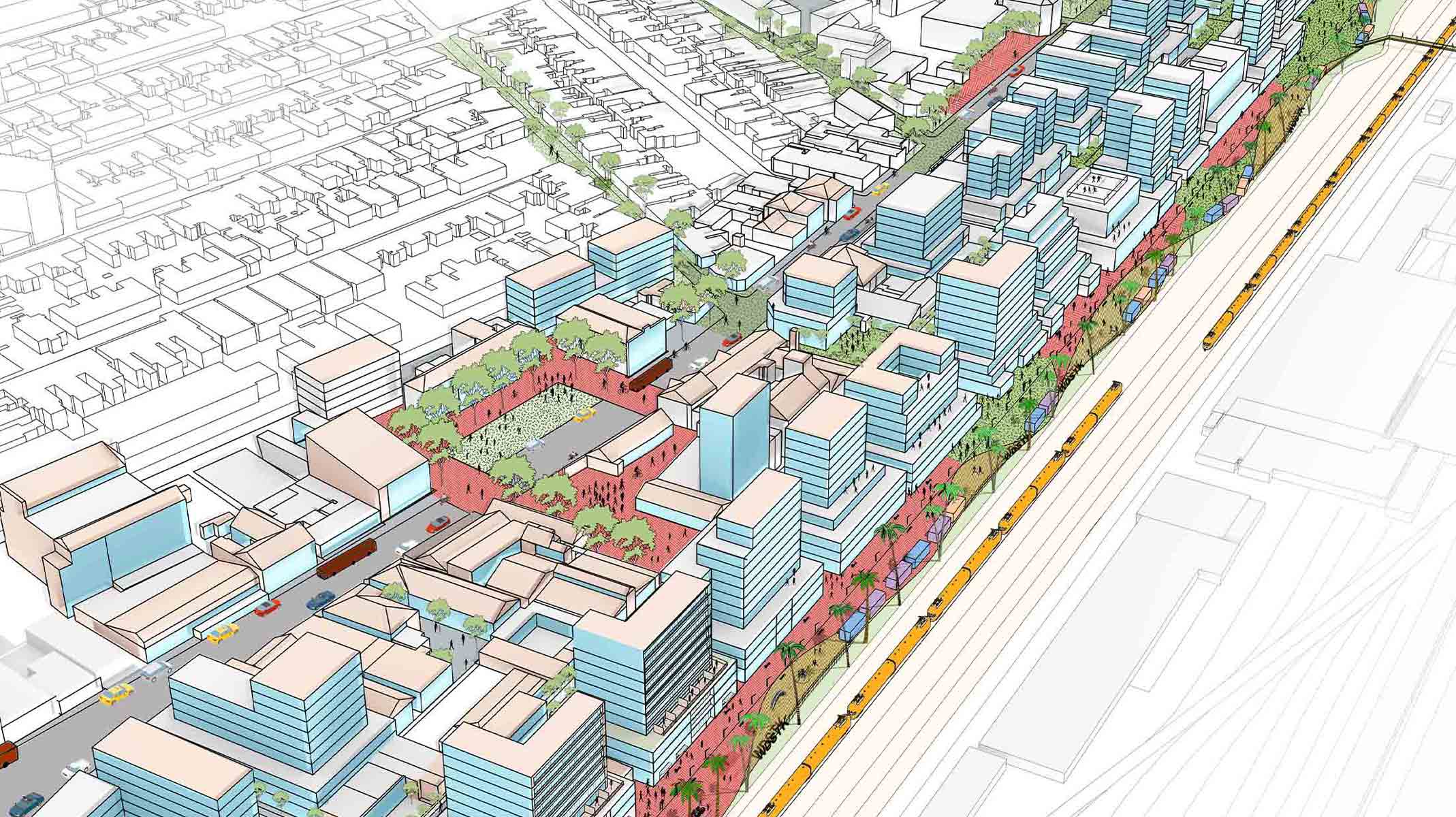
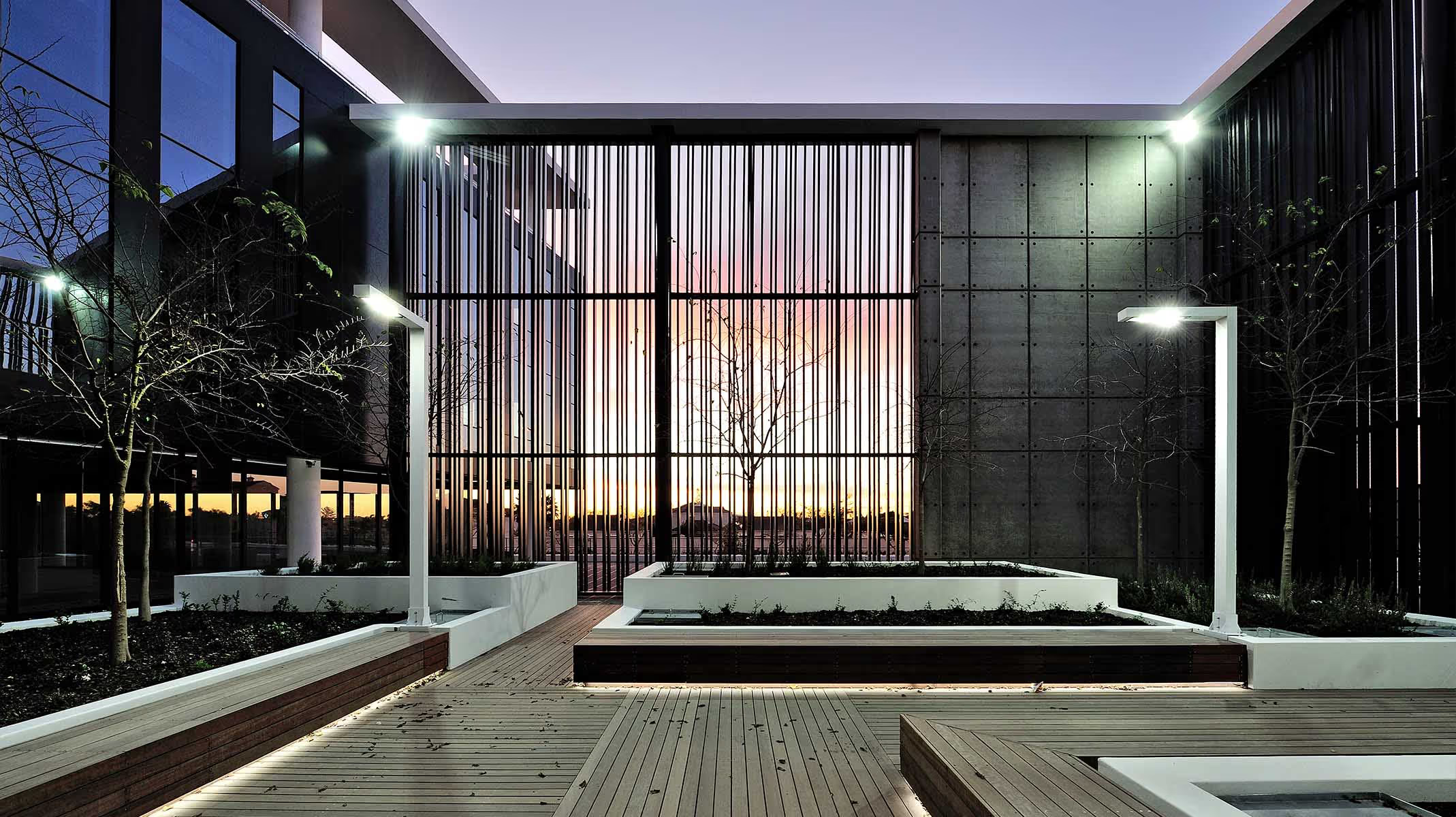
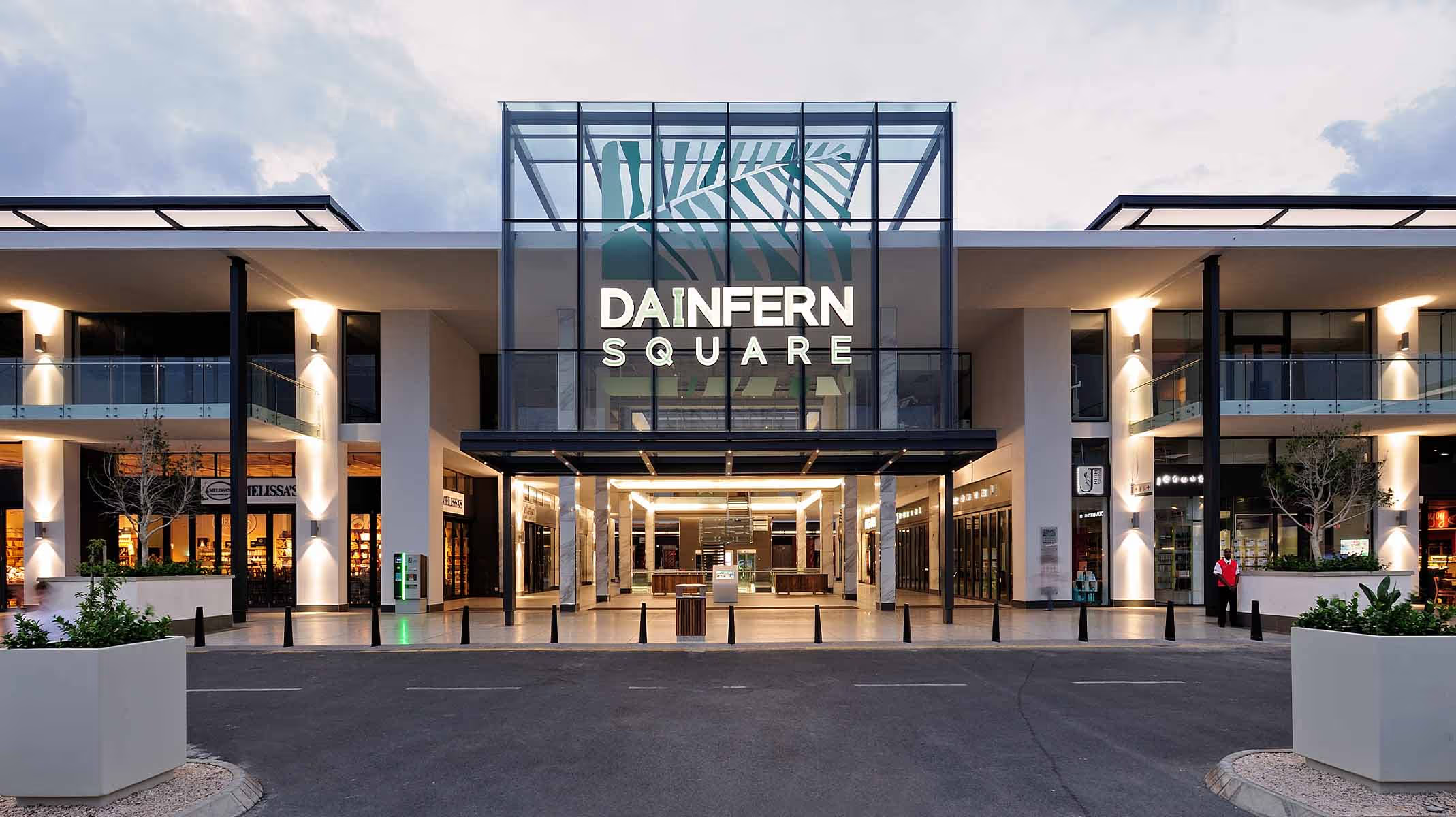
The public space network is organised around a strong north-south primary axis, running from Lone Creek Crescent through the Mall of Africa to the Waterfall Country Estate North Entrance. This anchors the street hierarchy. South of Simlak Drive, the framework introduces a finer-grained block structure modelled on the pedestrian character of Melrose Arch, another mixed-use precinct located closer to the south of Waterfall City. This granularity incorporates mid-block connections, active ground-floor frontages and a reduced vehicular footprint.
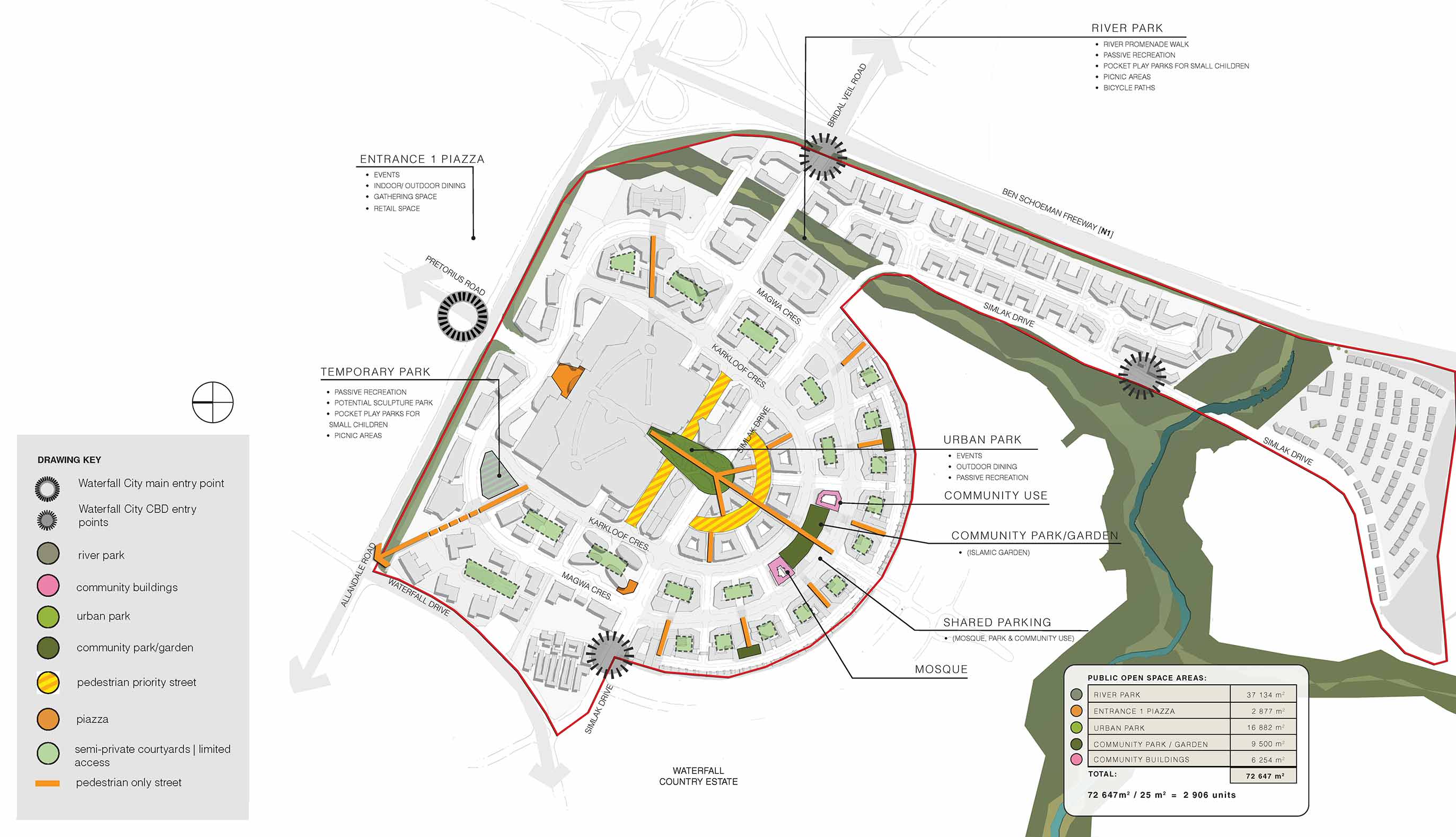
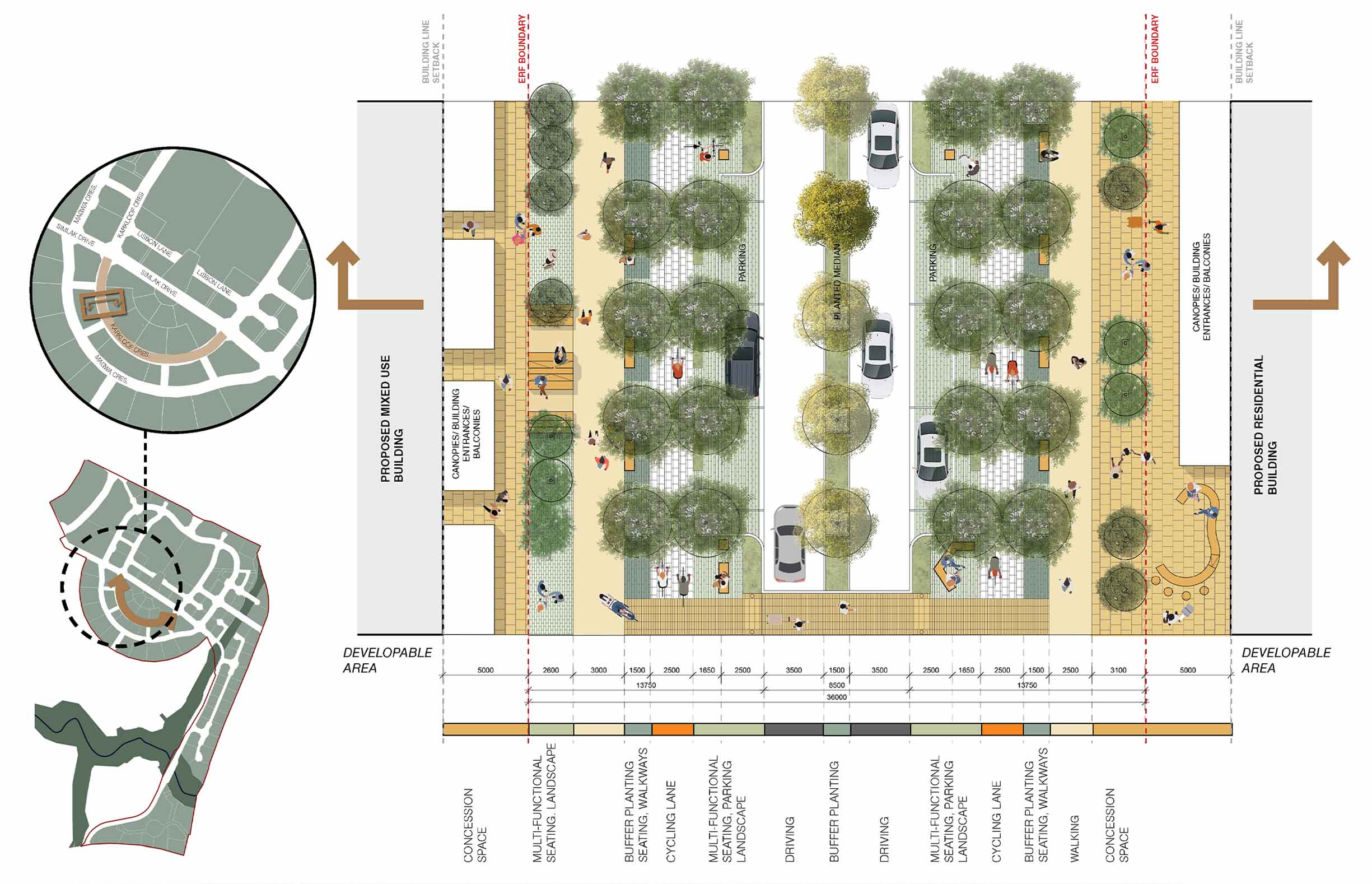
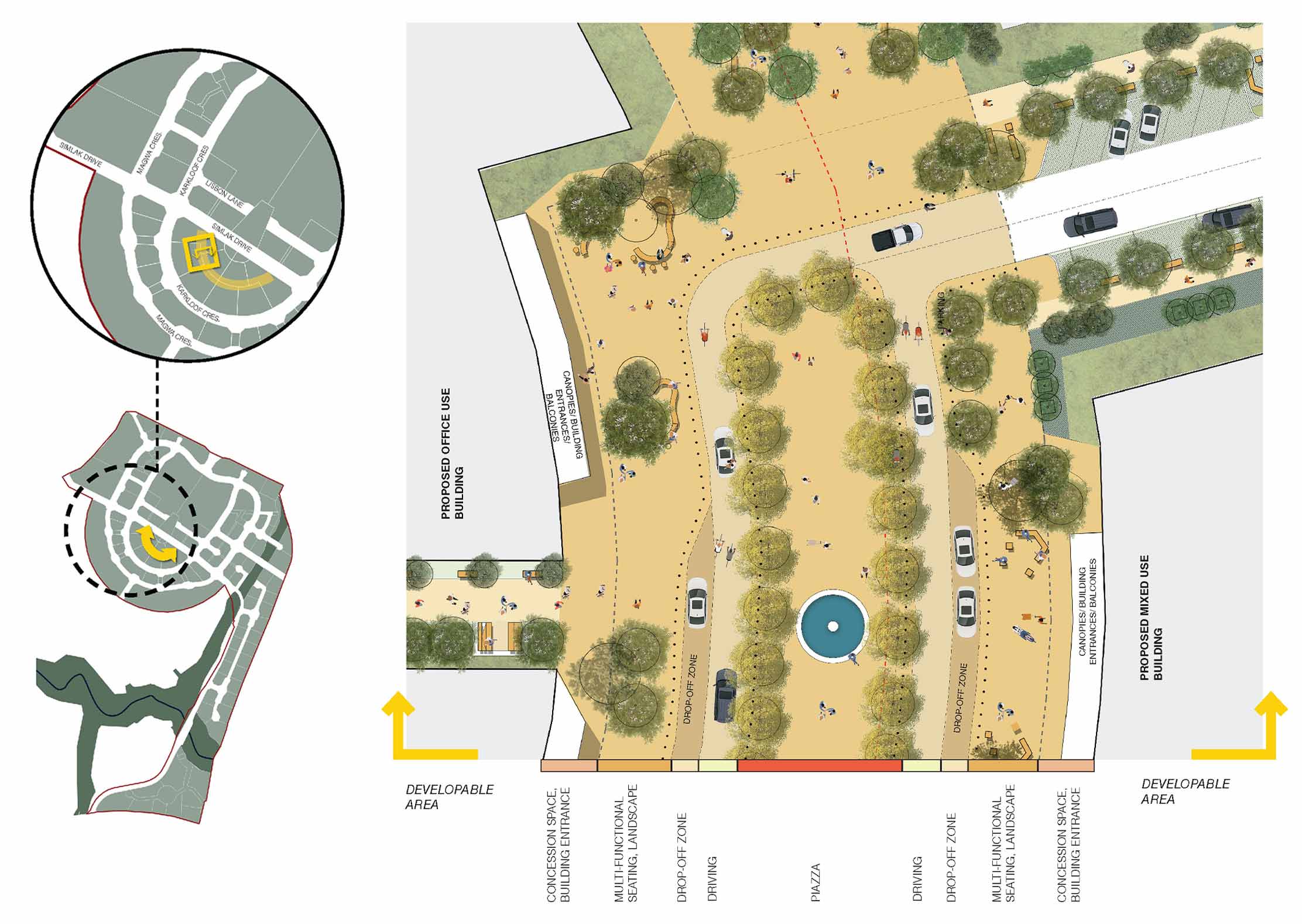
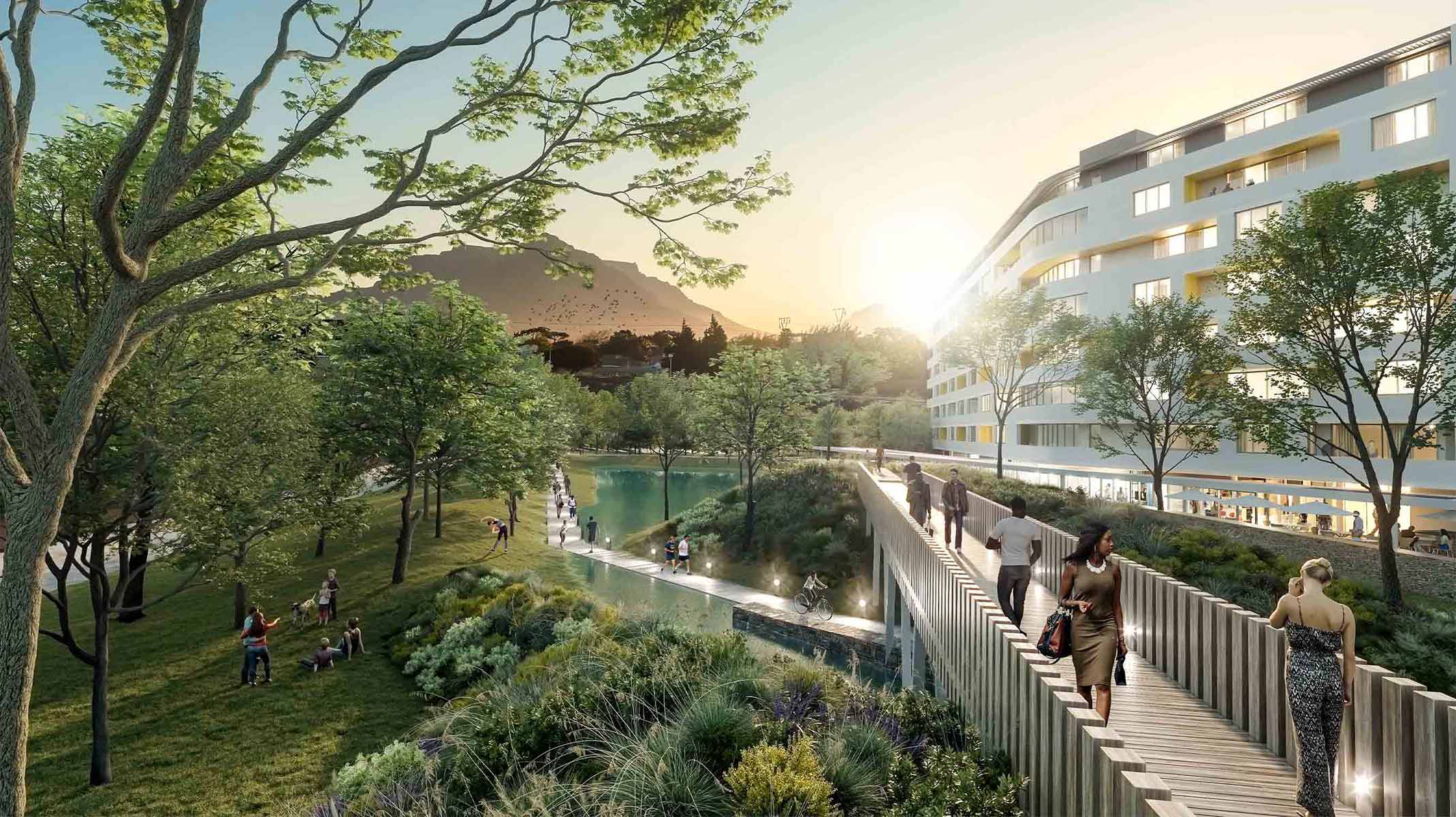
The proposed open space network totals 72 647m². This includes an urban park, a community park and garden and the piazzas at the north and south entrances to the Mall of Africa. A dedicated cycling network extends existing high-quality lanes along Magwa Crescent and Karkloof Crescent south into new development areas, creating a continuous active mobility loop through the CBD.
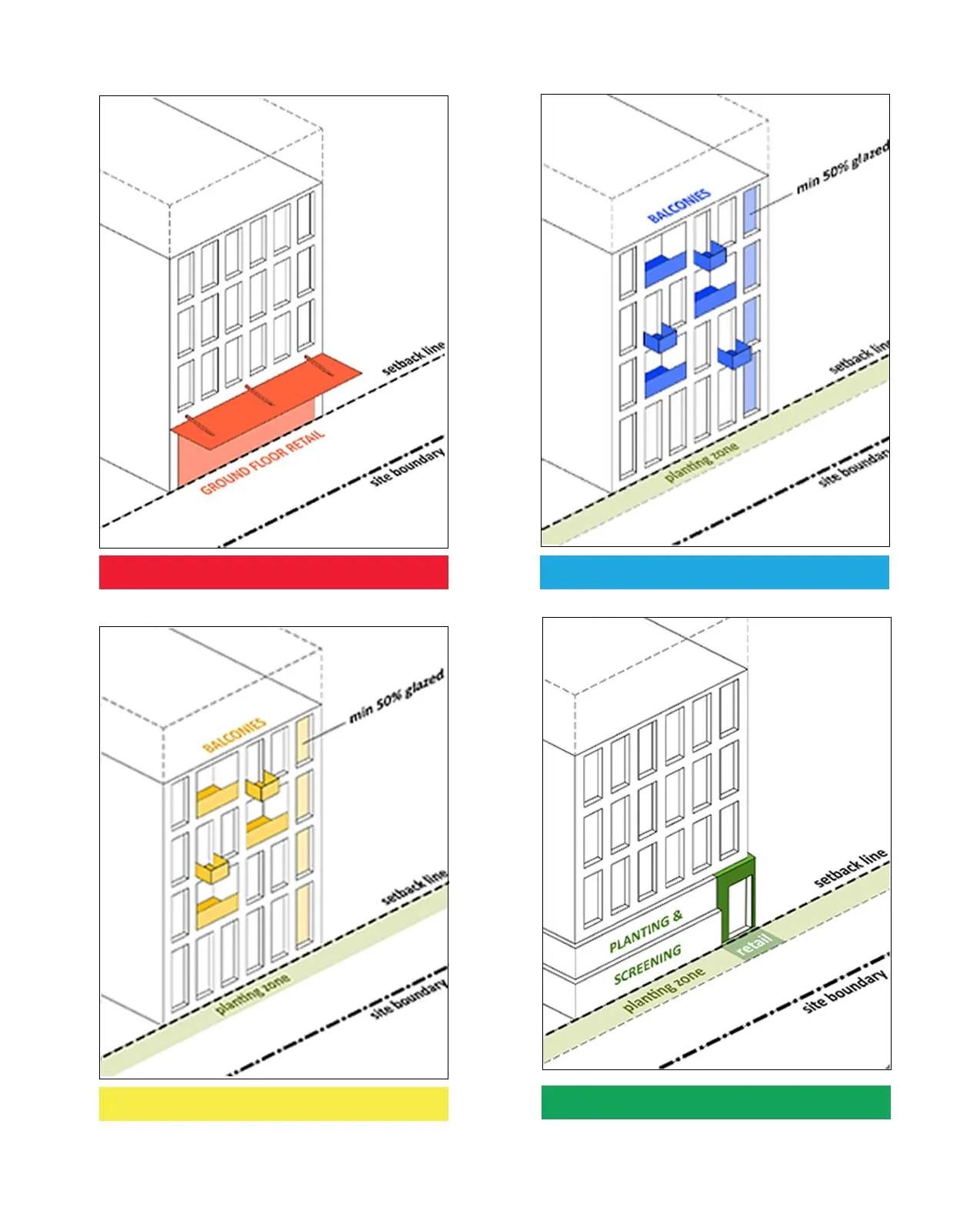
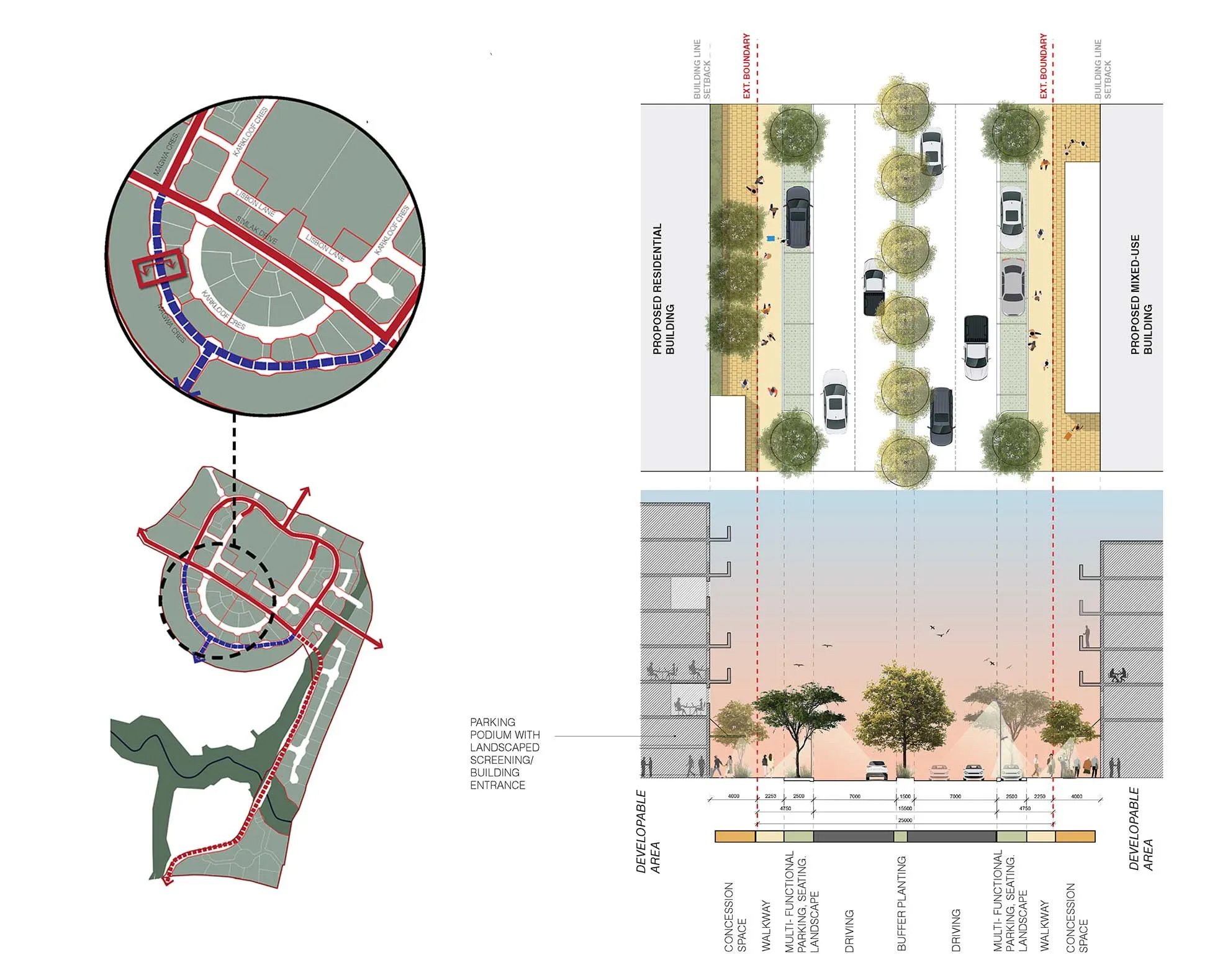
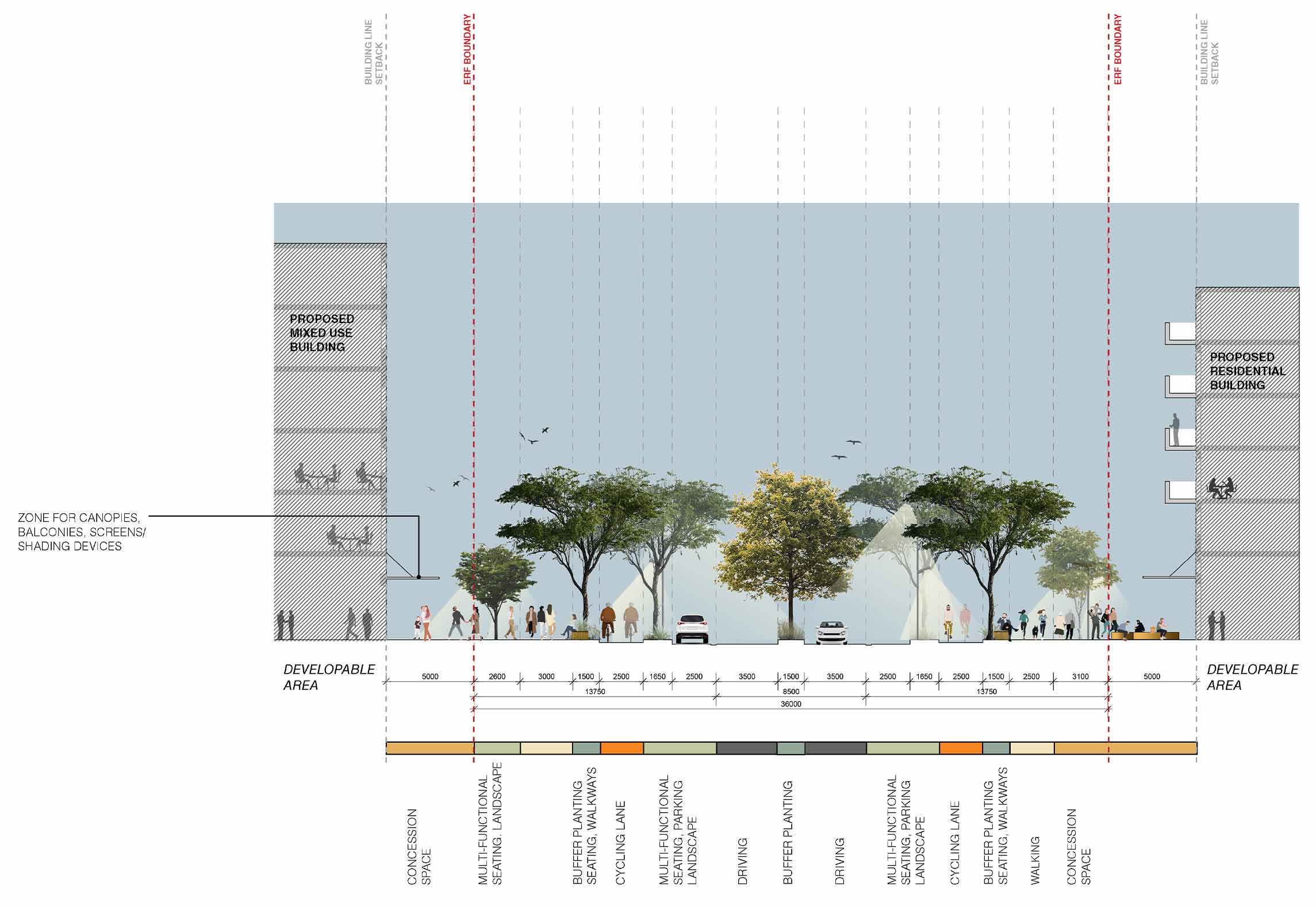
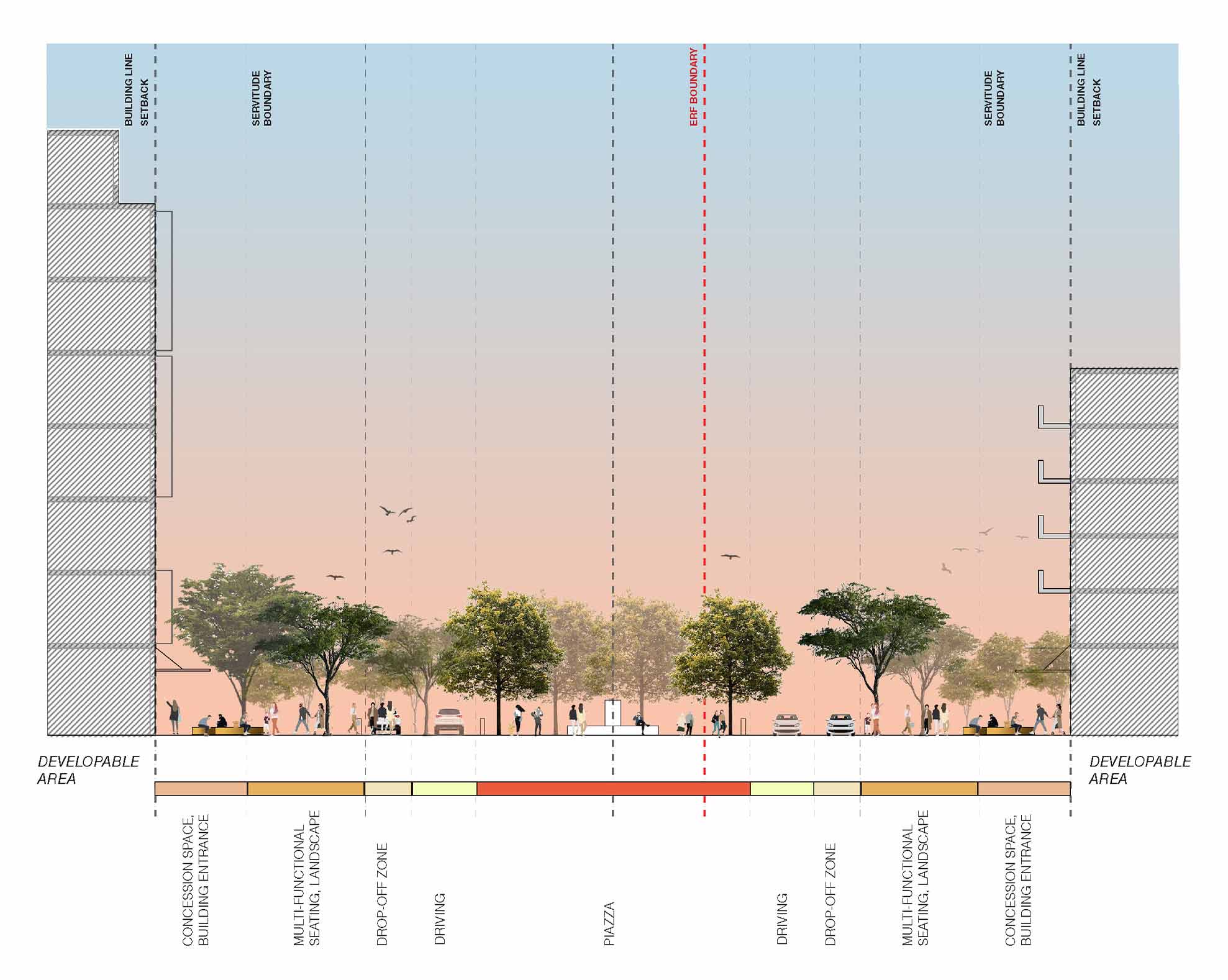
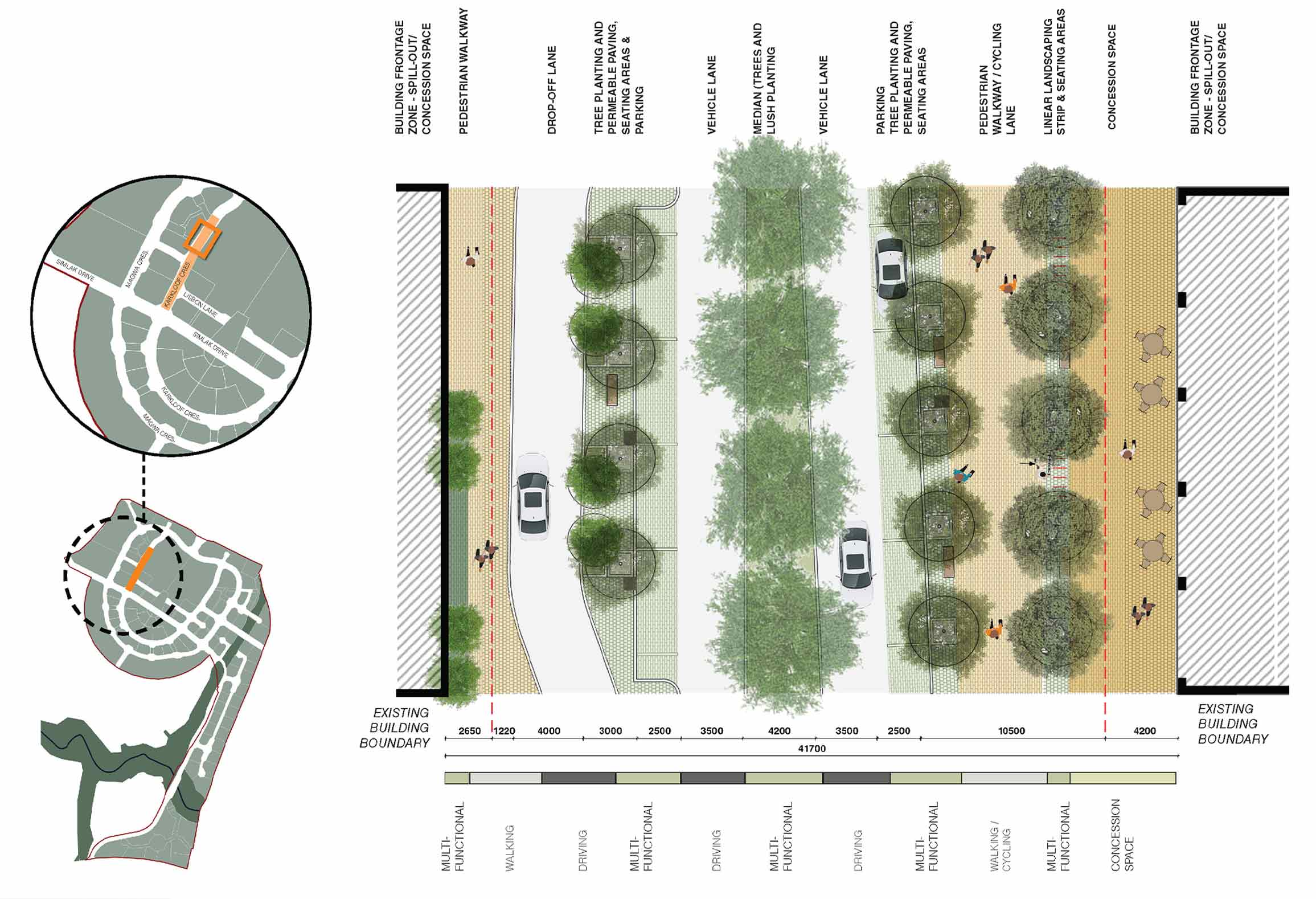
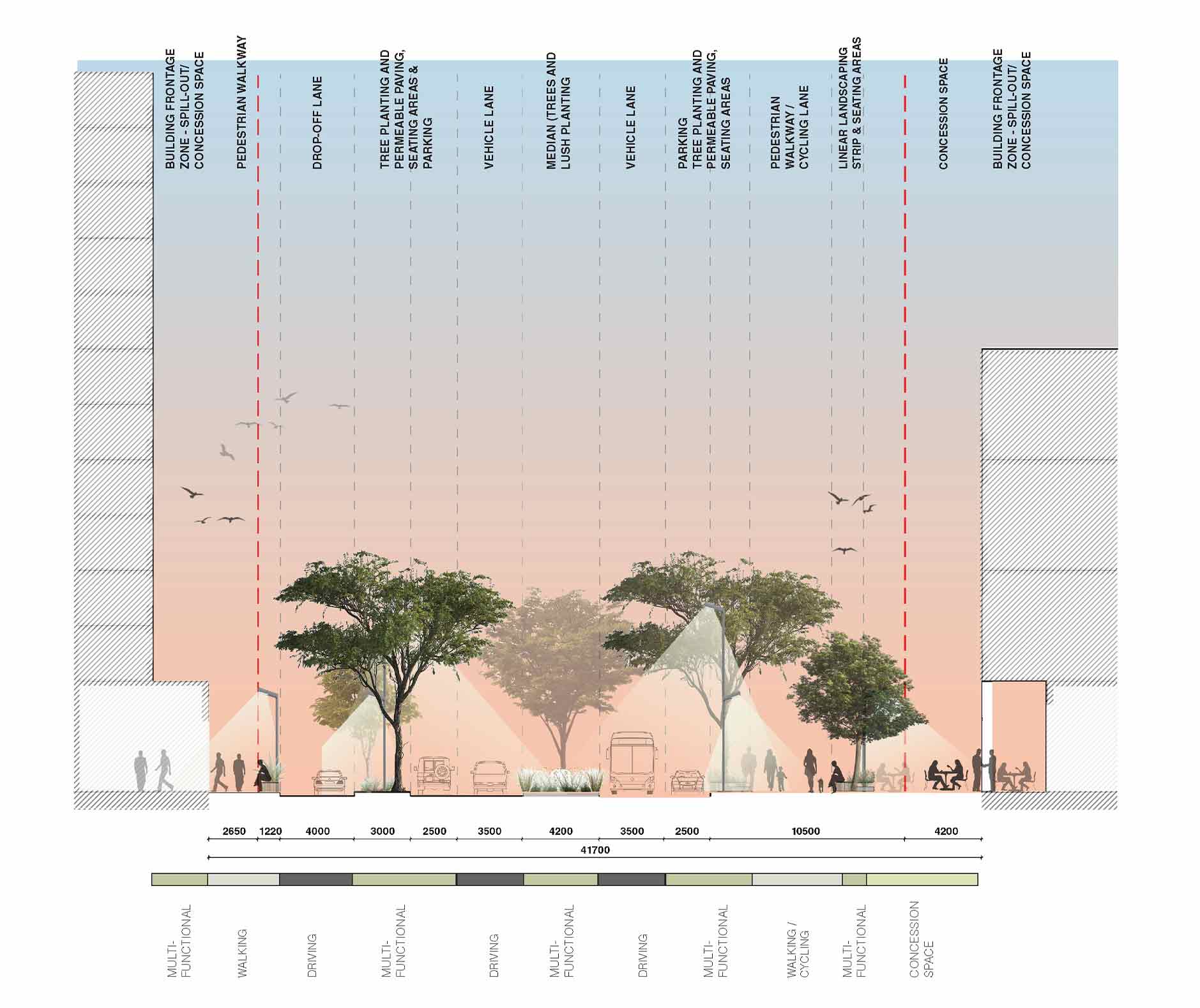
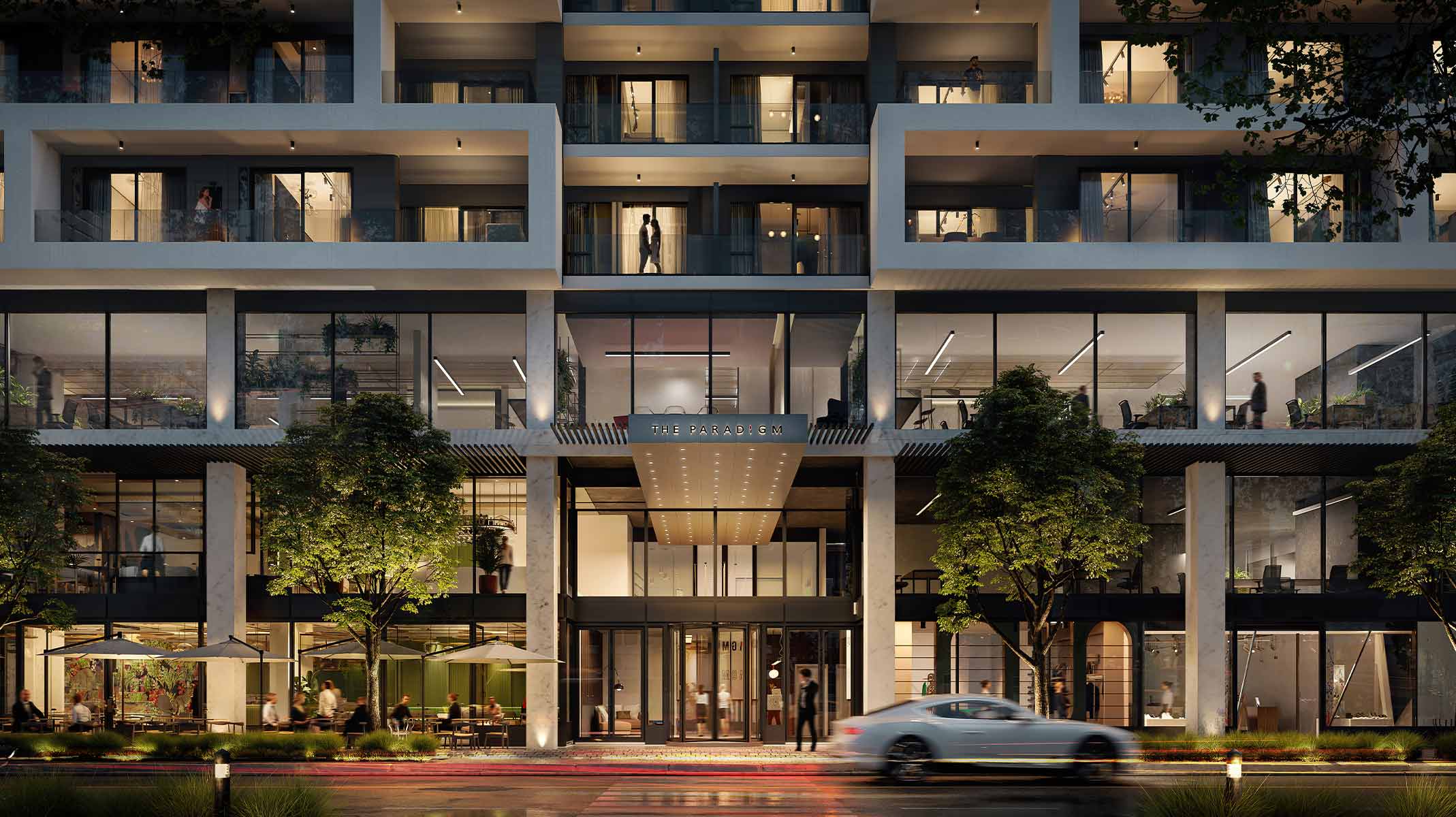
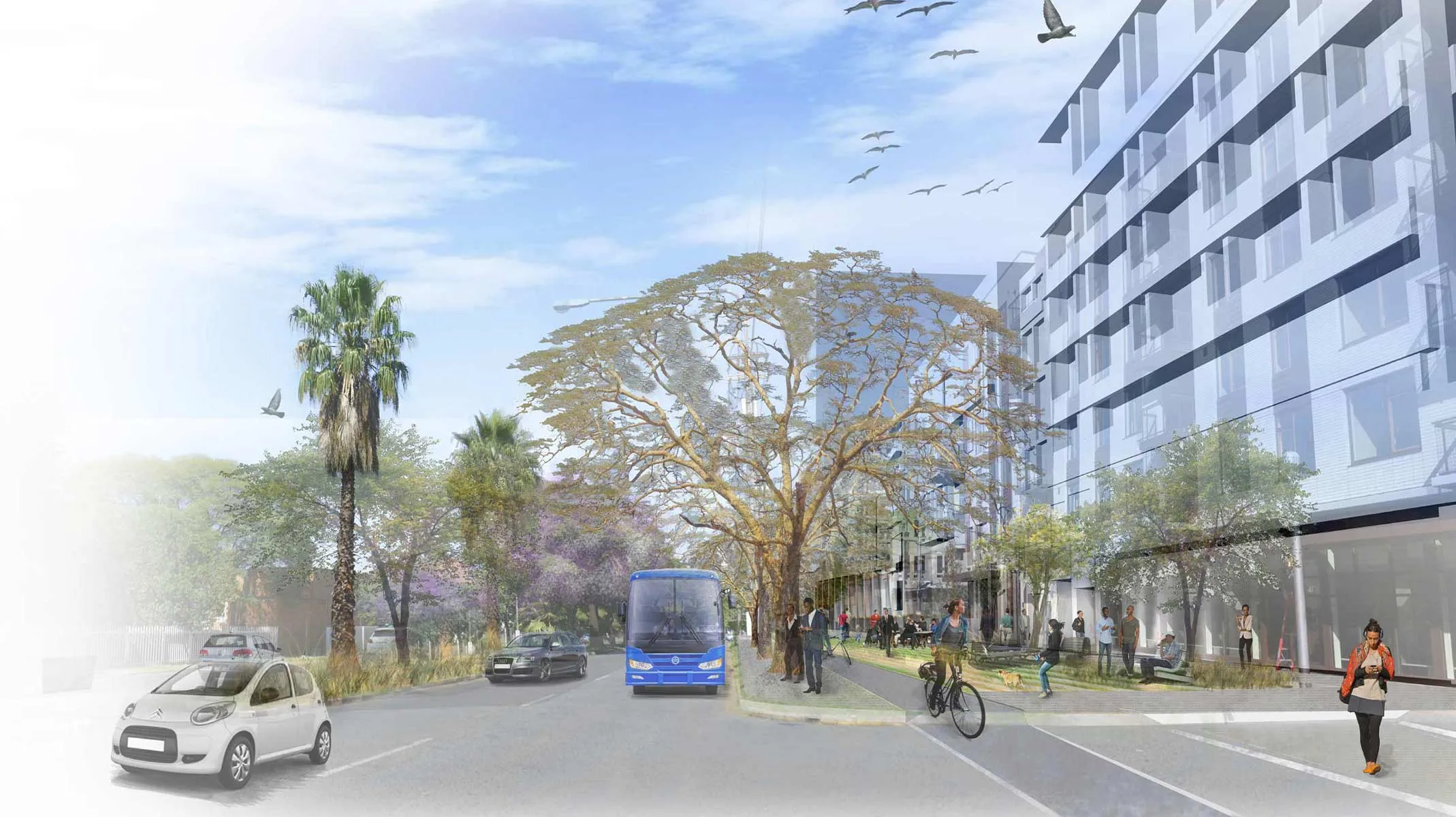
Different street typologies are included in the framework. These are internal boulevards, avenues, neighbourhood streets, a shared street and a pedestrian-only street, which are detailed with cross-sections, frontage conditions and guidance on materials selection. Building heights across the precinct range from one to 10+ storeys, with taller development concentrated at key nodes and a graduated transition to surrounding areas.
Sustainability
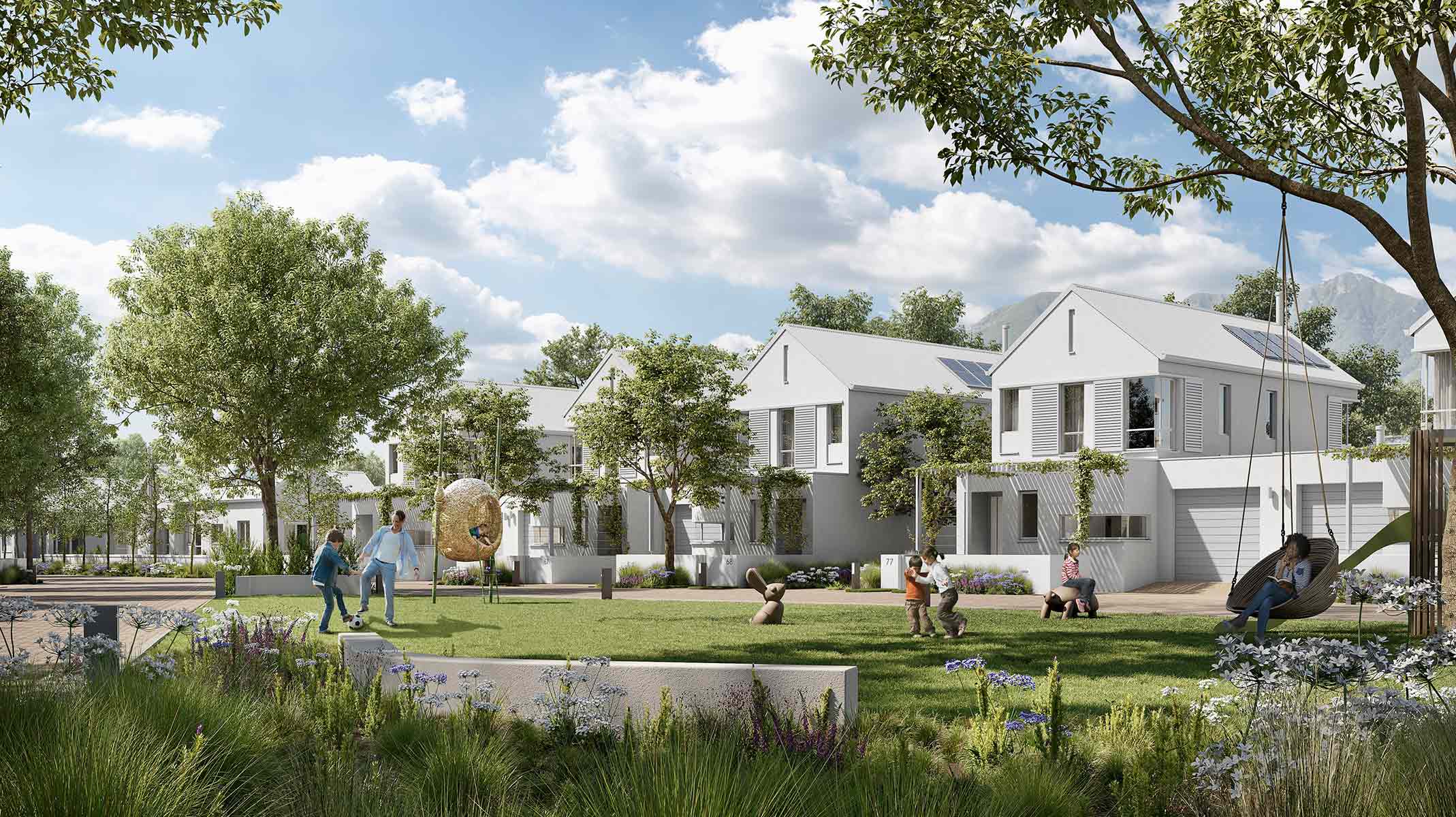
Sustainability and resilience are embedded as core principles rather than applied as additions. The framework promotes solar energy for street and building lighting, grey water treatment systems and reservoir storage. All landscaping aligns with the Waterfall City Landscape Development Guidelines, with tree planting, shade and stormwater management integrated into every street typology.

.avif)


%20(cover).avif)


.avif)
.avif)
.avif)