[ view project ]

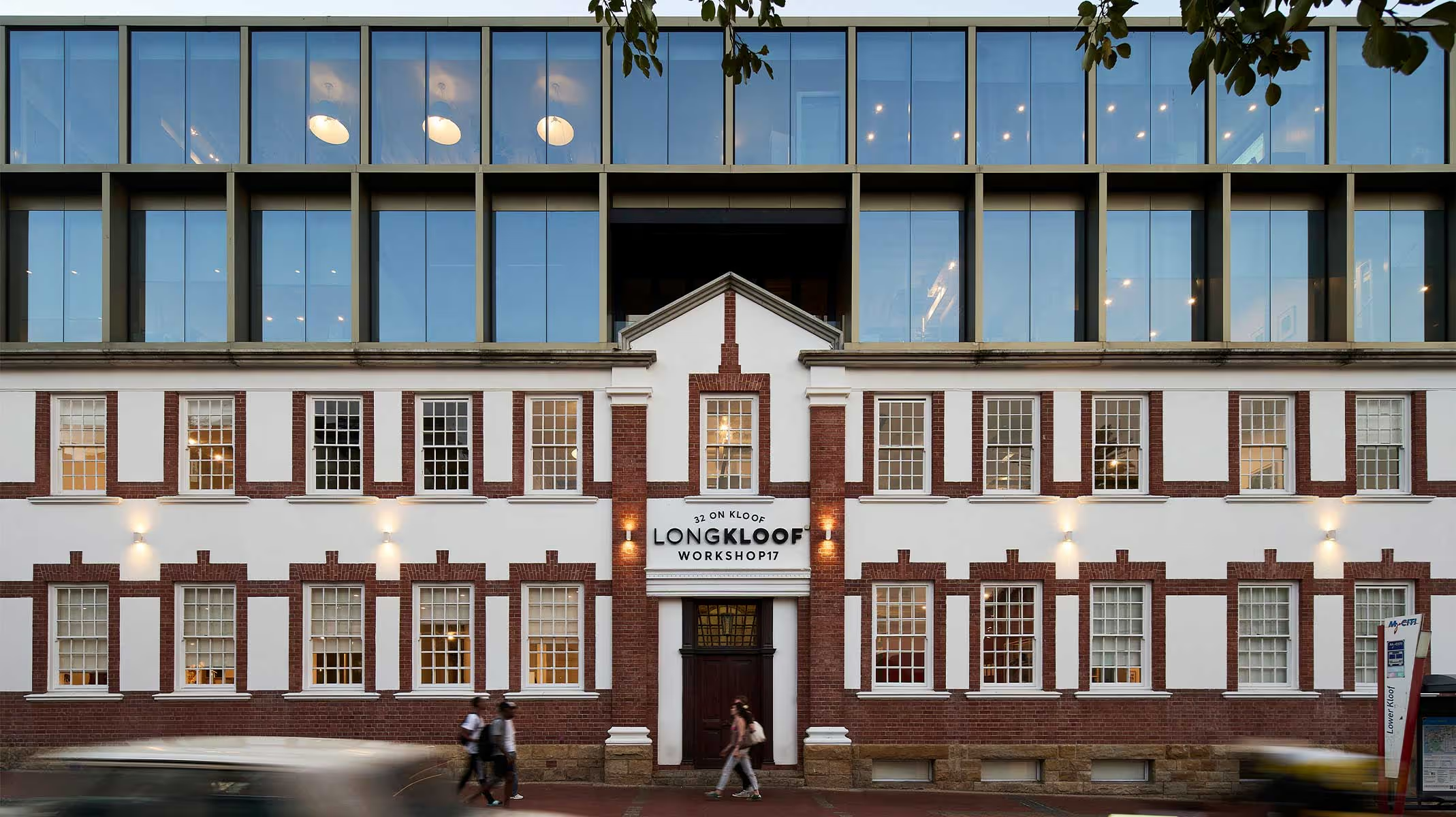
Designed for Blok, ONEHUNDREDONM was initiated to revitalise a fragmented section of Sea Point Main Road and unlock the value of a historic, underused site. Our brief was to repurpose the existing 1903 Victorian high street structure while integrating a viable contemporary mixed-use development. Blok’s priorities centred on improving spatial integration, maintaining street-level activation and reinforcing the character of the precinct. At its core, the project needed to reconcile heritage preservation with the demands of a dense, commercially viable residential building aligned with contemporary urban living.
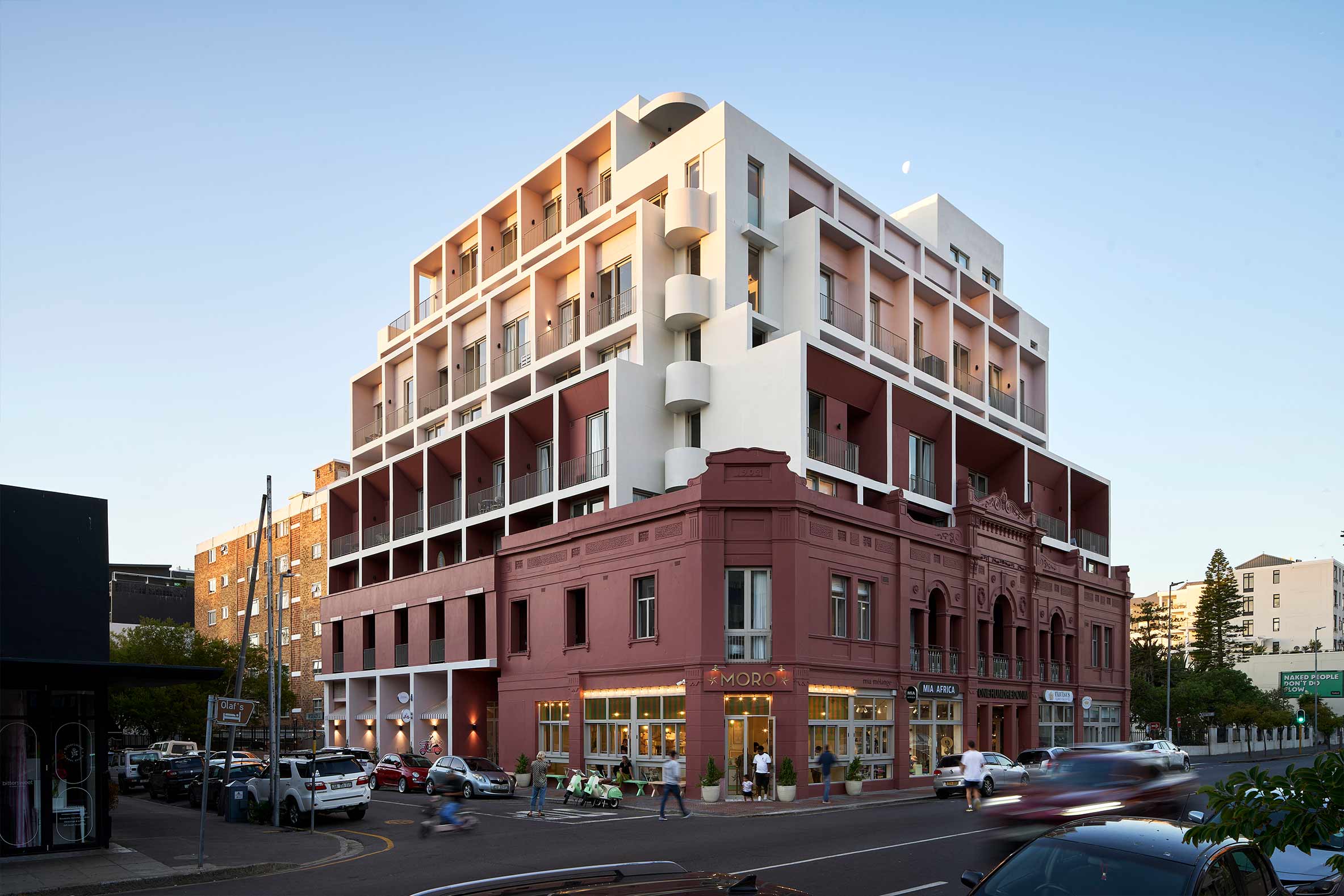
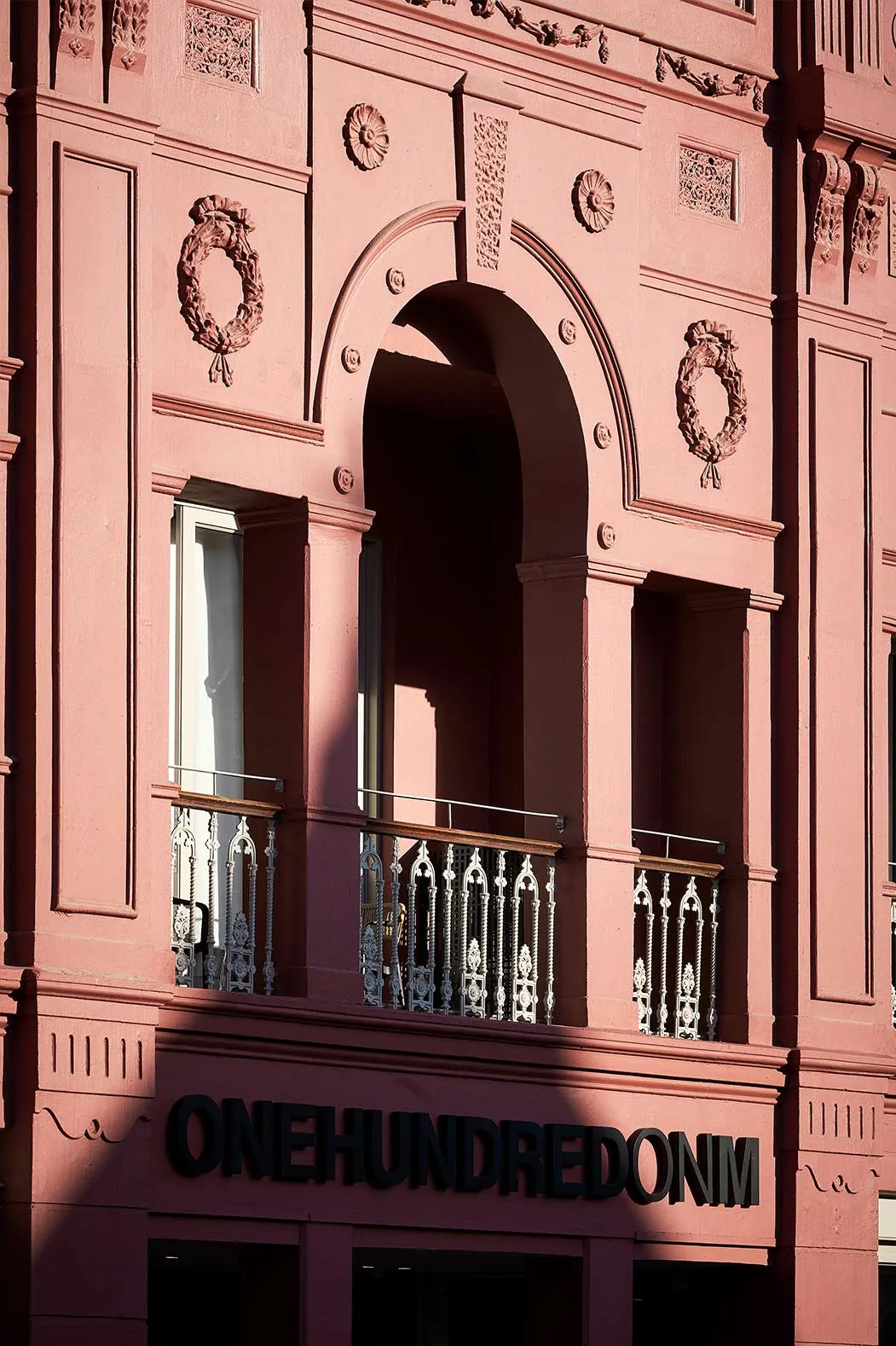
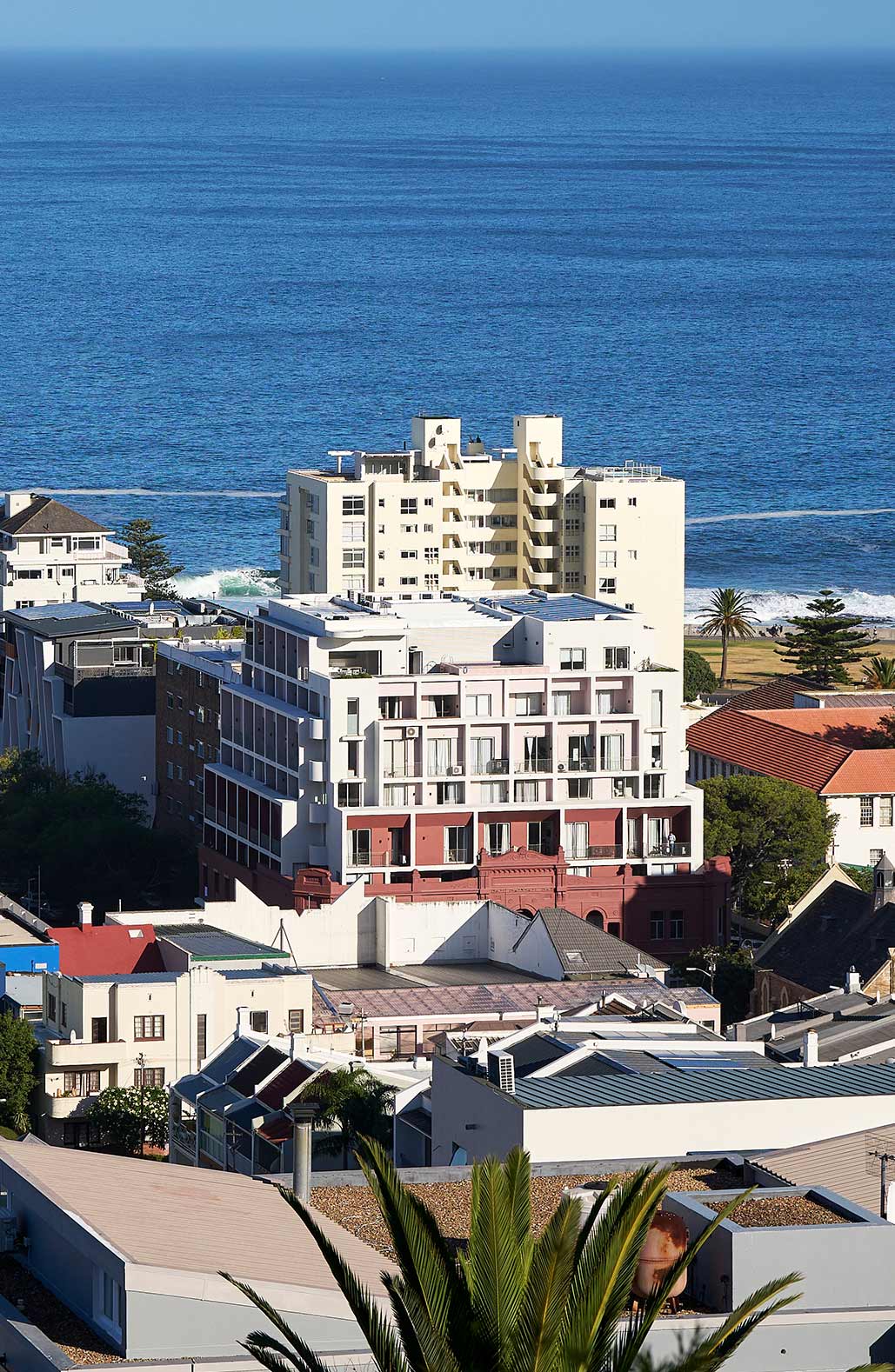
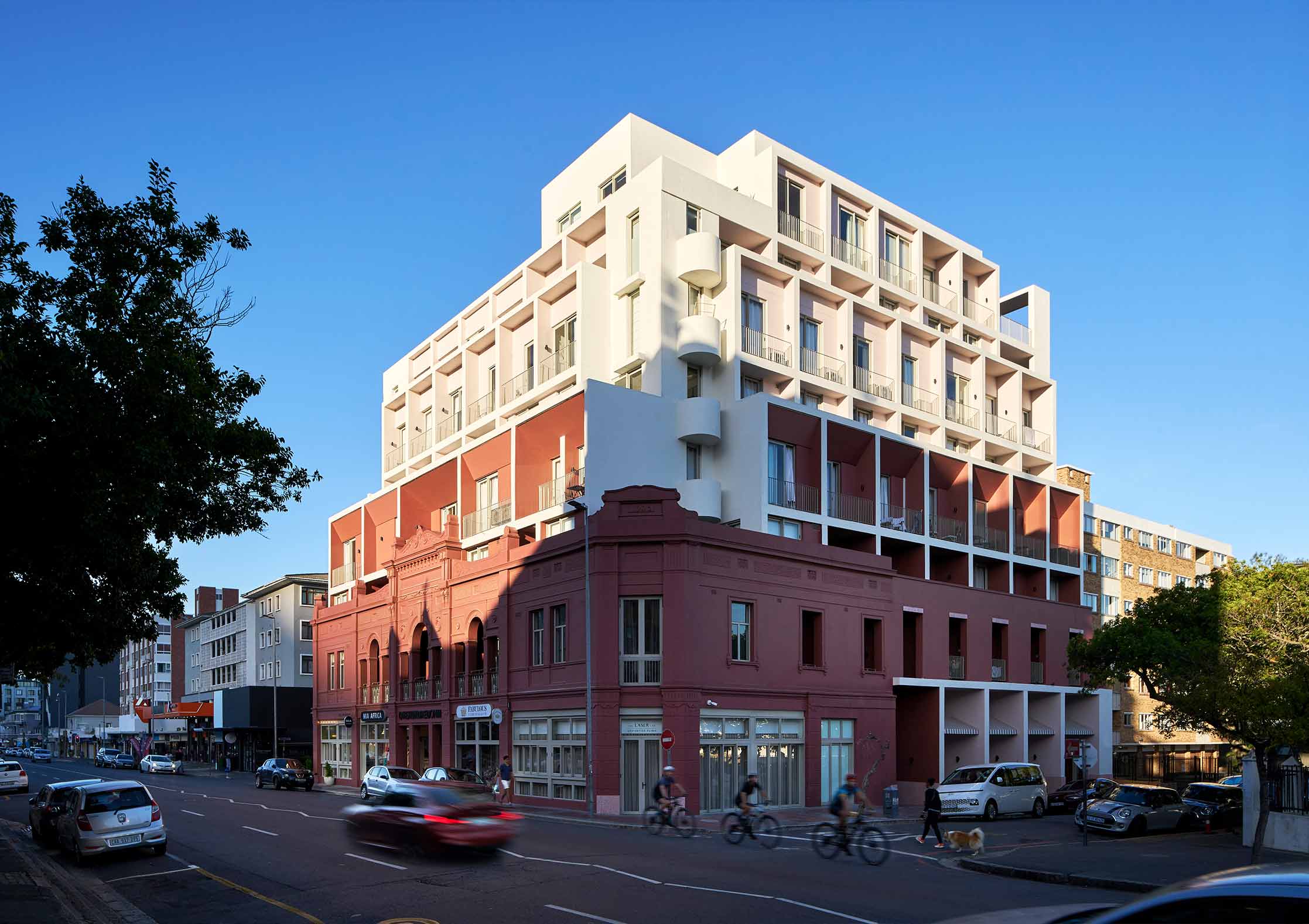
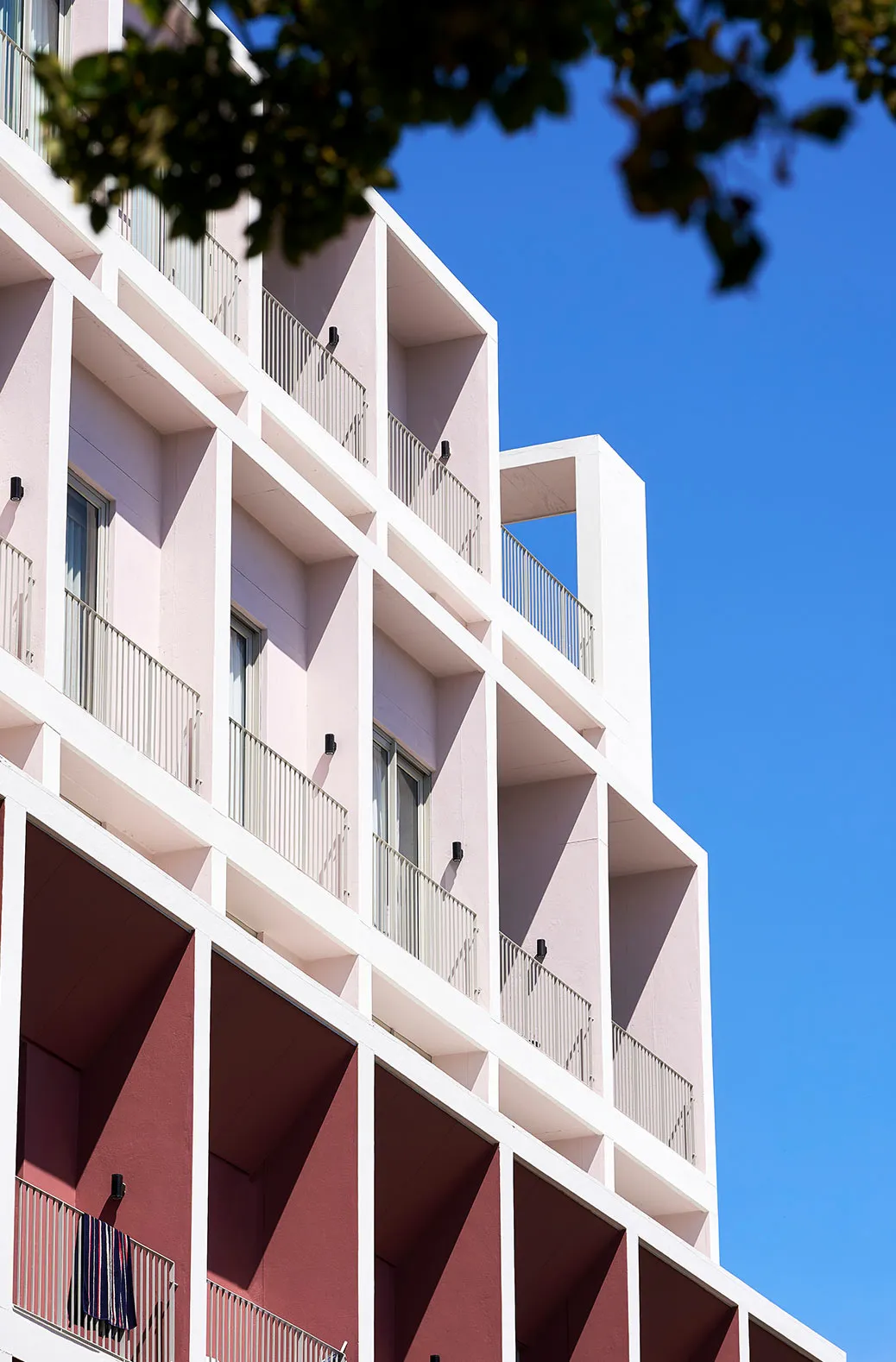
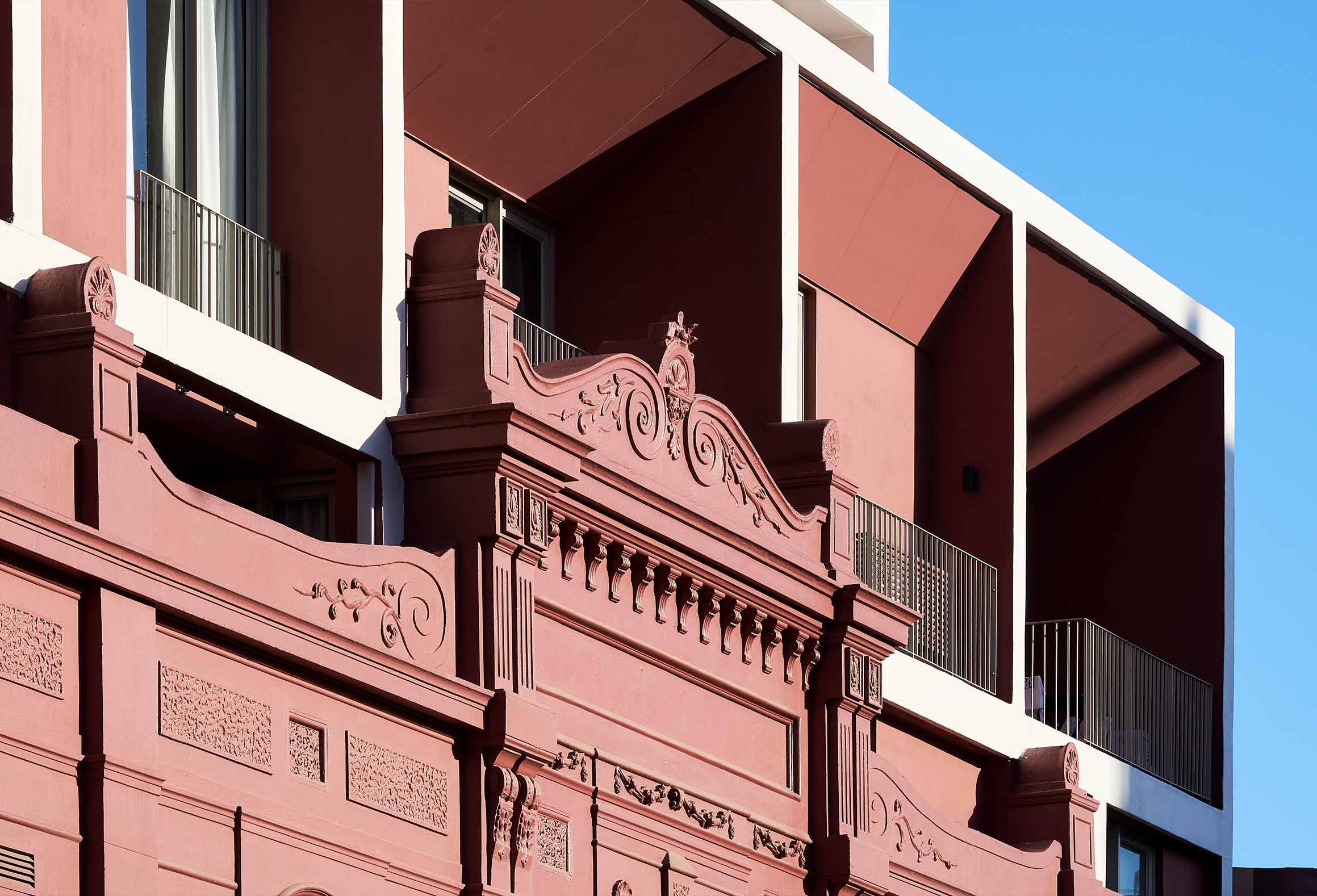
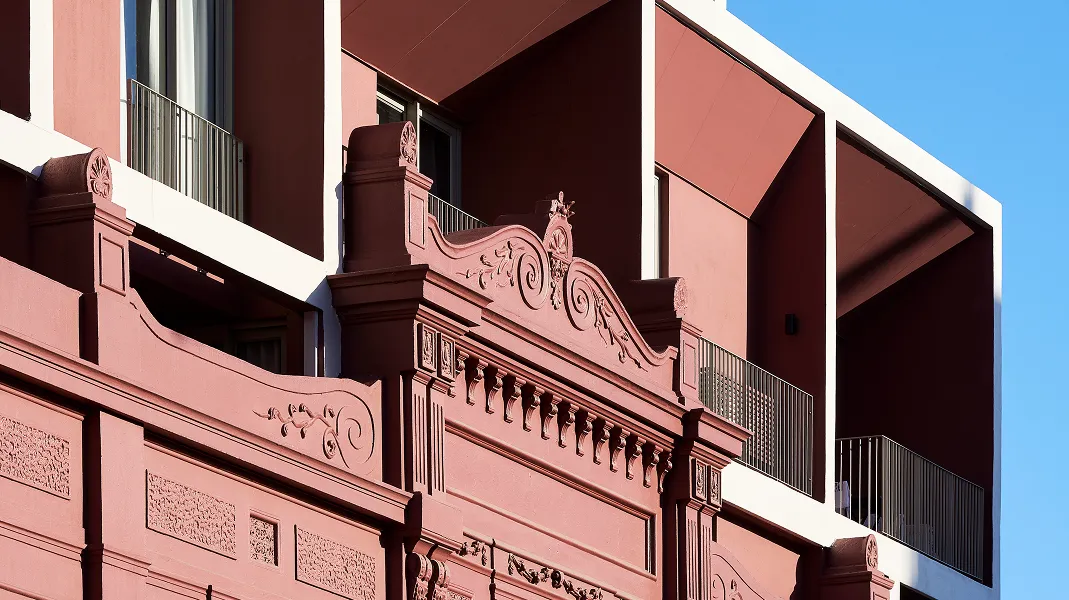
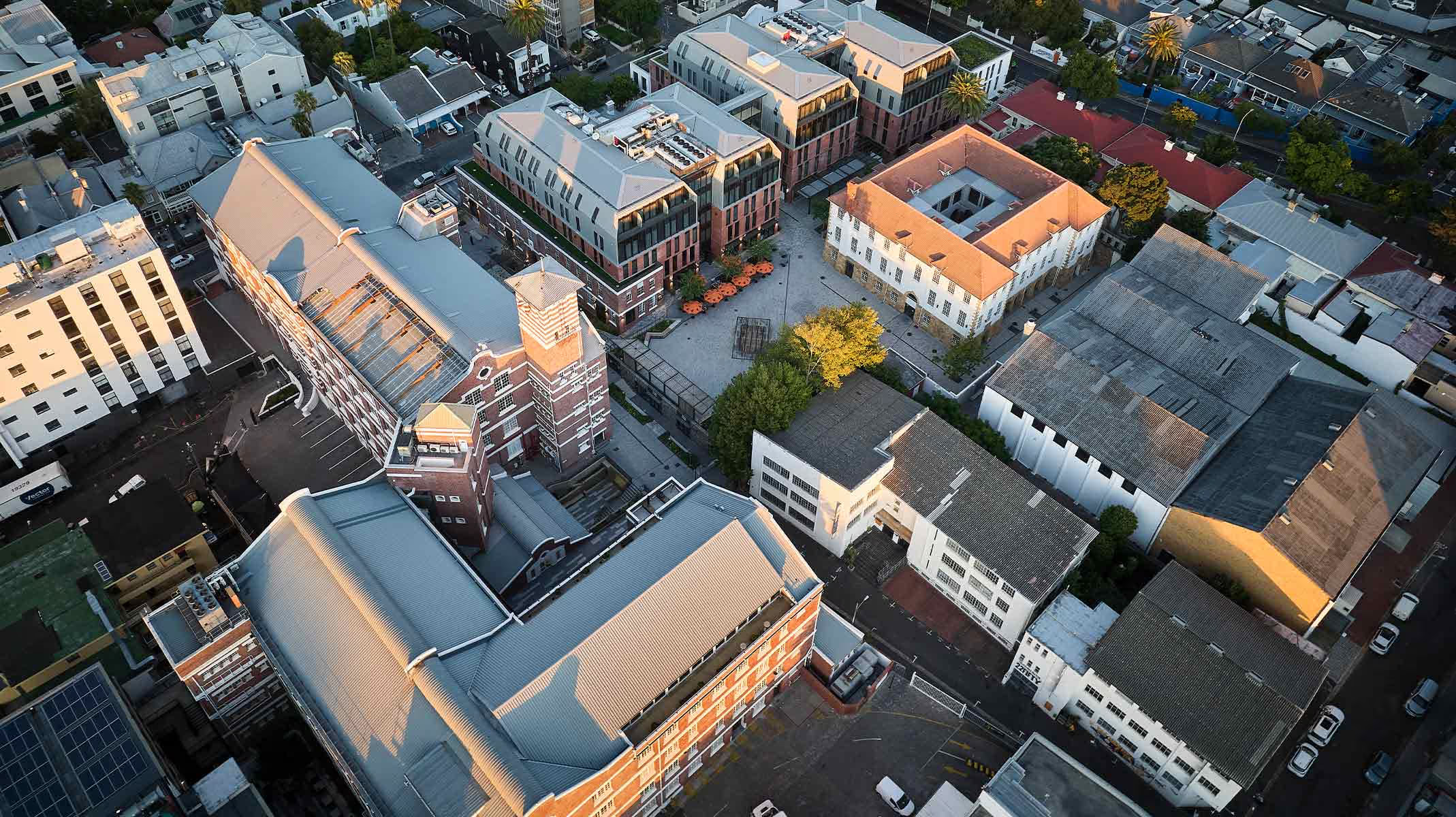
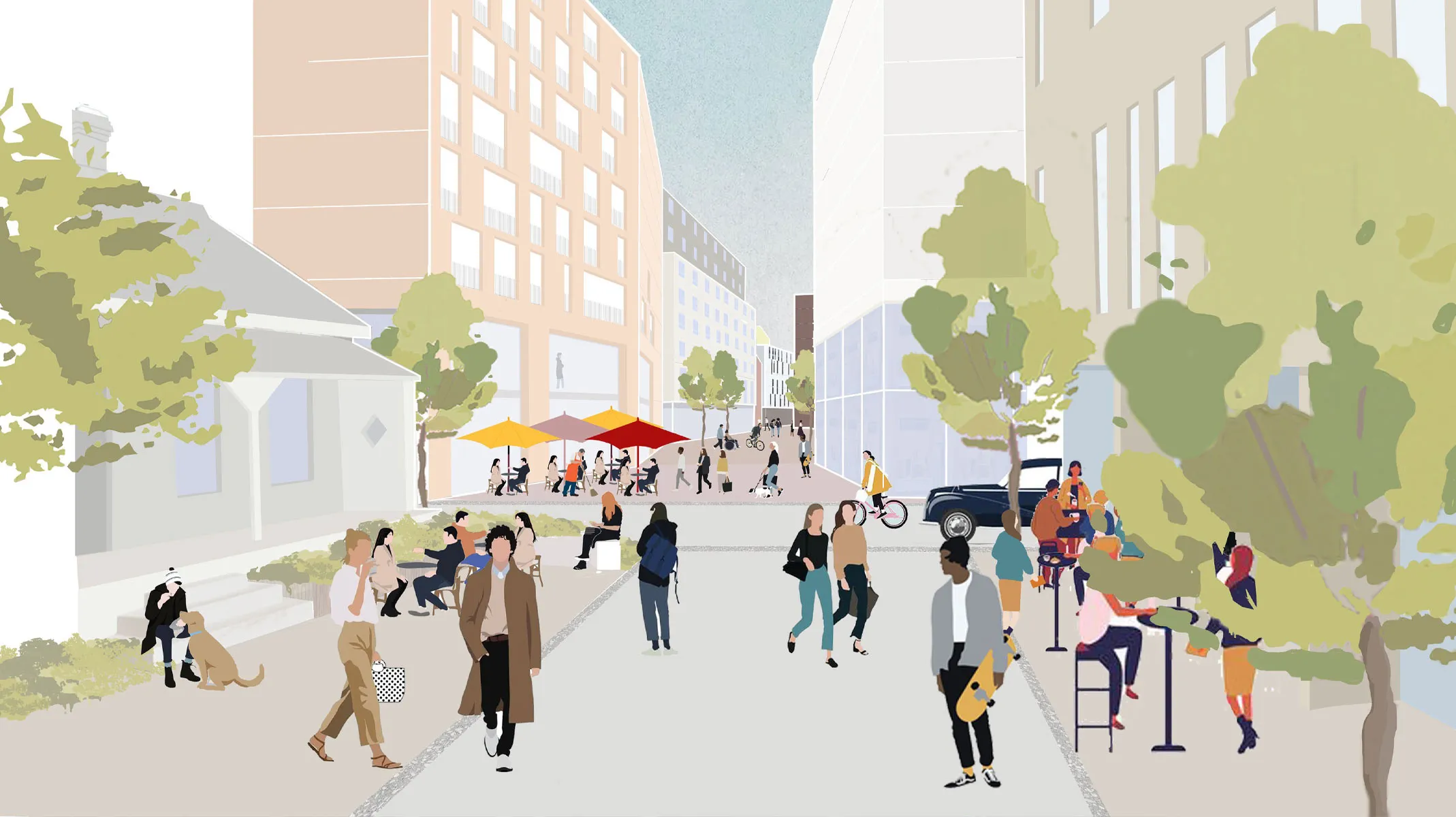
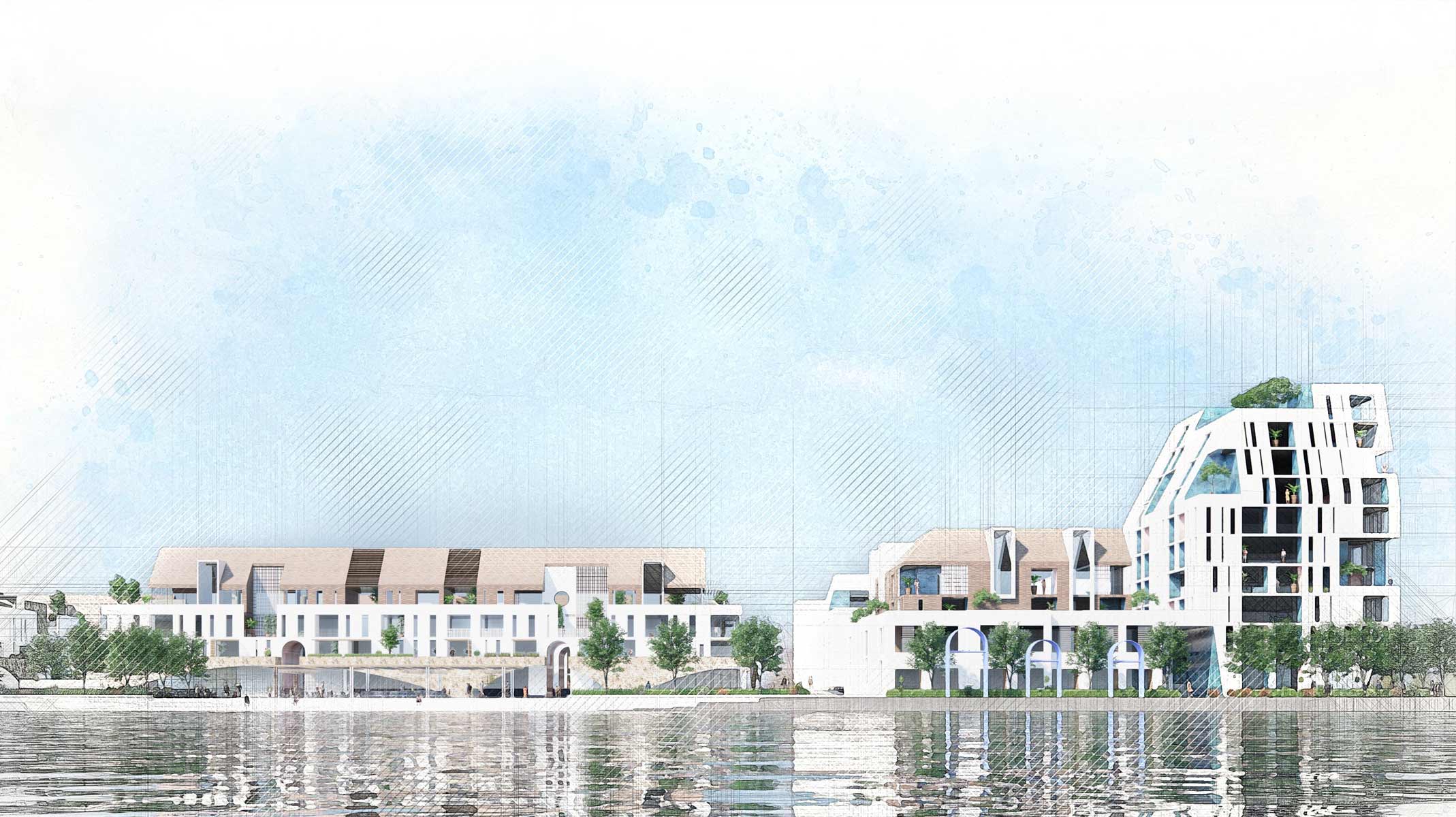
The site sits on a small urban block with three street frontages, each with a distinct identity. The surrounding streetscape is layered, reflecting a mix of Victorian, Edwardian, Art Deco and modern infill buildings. These shifts in scale and expression required a response that mediates between architectural languages while remaining legible and grounded in its setting. The project is anchored in an adaptive reuse strategy that retains and celebrates the original Victorian façade as a base, with a contemporary structure rising above it.
The approach establishes a clear relationship between old and new, where the historic fabric informs the spatial logic and presence of the building without constraining its evolution.
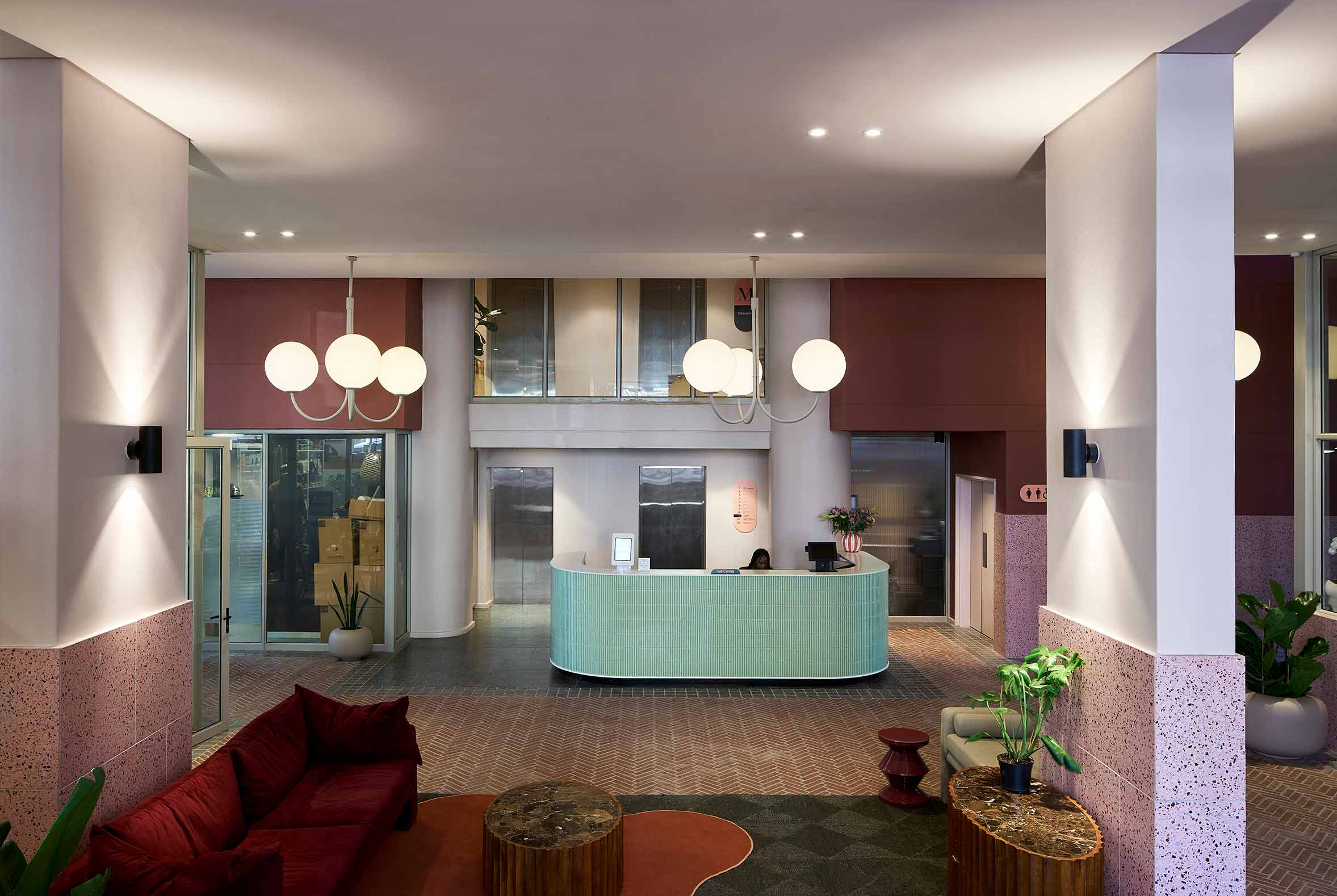
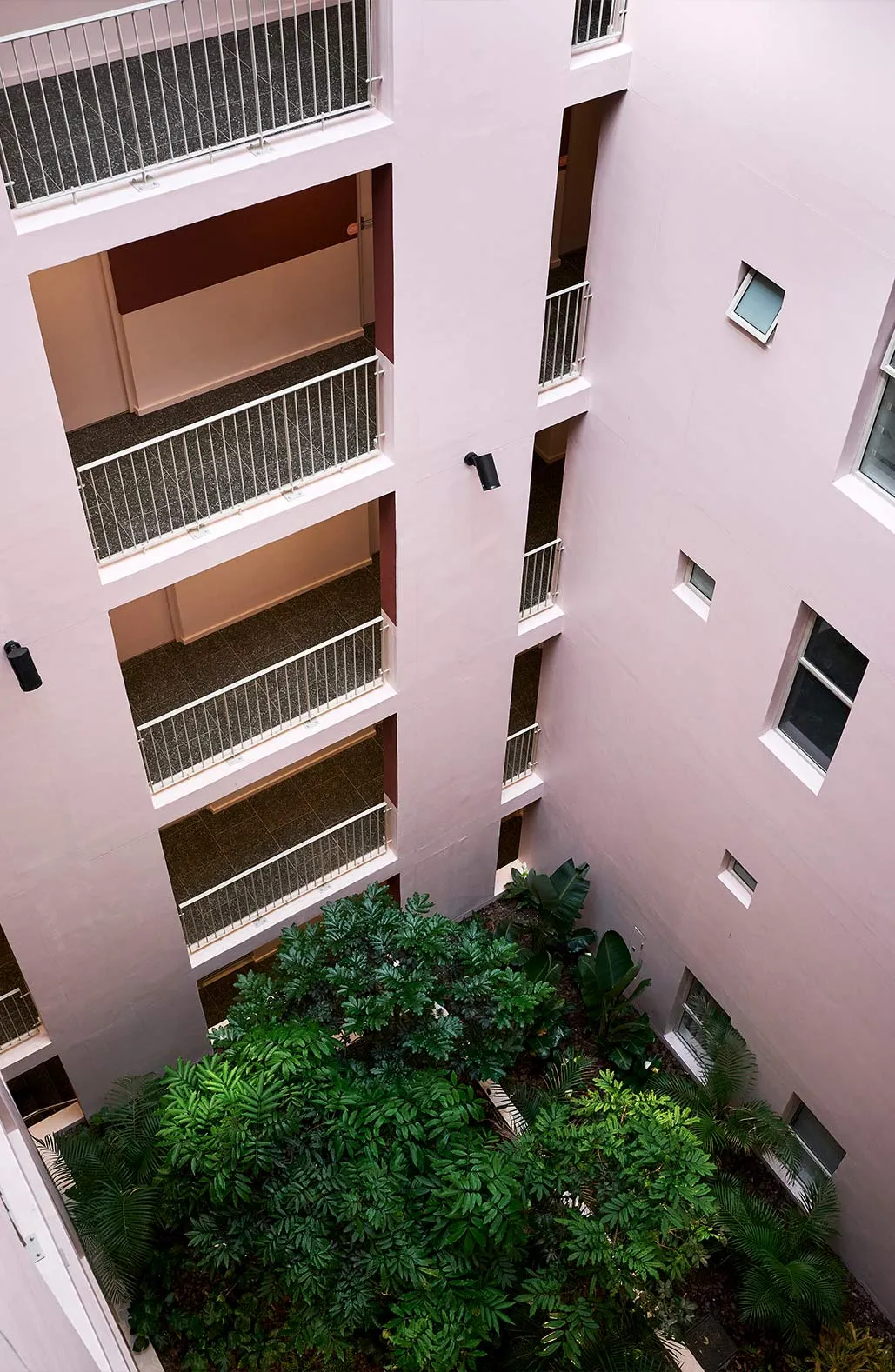
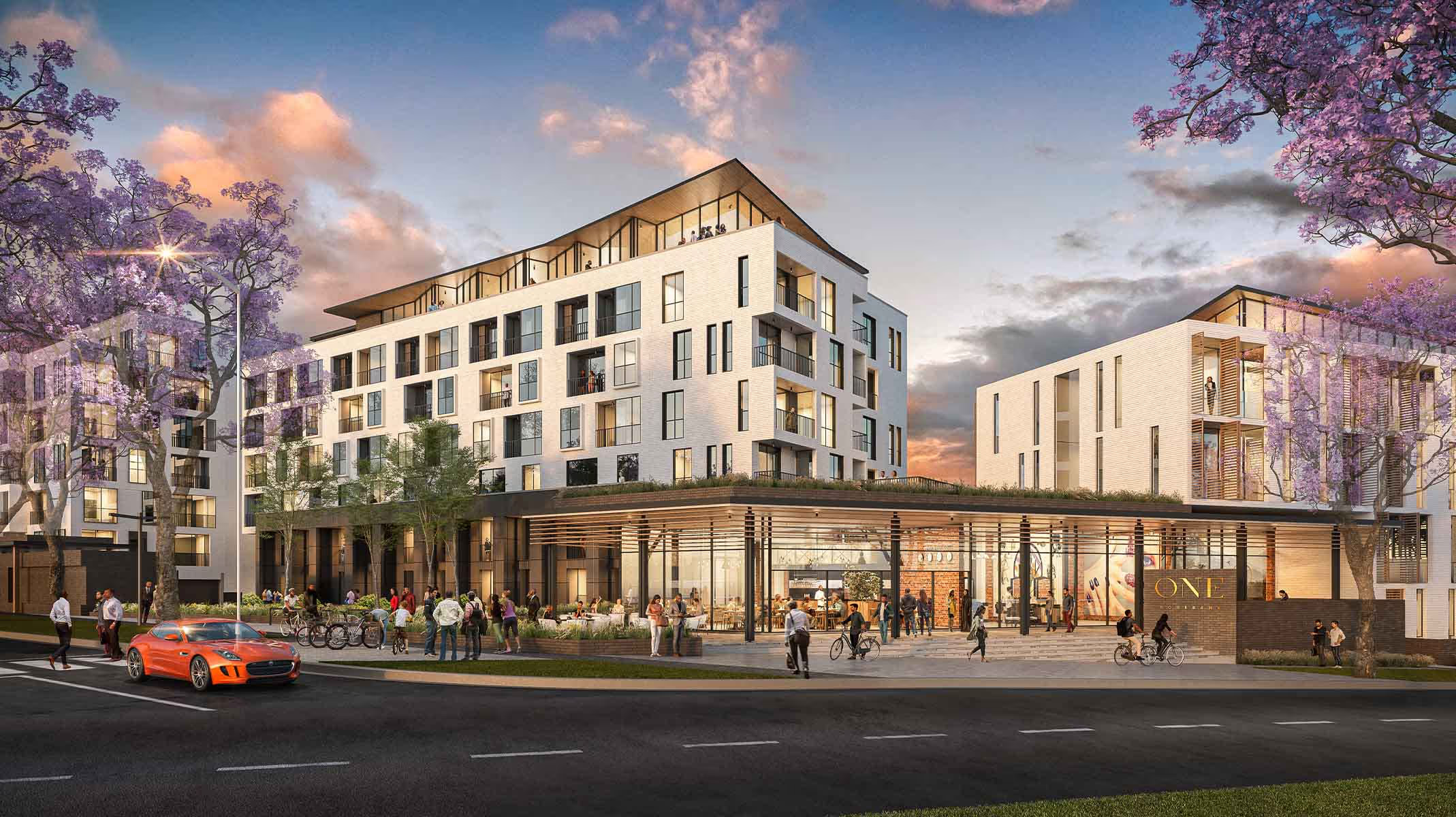
A series of deliberate spatial interventions organise the building. An open internal core anchors the scheme, reinstating historic access routes and improving connectivity through the site. At ground level, the building is set back with a sunken internal floor that creates a defined threshold between public retail space and more private residential areas. The internal courtyard and lane system form the heart of the plan, establishing a connected and permeable environment that aligns with the rhythm of the surrounding neighbourhood. Circulation is structured to prioritise clarity and ease of movement, ensuring the building remains accessible and active at multiple levels.
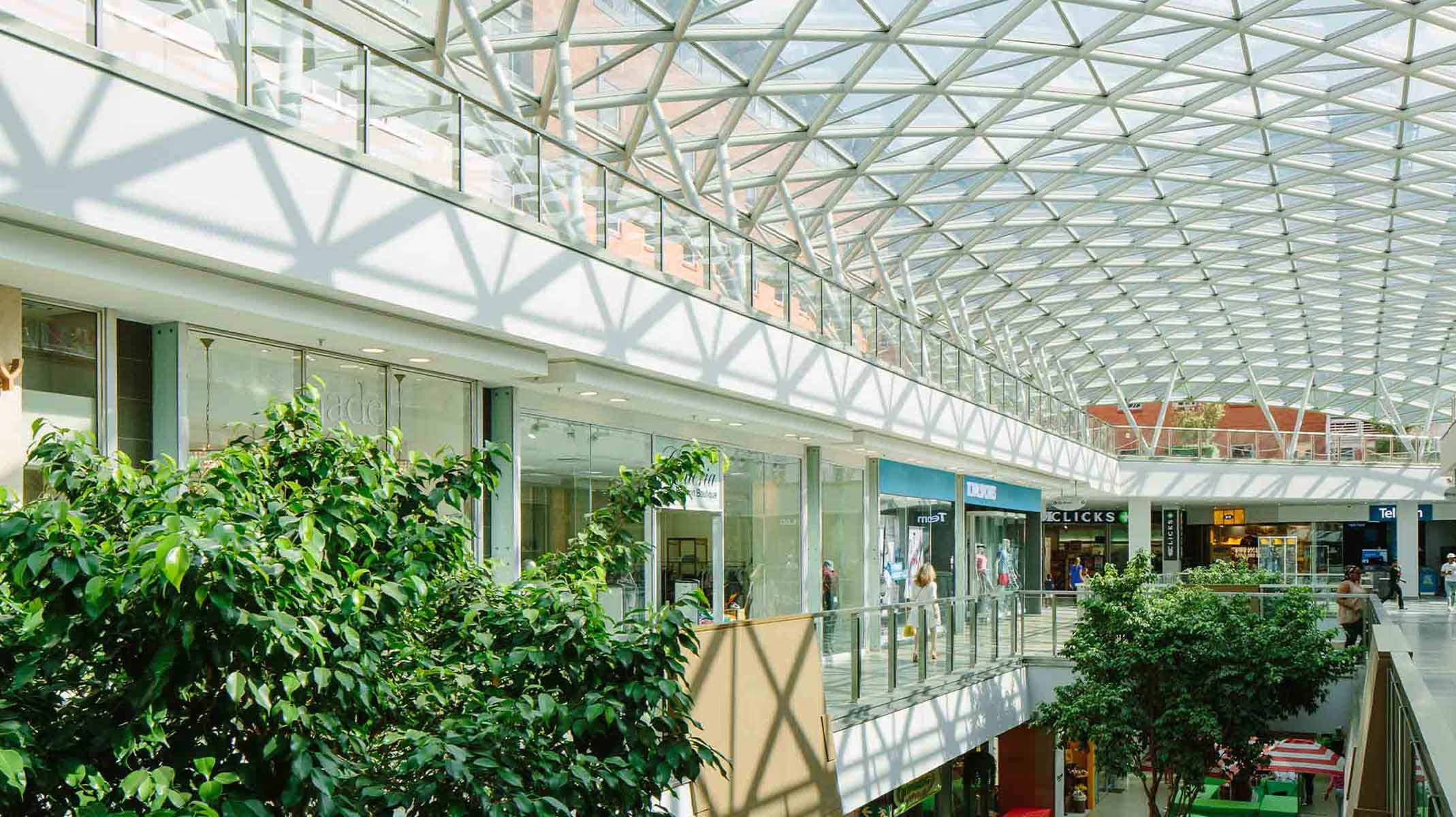
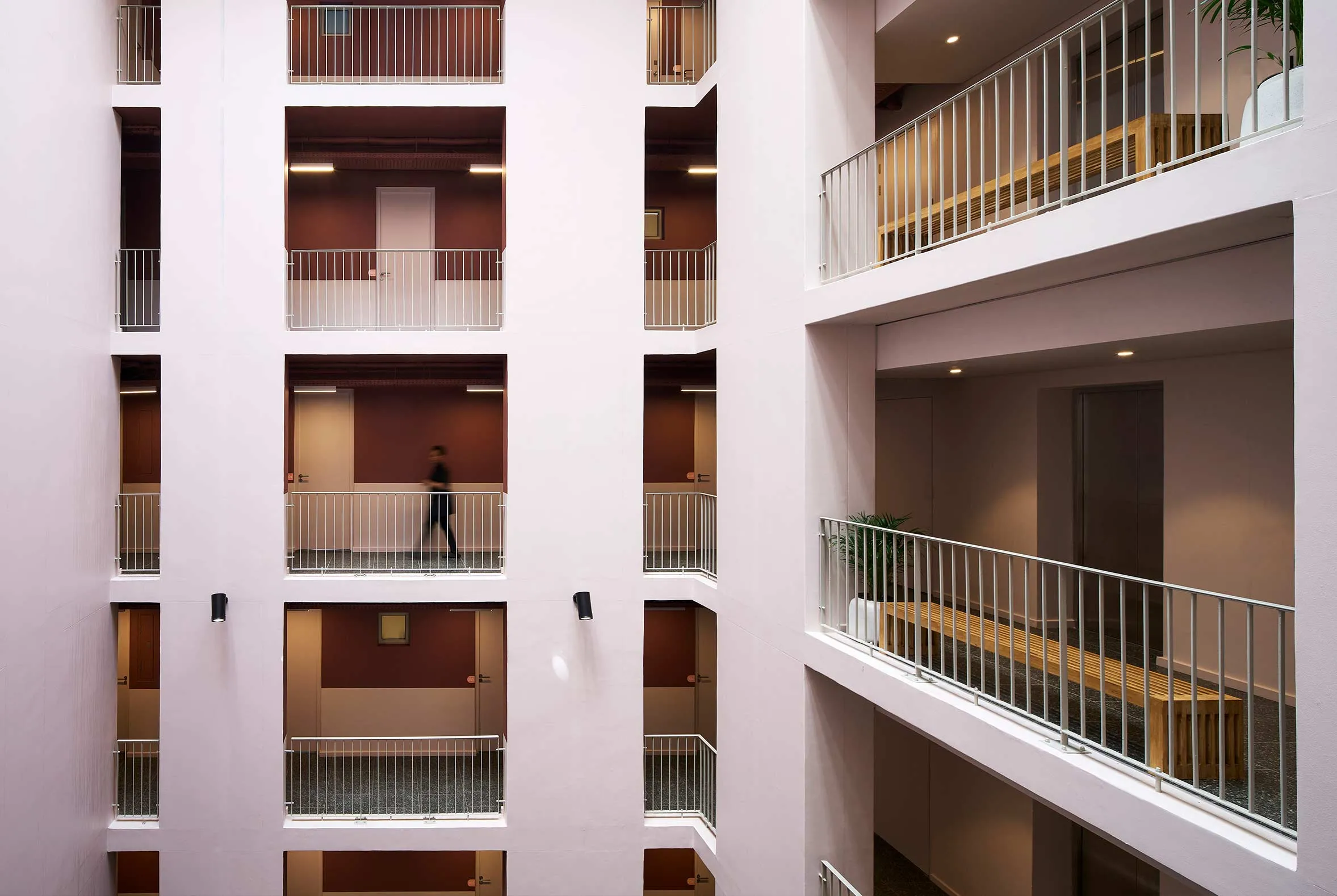
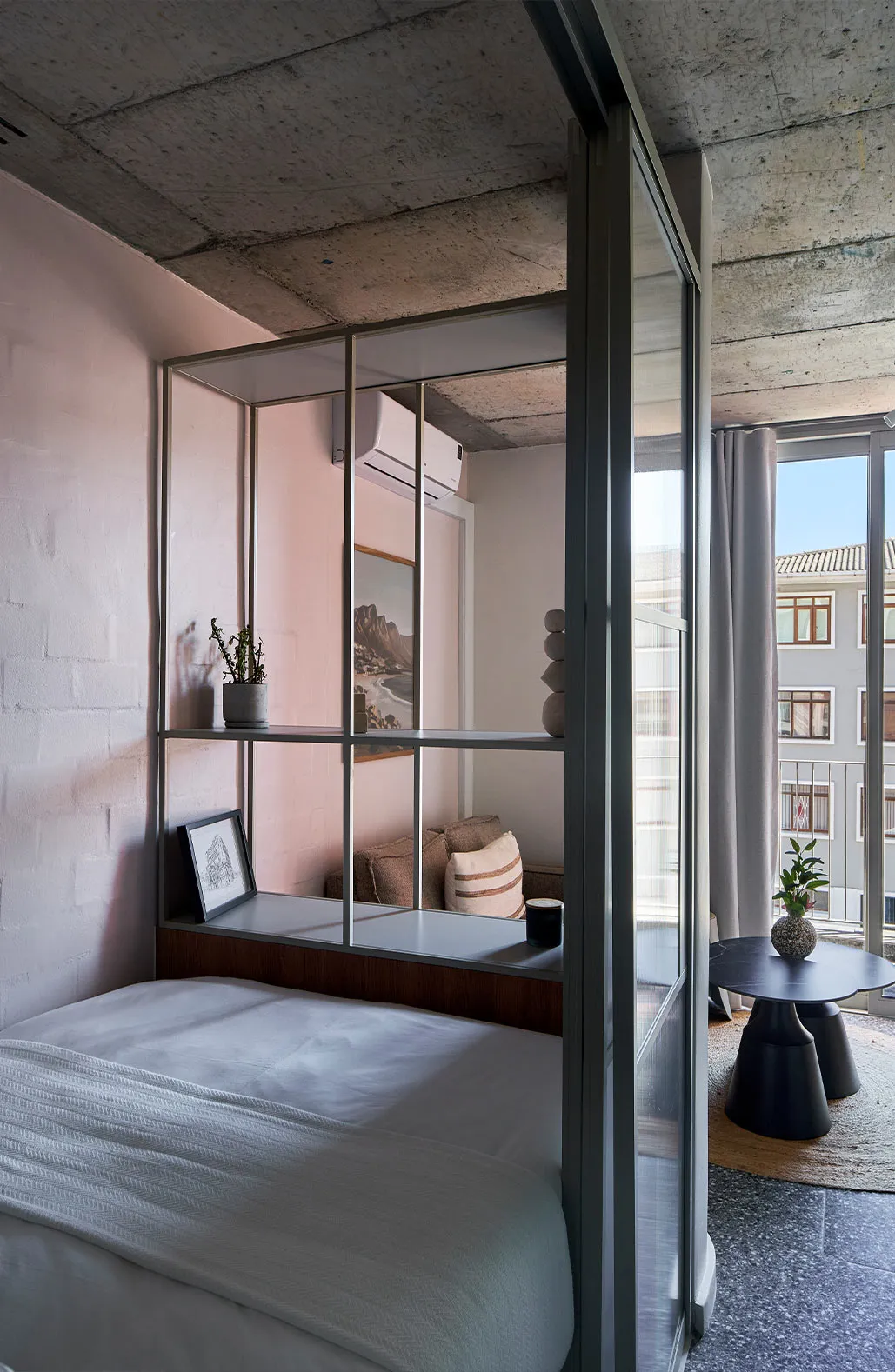
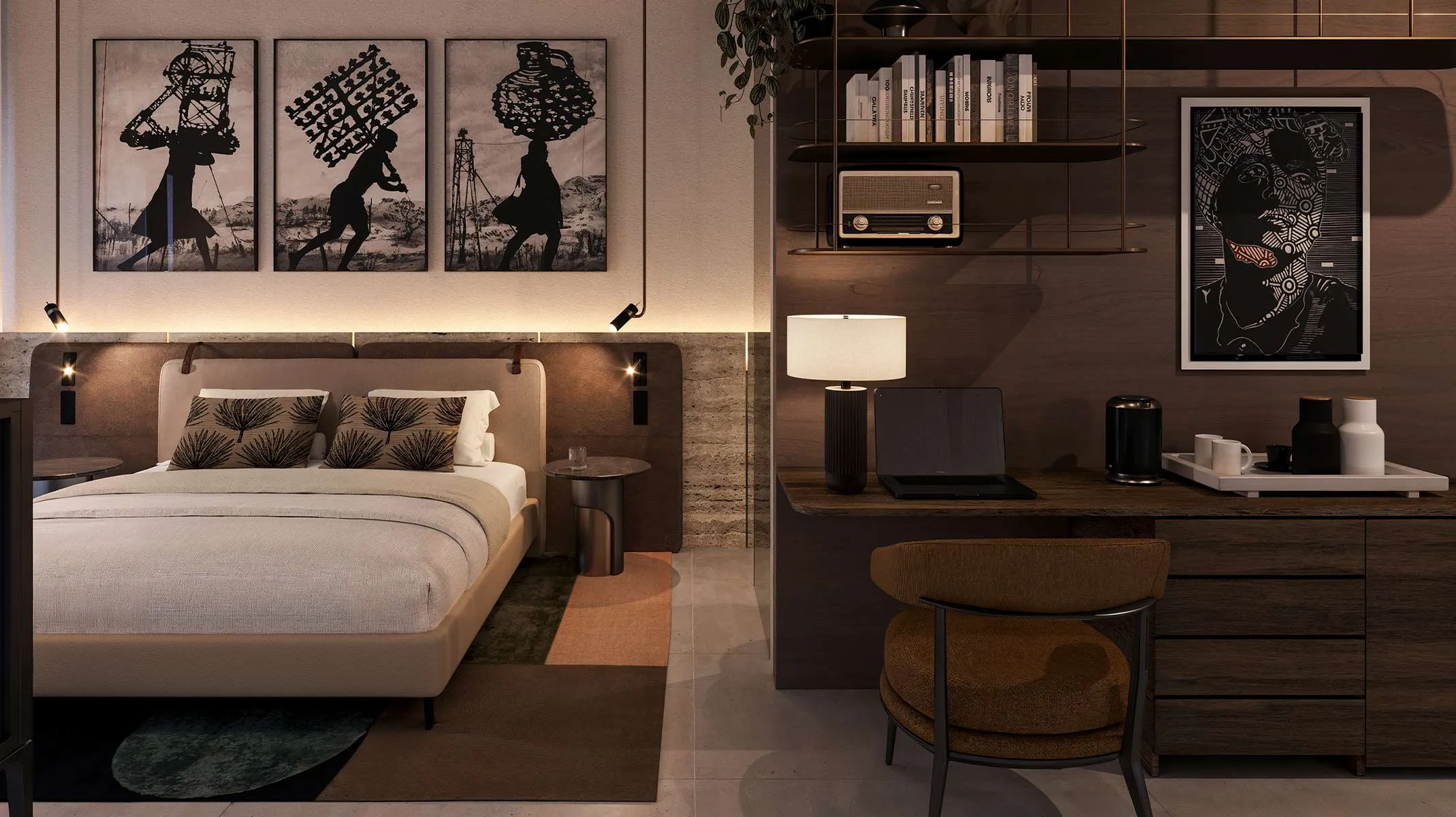
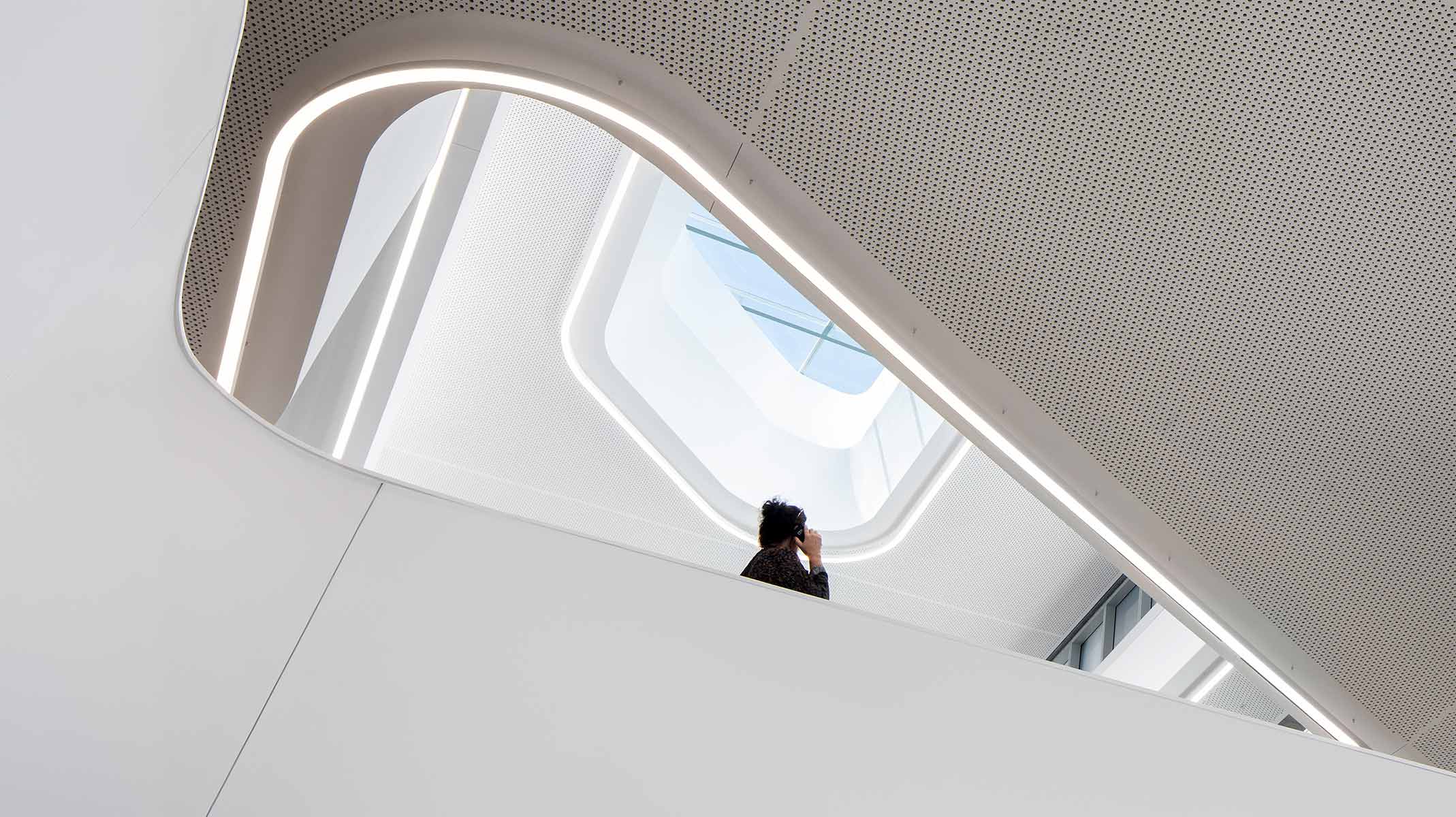
Environmental performance is driven by passive design. The full-height atrium introduces light deep into the building while acting as a social and environmental core. A sawtooth roof with polycarbonate cladding enhances daylight penetration and supports natural ventilation through the stack effect. Apartments are designed with floor-to-ceiling glazing, supported by internal reflective joinery elements that extend the reach of natural light. Together, these strategies reduce reliance on mechanical systems while improving internal comfort and overall spatial quality.
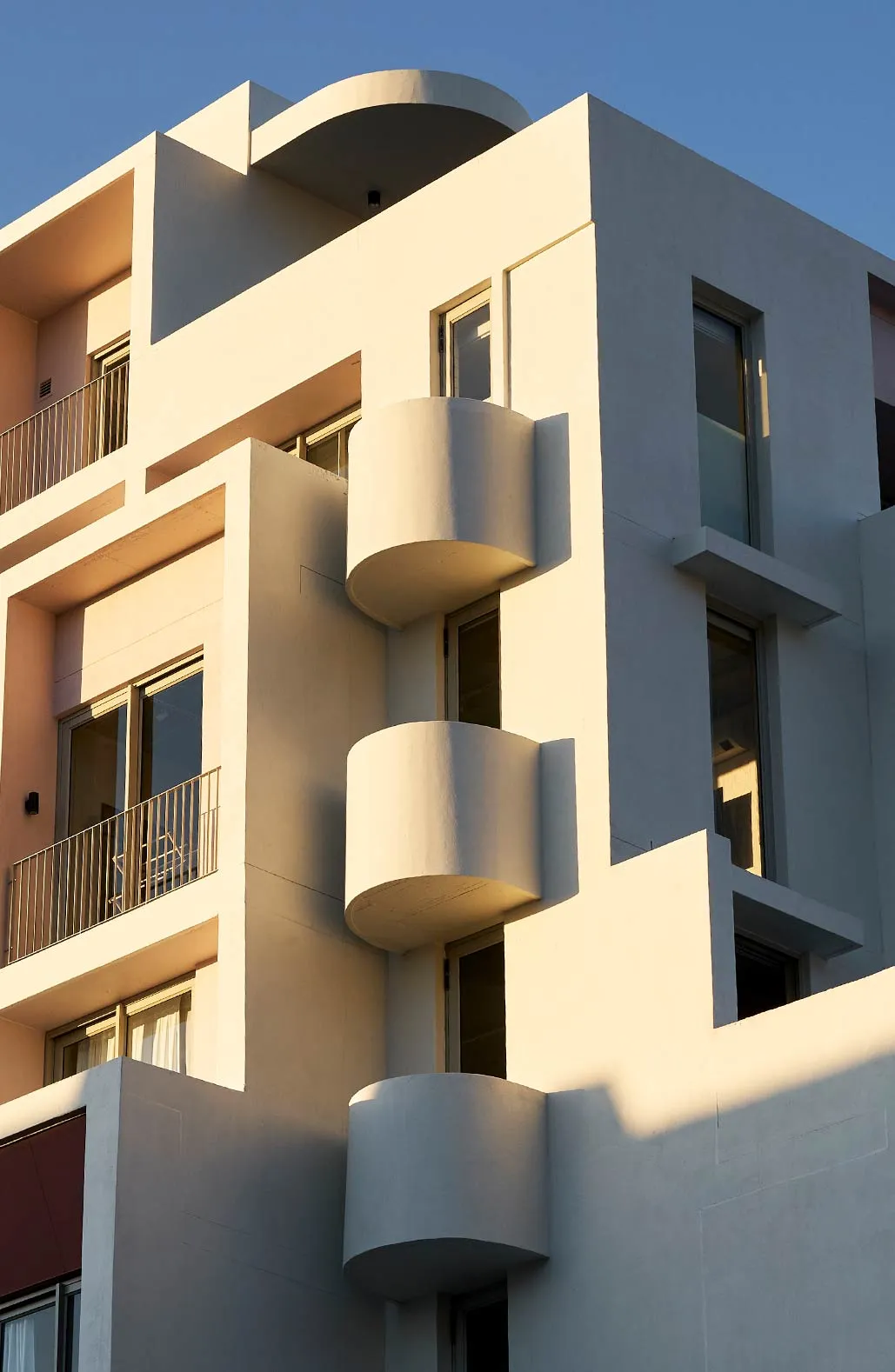
The building is defined by an ordered and restrained architectural language.
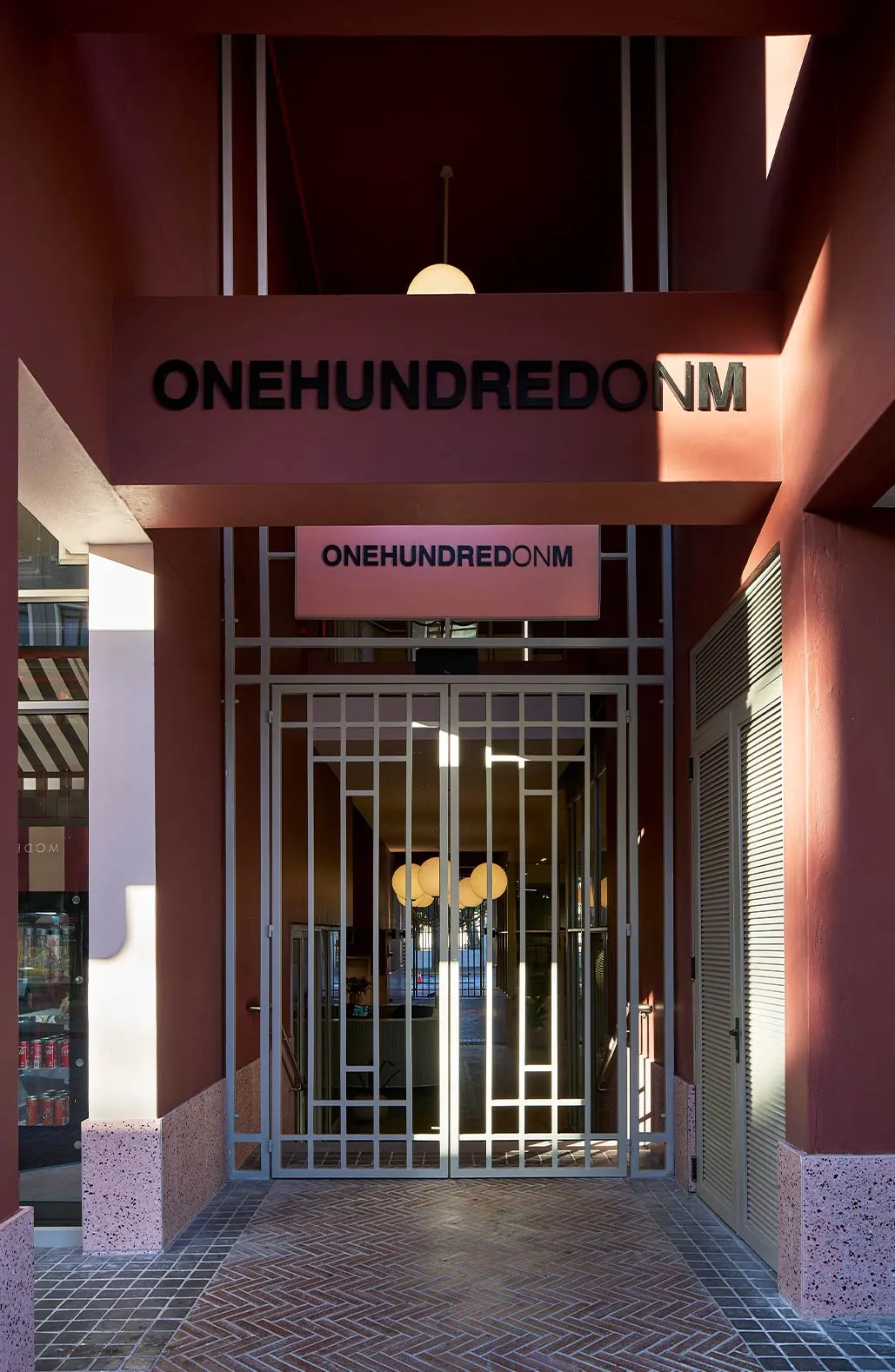
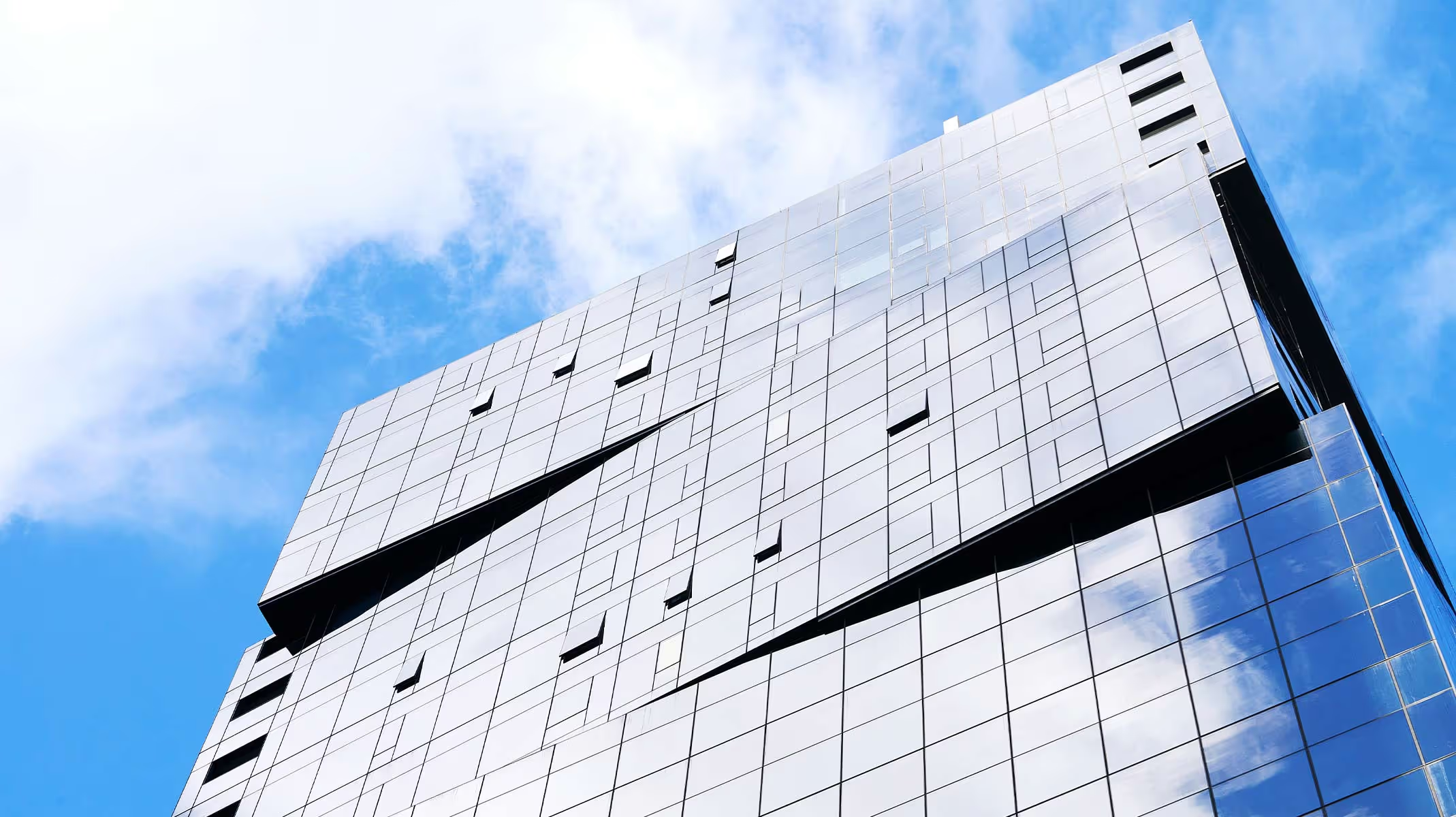
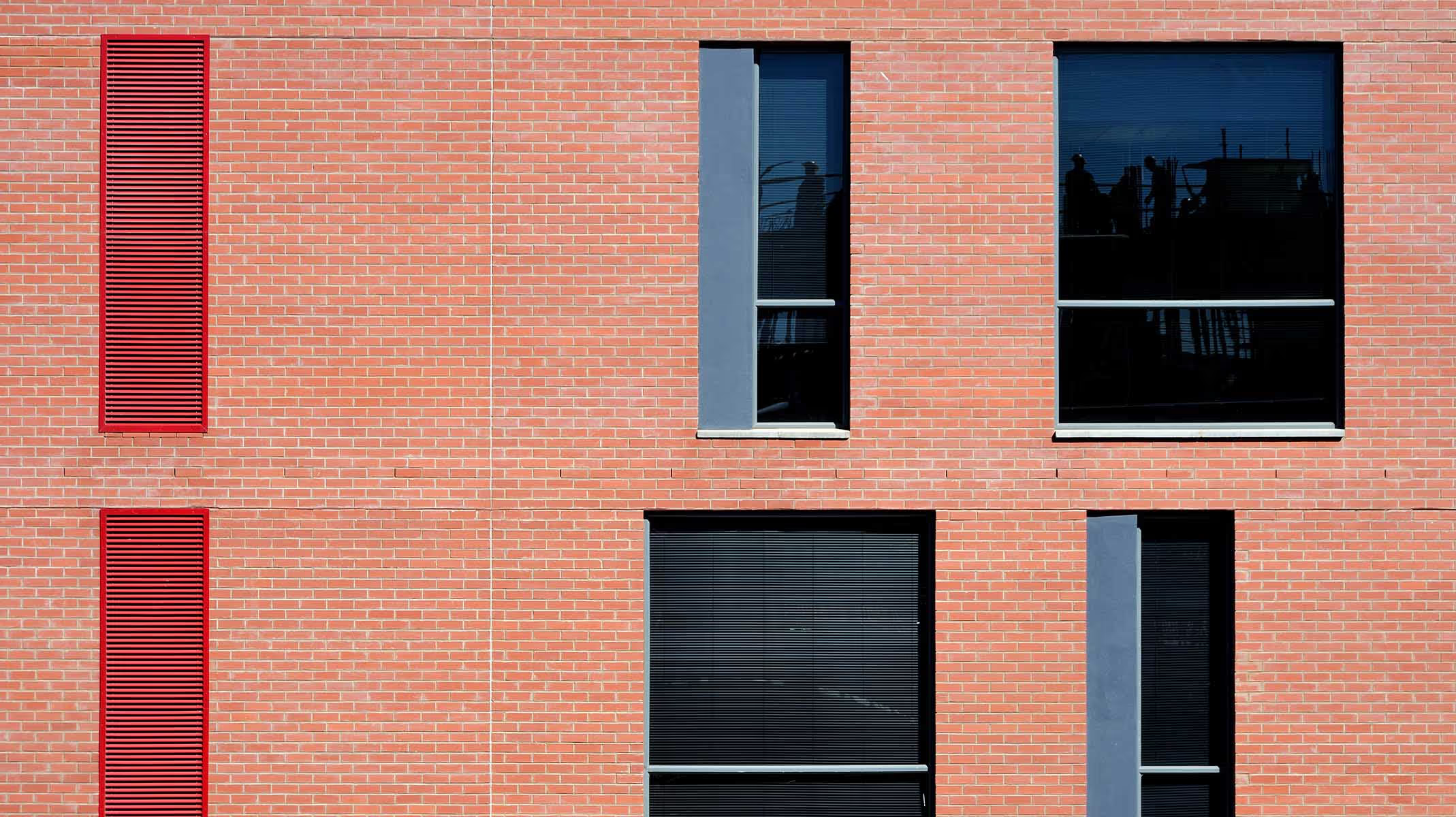
A consistent geometric framework informs the façade, internal openings and circulation elements, creating a sense of clarity and cohesion throughout. The massing steps back from the street, allowing the historic façade to maintain its prominence while accommodating the scale of the new structure above. Material choices reinforce continuity and atmosphere. A red brick ground floor establishes a tactile connection to the site and extends into the internal spaces, while polycarbonate elements are repeated to create visual continuity across the atrium and roof structure.
The project required precise coordination to retain the existing façade while excavating and constructing a multi-storey building behind it. Working within the constraints of a heritage structure demanded careful staging, technical control and alignment with regulatory requirements. The density of the site and the complexity of the urban context required a clear and disciplined approach to both planning and construction, ensuring that spatial ambitions could be delivered without compromising the integrity of the original structure.
The building is structured as a transition from an active urban edge to a more contained internal environment. Movement through the site is shaped by reinstated routes and a clear spatial sequence that connects street, courtyard and residential levels. The atrium acts as a social centre, with visually connected circulation routes that allow residents to engage with one another. This introduces a level of interaction often absent in apartment buildings, while still maintaining a sense of privacy within individual units.
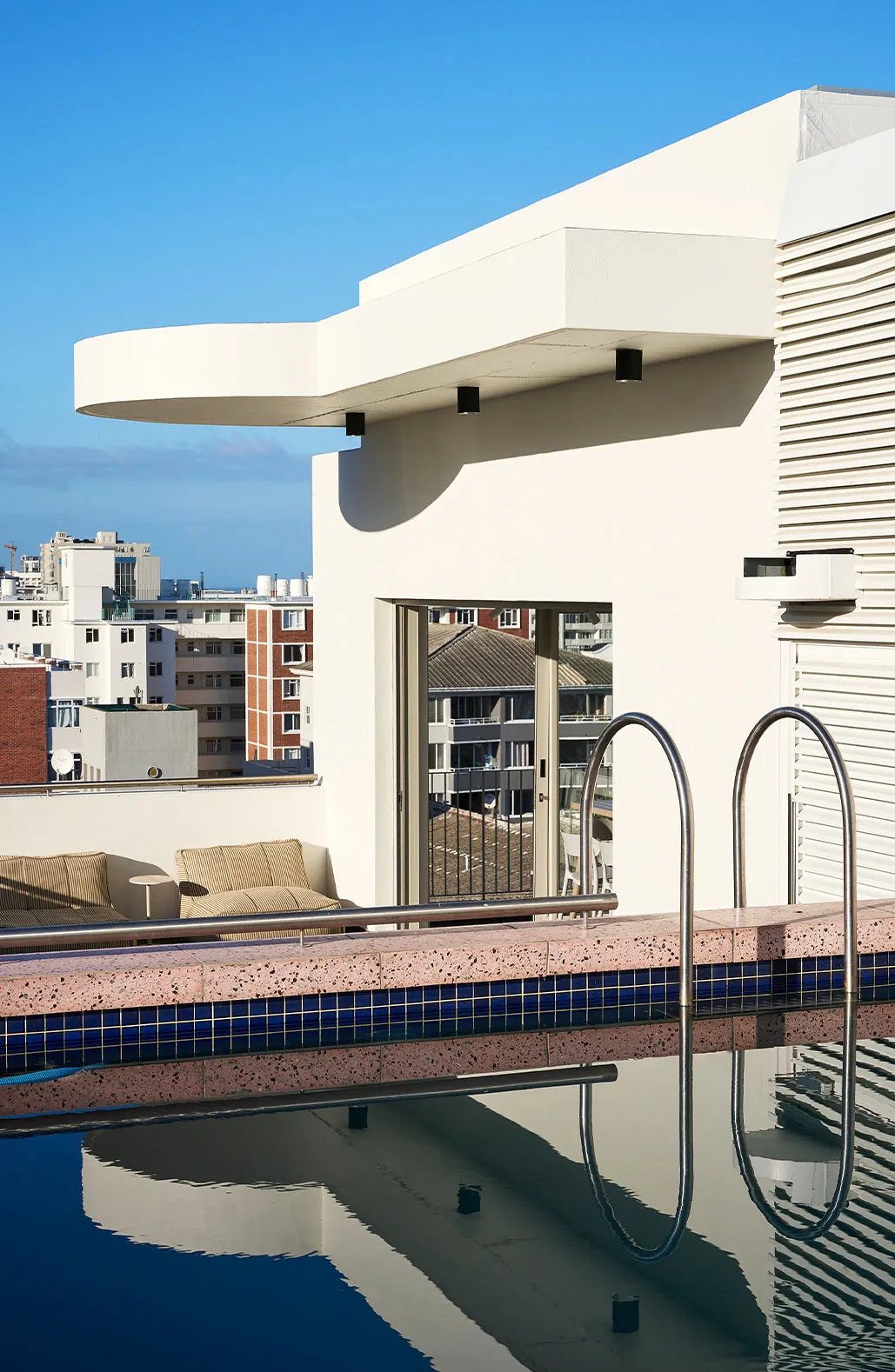
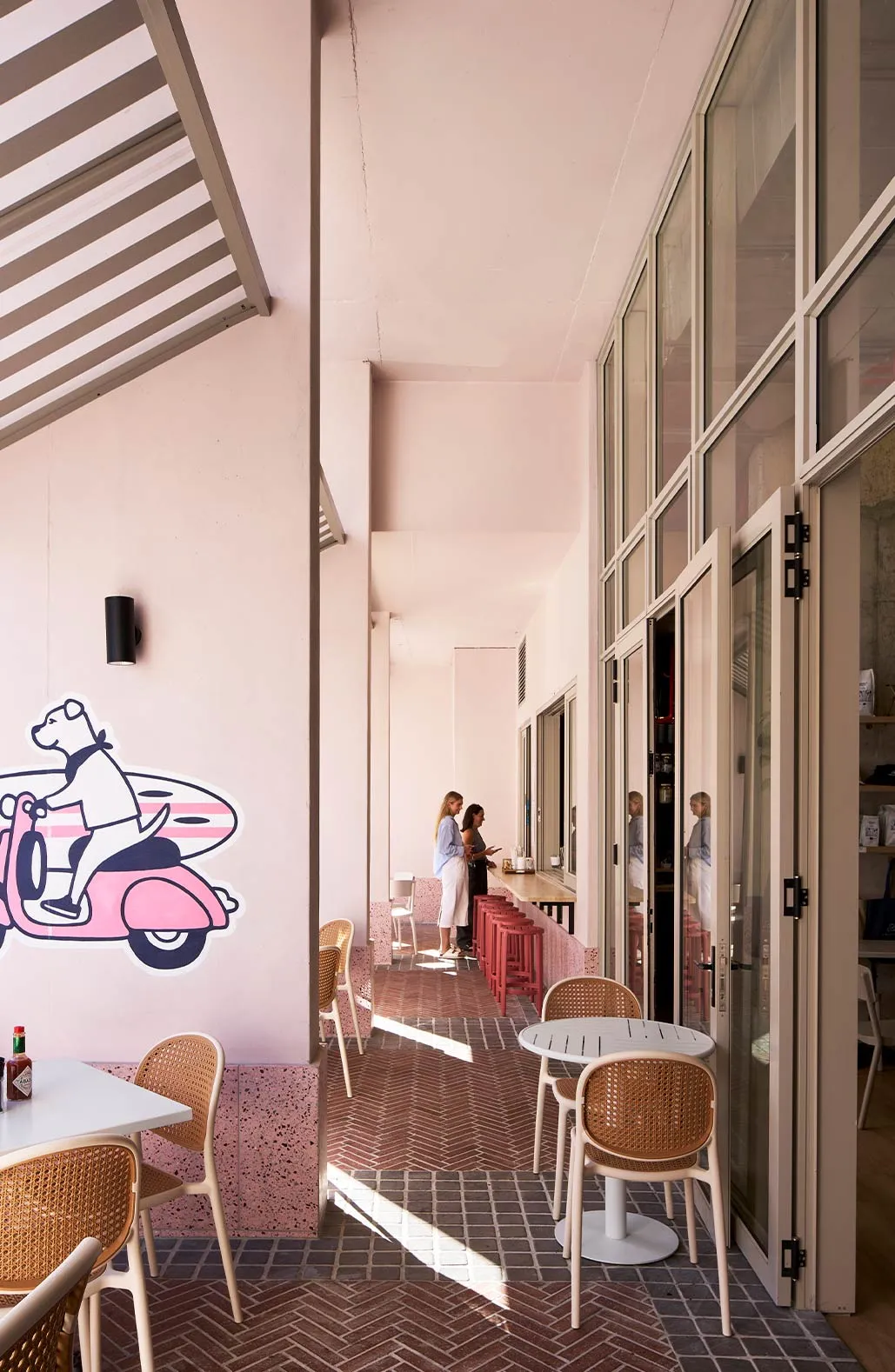
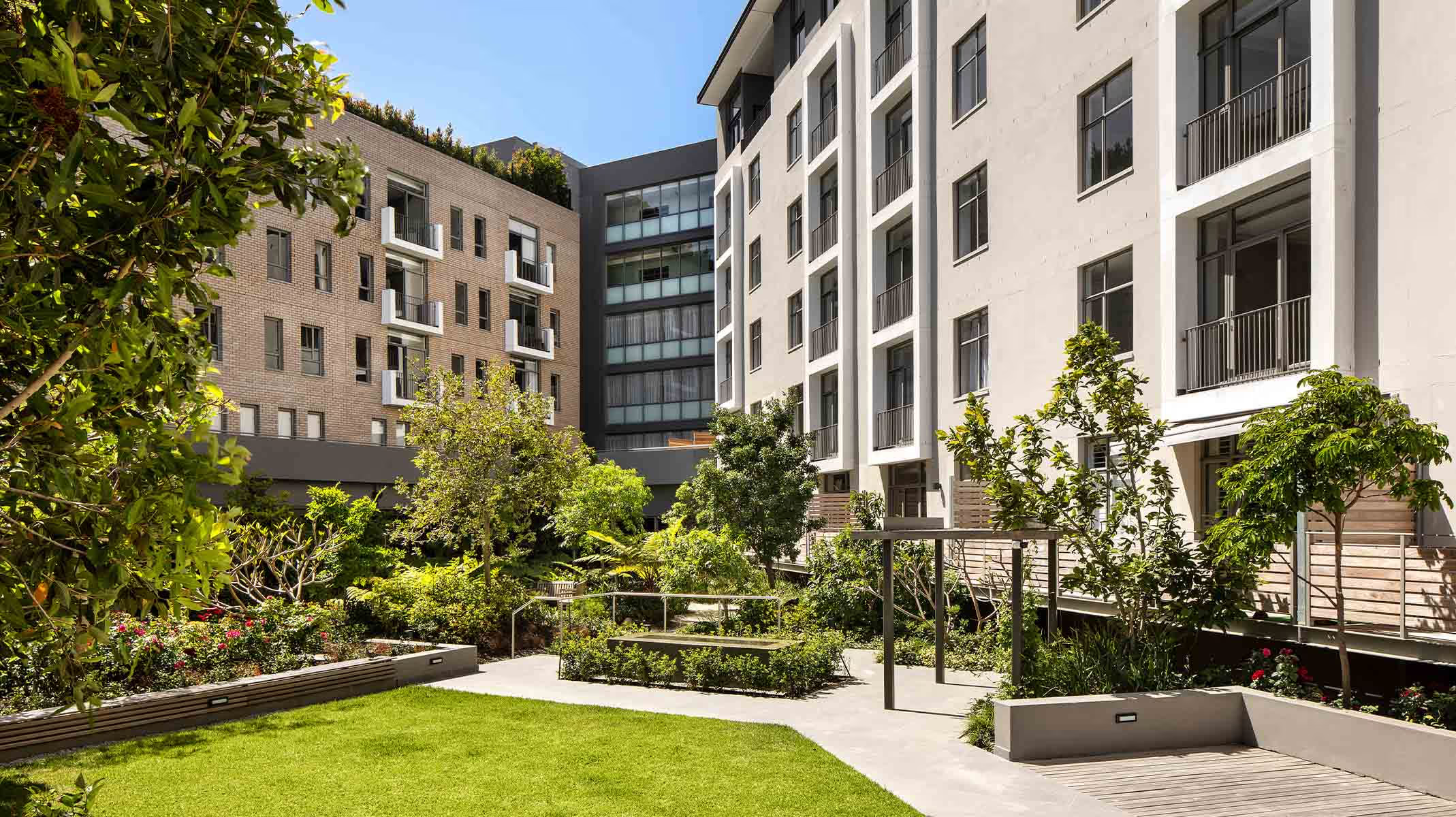
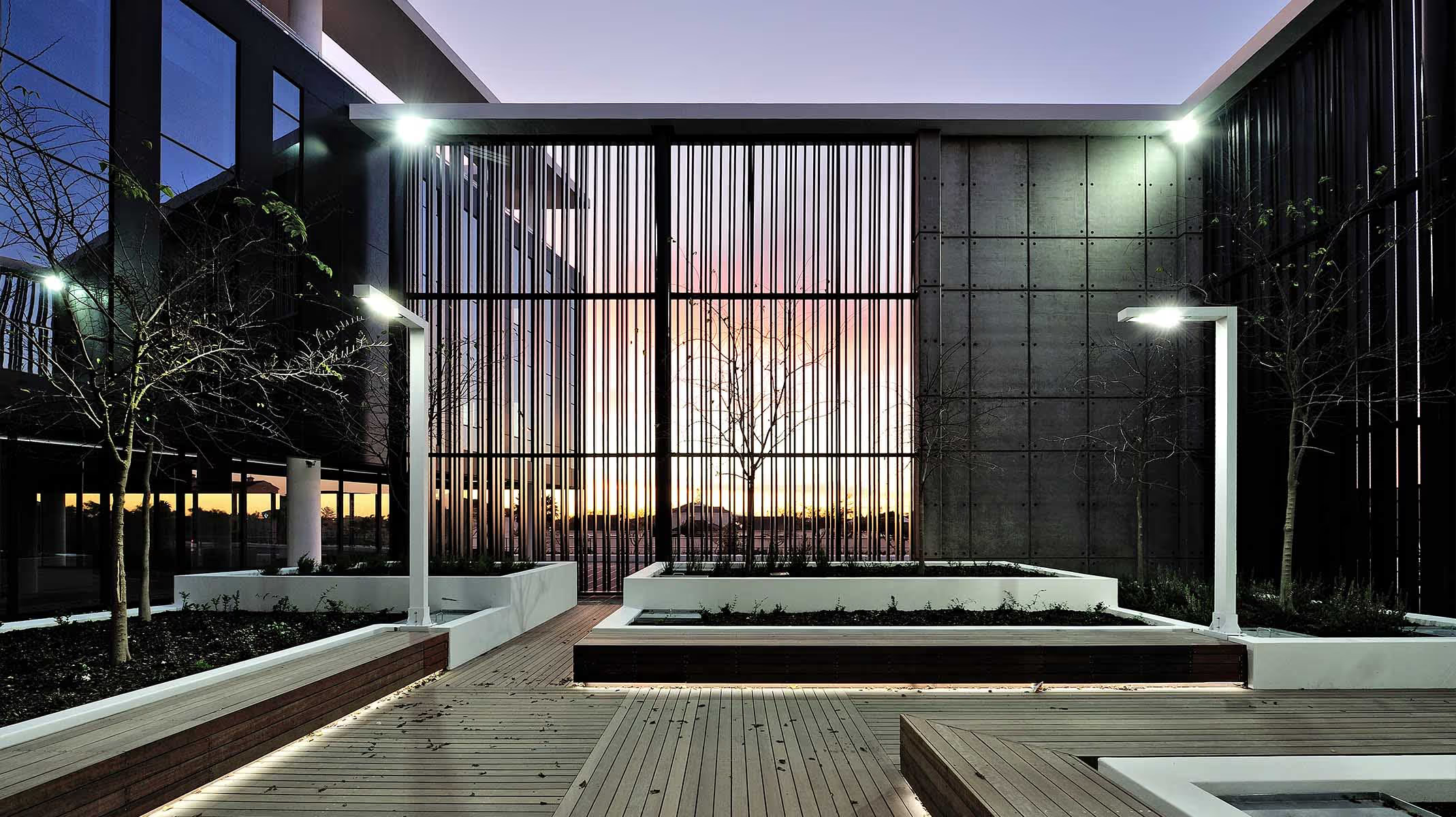
The courtyard garden provides a calm, sheltered space within the block, contrasting with the energy of Main Road. Above, the rooftop pool offers a shared amenity with views of Signal Hill, extending the experience vertically and reinforcing a sense of community.
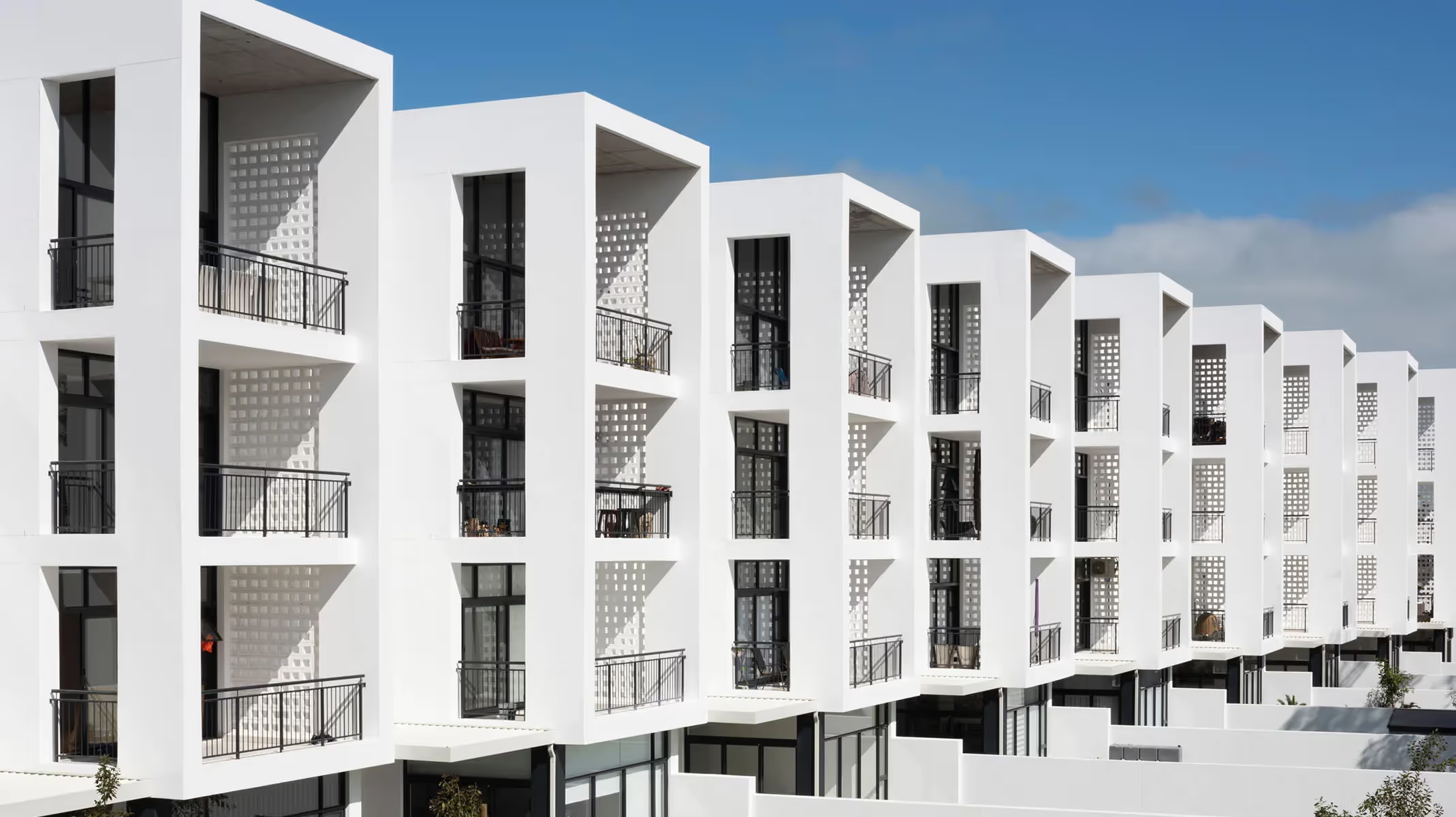
The project strengthens the character of this section of Main Road and contributes to ongoing urban renewal in Sea Point. It accommodates 93 apartments within a high-density framework while maintaining a sense of openness, light and liveability. By working with, rather than replacing, the existing structure, the scheme demonstrates how heritage buildings can be adapted to support contemporary use. The result is a building that is grounded in its context while remaining forward-looking, contributing to both the cultural continuity and urban vitality of the neighbourhood.

.avif)


%20(cover).avif)


.avif)
.avif)
.avif)